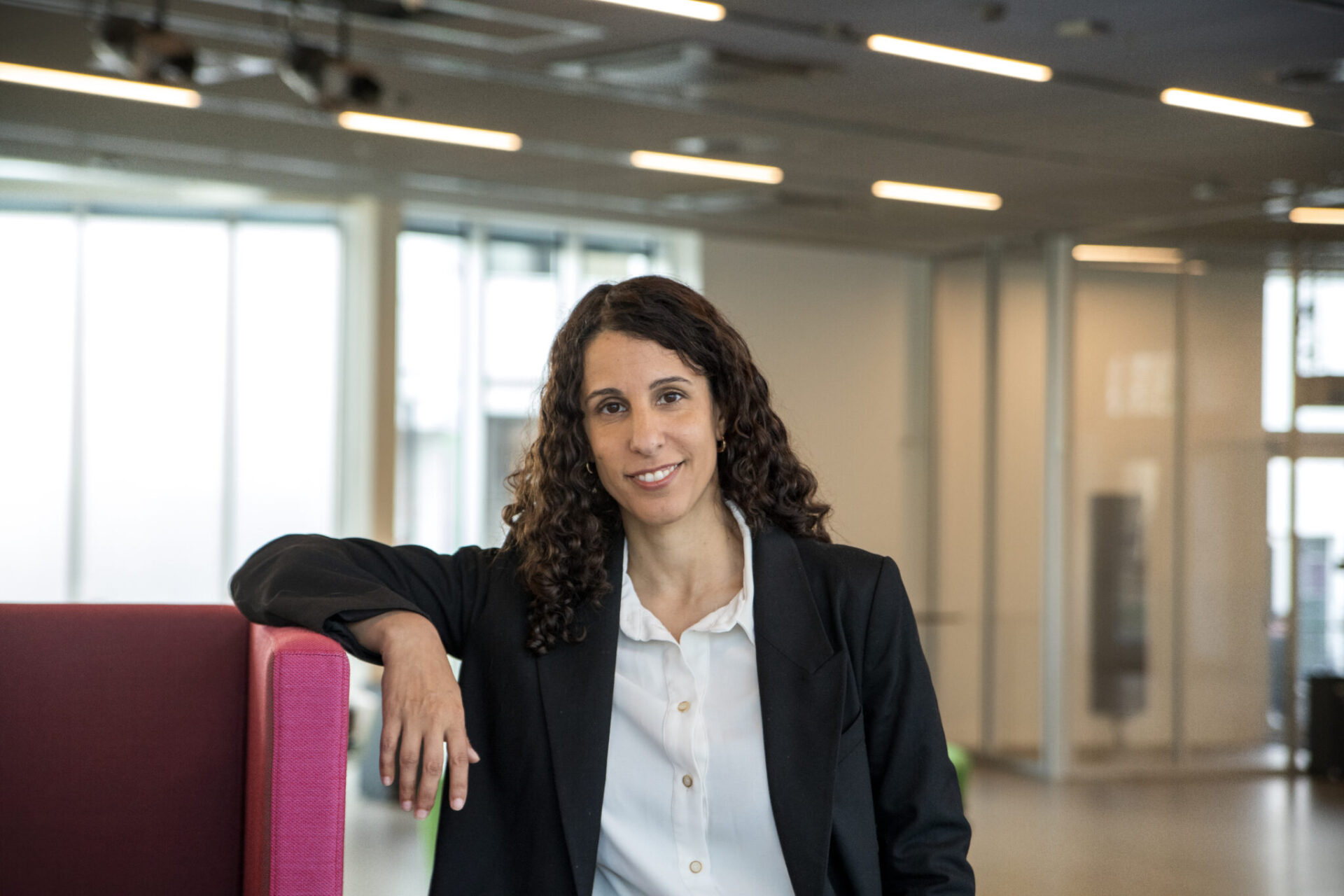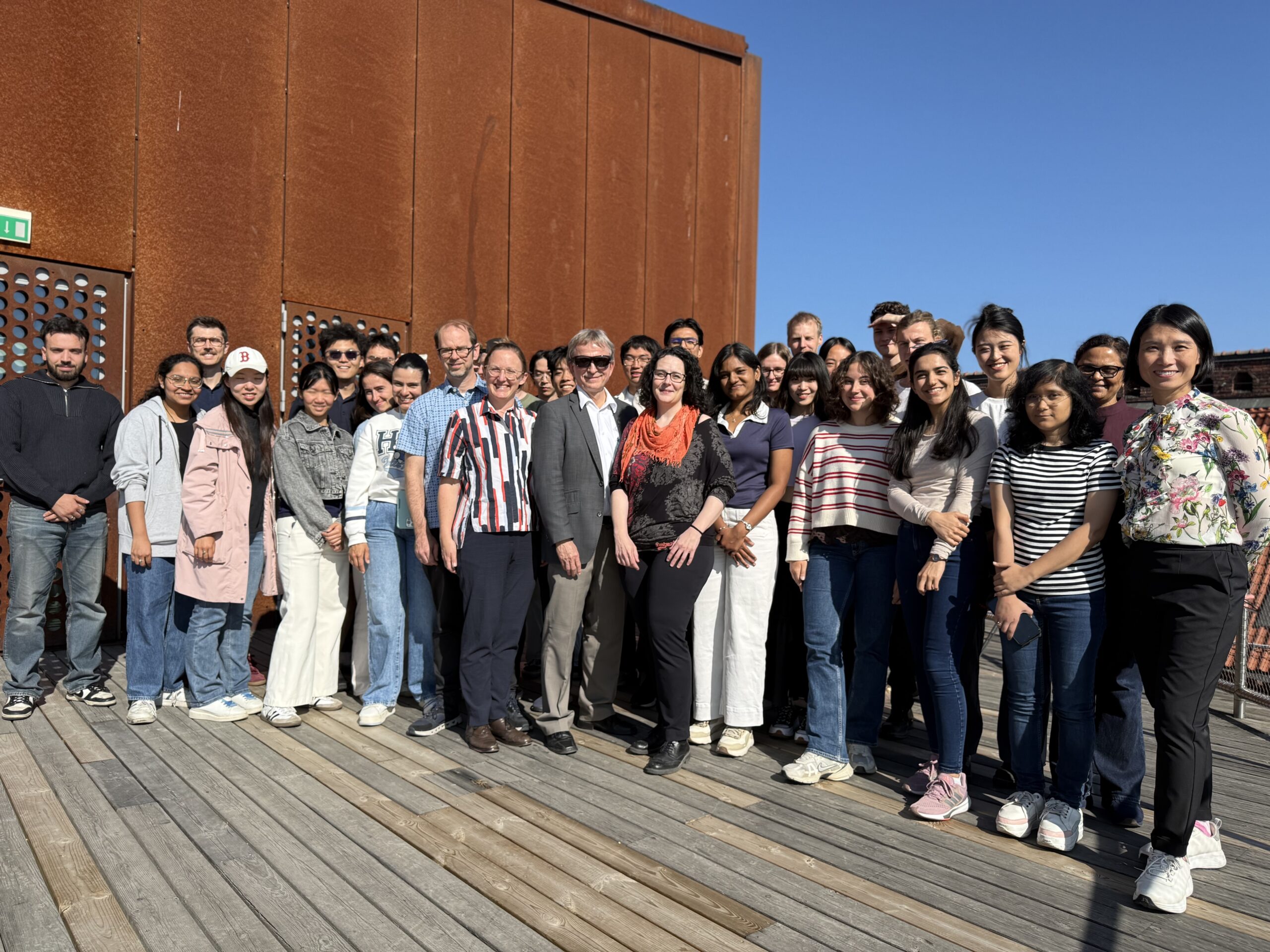
At Google’s 2023 Geo for Good Summit, Digital Futures Faculty, Professor Yifang Ban and her team were honoured with the Google Geo for Good Impact Award. This recognition highlights their remarkable contributions to wildfire monitoring urban mapping and urban risk assessment for enhanced urban resilience and sustainability in the face of climate change and extreme events.
Professor Yifang Ban (picture on top), a distinguished scientist in the field of Geoinformatics and environmental monitoring, has demonstrated an exceptional commitment to advancing technology and innovation for the betterment of our communities and the environment. Her team’s work has brought new suits of approaches for environmental change monitoring and a new level of insights into some of the most pressing challenges of our time.
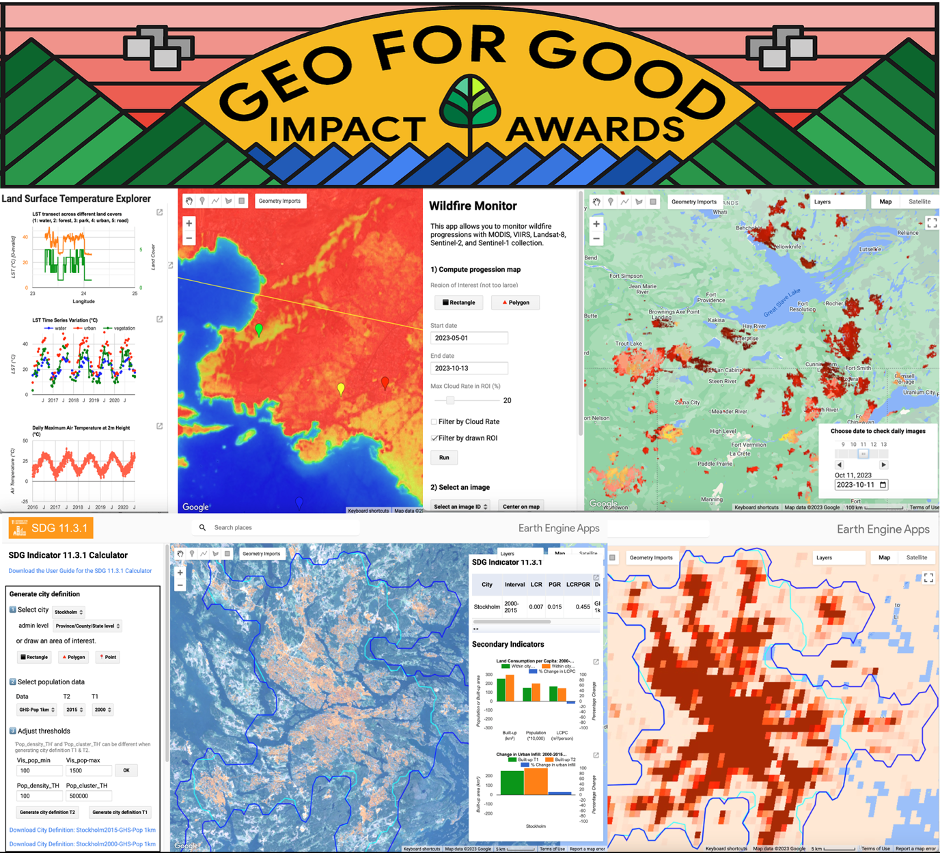
The Google Geo for Good Impact Award acknowledges Professor Ban and her team (Dr. Puzhao Zhang, Research Scientist, Sebastian Hafner and Yu Zhao, PhD Students)’s pioneering work in the following areas:
- Innovative Wildfire Monitoring: Professor Ban’s team has developed cutting-edge methods for monitoring wildfires, leveraging AI and Google Earth Engine (GEE), to provide near real-time insights into wildfires at a continental scale. This advancement has been instrumental in supporting emergency response and management efforts, helping to mitigate the devastating effects of wildfires.
- Urban Mapping and Urbanization Monitoring: Professor Ban’s team has contributed significantly to the development of globally applicable methods for urban mapping worldwide. By monitoring the spatial patterns and temporal trends of urbanization and associated urban risks, her work supports urban resilience and sustainability initiatives, making cities more adaptable to climate change and extreme events.
In addition, Professor Ban has been an invited expert for SDG11 by the UN-Habitat and contributed to the UN Habitat’s SDG 11 Synthesis Report to the 2023 UN High-Level Political Forum on “Rescuing SDG 11 for a Resilient Urban Planet”. Her team has developed two GEE apps for SDG11 that have been included in the UN Habitat-GEO’s EO4SDG11 Toolkit. The 1st app is the City Definition Generator for SDG11. This GEE app can automatically or interactively generate spatial definitions of a city extent, i.e., city definitions based on the Degree of Urbanization adopted by the UN. It works worldwide, and the city definitions generated using this app can be used for other SDG indicators, including 11.2.1, 11.3.1, 11.6.2, and 11.7.1.
The 2nd app is the SDG Indicator 11.3.1 Calculation App. This GEE app can automatically generate city definitions and calculate SDG 11.3.1 primary and secondary indicators following the global indicator methodology. “This flexibility and the simplicity with which the tool enables users to visualize and interact with the diverse archive of EO products makes it an invaluable resource that will significantly improve data production at the local level and enhance SDG 11.3.1 monitoring at the global scale” stated Dennis Mwaniki, Spatial Data Expert, and Robert Ndugwa, Head of Data & Analytics Section, UN-Habitat.
The Geo for Good Impact Awards, launched on Oct. 10 at the 2023 Google’s Geo for Good Summit, is to recognize and award organizations for projects that have had real-world impact using Google’s mapping tools. The impact awards select projects that focus on climate change mitigation and adaptation or nature protection & conservation.
In a statement, Professor Yifang Ban expressed her gratitude for the award, saying, “I am deeply honoured to receive this award on behalf of my team and KTH. A passion for leveraging AI drives our work and GEE to address some of the most urgent challenges facing our planet today. This recognition from Google motivates us to continue our mission to make the world a more resilient and sustainable place.”
For more information about Professor Yifang Ban’s work, please visit:
- https://www.kth.se/profile/yifang
- https://www.digitalfutures.kth.se/research/collaborative-projects/earth-observation-big-data/
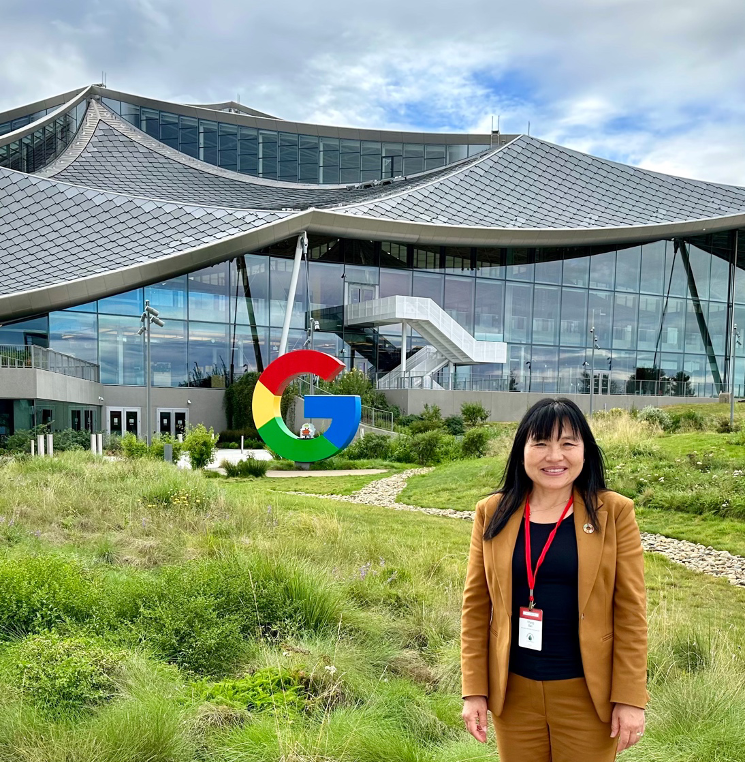
Photo: KTH Professor Yifang Ban at Google Mountain View campus, California, U.S.