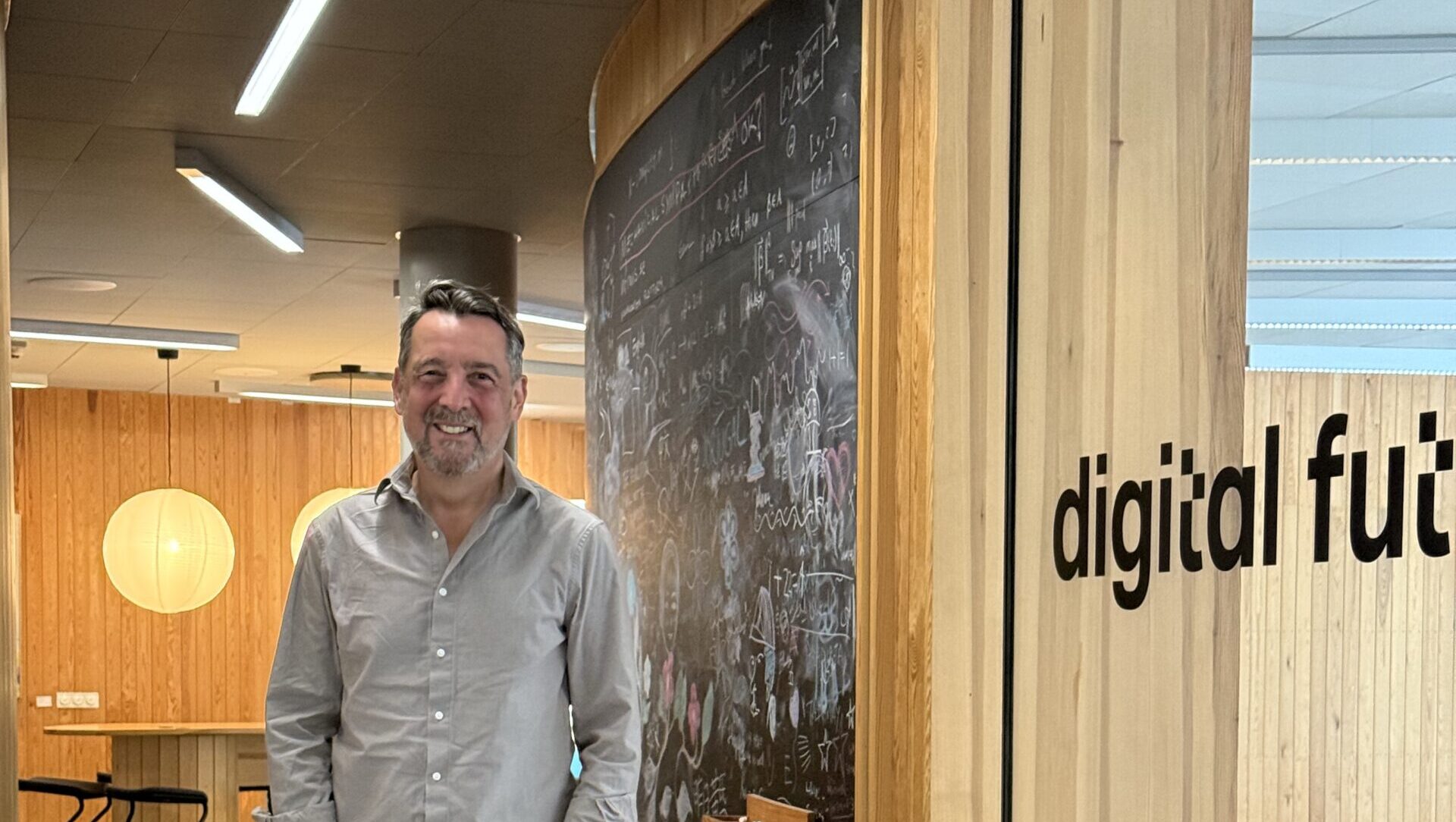
As his time as Scholar-in-Residence at Digital Futures comes to an end, Professor Paul Walton looks back on a period of research exchange, new connections and discussions about how science can become more interdisciplinary and inclusive.
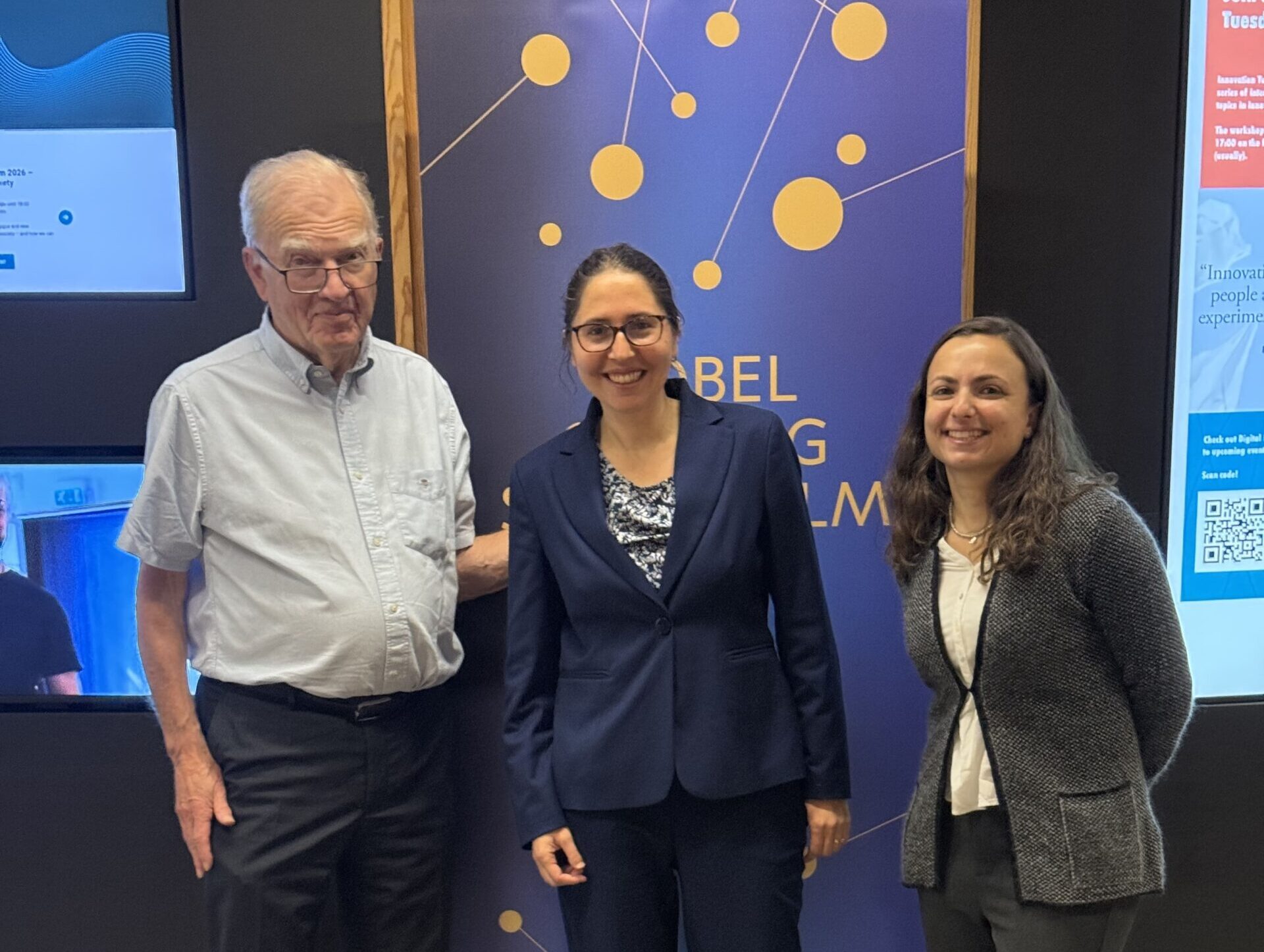
Walton, Professor of Chemistry at the University of York, has spent the summer at KTH as part of the Digital Futures Scholar-in-Residence programme. His research in bioinorganic chemistry has contributed to our understanding of copper oxidases, including the discovery of the histidine brace. Alongside his scientific work, he has a longstanding commitment to equality and inclusion in academia, that has made him an internationally recognised advocate for gender equality in science.
During his residency, hosted by Professor Sandra Pauletto, Walton has pursued two closely connected strands of work. One has focused on rapid quantum chemistry calculations for transition-metal complexes and exploring how AI and machine learning could help develop faster approaches to quantum chemistry. The other has involved sharing his experience of promoting gender equality and inclusive practices in academia with the Digital Futures community.
Connecting chemistry and AI
One of the central ideas behind Walton’s residency has been to bring together fields that do not traditionally work closely together. Chemistry generates complex systems and data, while AI and digital technologies provide new ways of analysing, modelling and learning from that complexity.
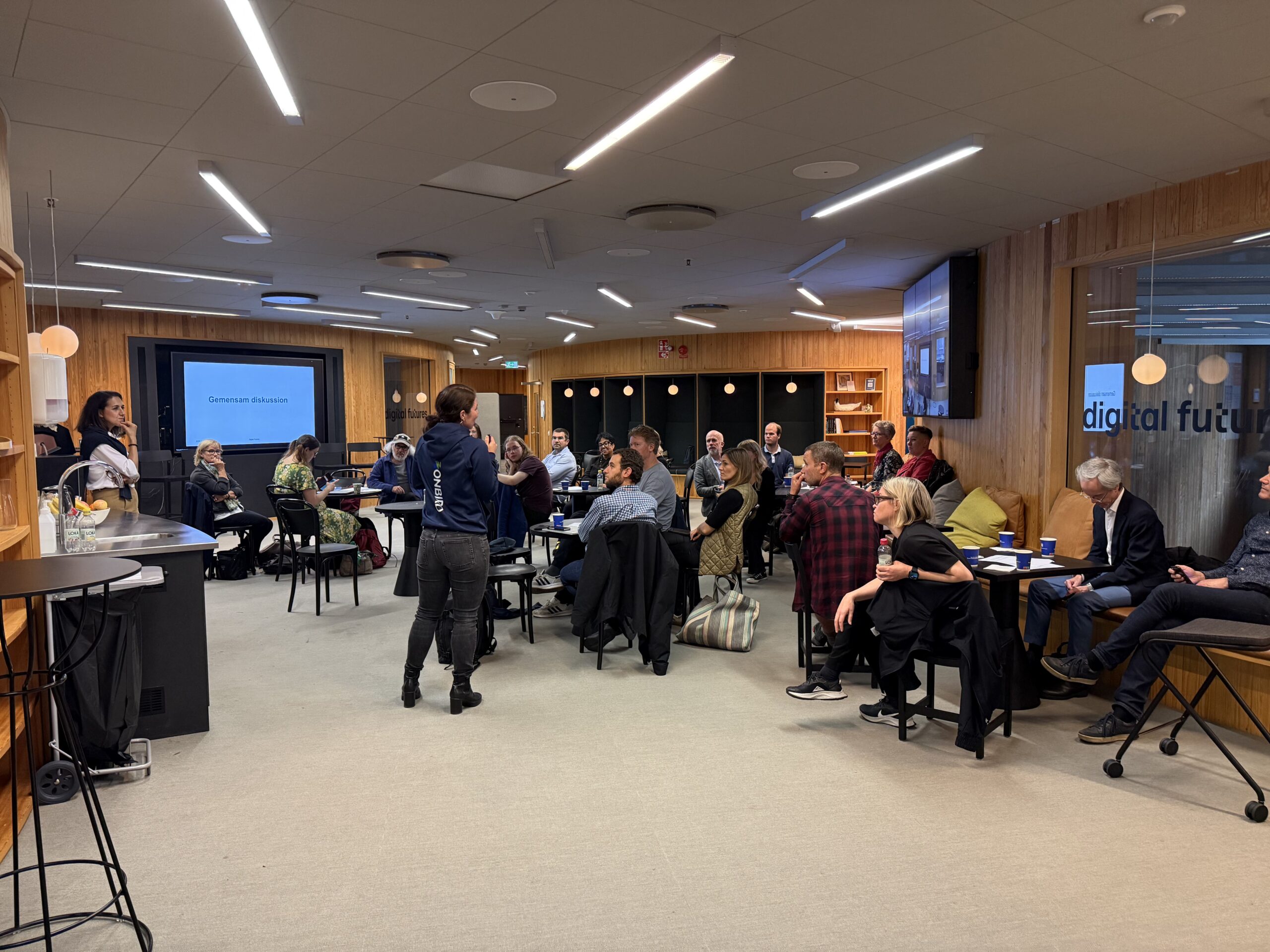
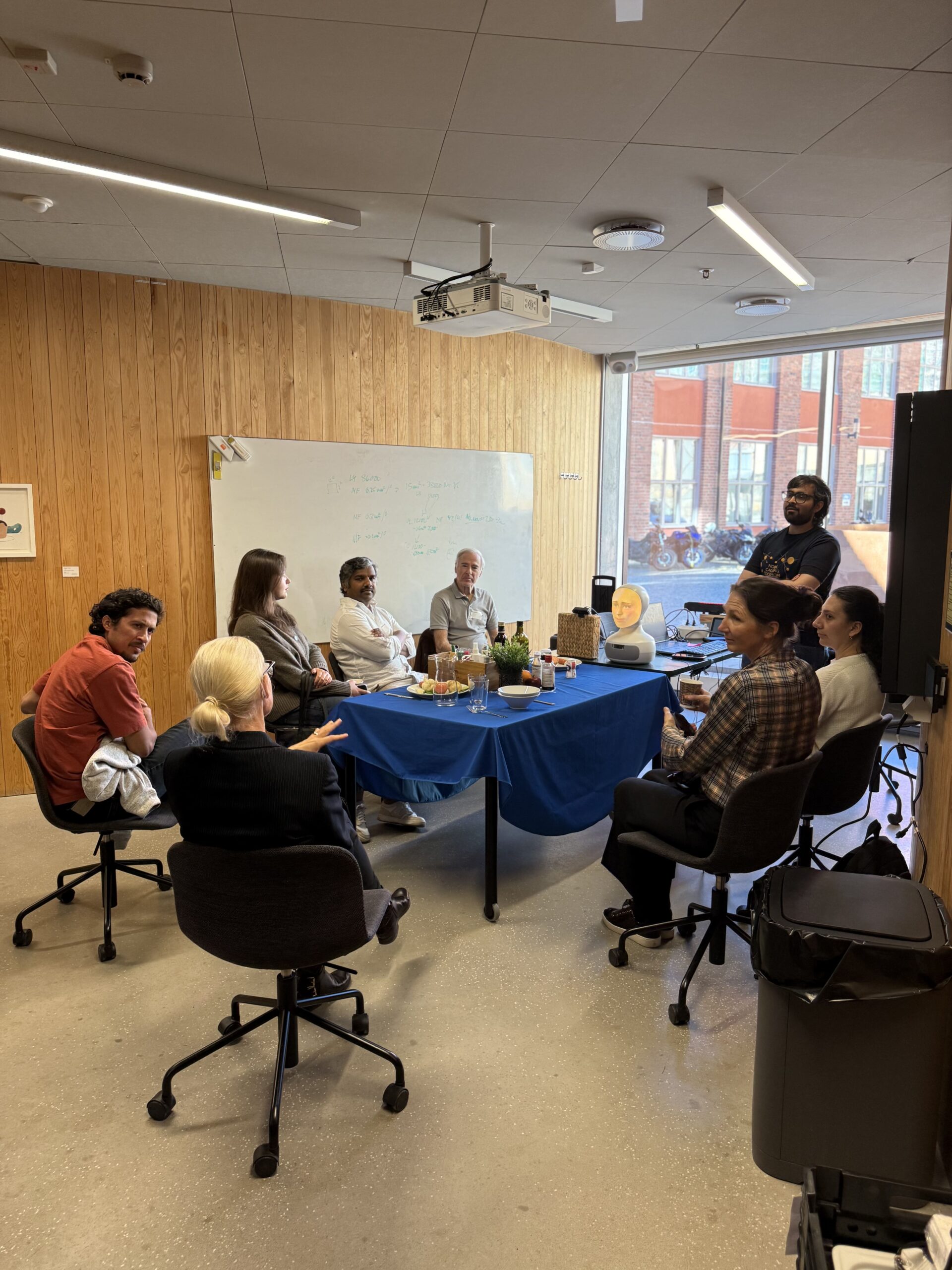
At Digital Futures, Walton has engaged with researchers working across data science, engineering and digital technologies, exploring how these perspectives can complement his work in quantum chemistry.
“Bridging chemistry with digital technologies requires stepping out of traditional silos, and Digital Futures provided the ideal home for that,” says Walton. “Immersing myself in KTH’s data science and engineering community has sparked fresh interdisciplinary ideas, giving me new computational perspectives on modelling molecular systems, especially their photocatalytic properties.”
The exchange reflects the purpose of the Scholar-in-Residence programme, which enables researchers from outside Sweden to spend time within the Digital Futures environment and contribute to research, teaching, events and mentoring.
A culture of collaboration
For Walton, however, the residency has been about more than research. Spending several months within the Swedish academic environment has also given him an opportunity to experience a different research culture at close hand.
Looking back on your time as a Scholar-in-Residence at Digital Futures, what has surprised or inspired you most about working in Sweden and at KTH/Digital Futures?
“What continues to inspire me most is how deeply embedded open, team-based collaboration is in the scientific culture here. At Digital Futures and KTH, there is a refreshing absence of rigid hierarchy; ideas are welcomed and tested on their merit regardless of career stage.
“I’ve also been profoundly inspired by Sweden’s genuine commitment to gender equality in STEM. It isn’t treated as a policy checklist, but as a lived practice that directly enriches research quality. Embracing that signature lagom ethos – finding the sweet spot between ambitious scientific inquiry and balanced, sustainable working practices – creates a uniquely fertile ground for innovation.”

Sharing experience on equality in science
Walton has held several leadership roles related to equality and inclusion, including Chair of the Royal Society of Chemistry’s Diversity Committee and Head of the Department of Chemistry at the University of York. He has also been recognised for his work on equality in science.
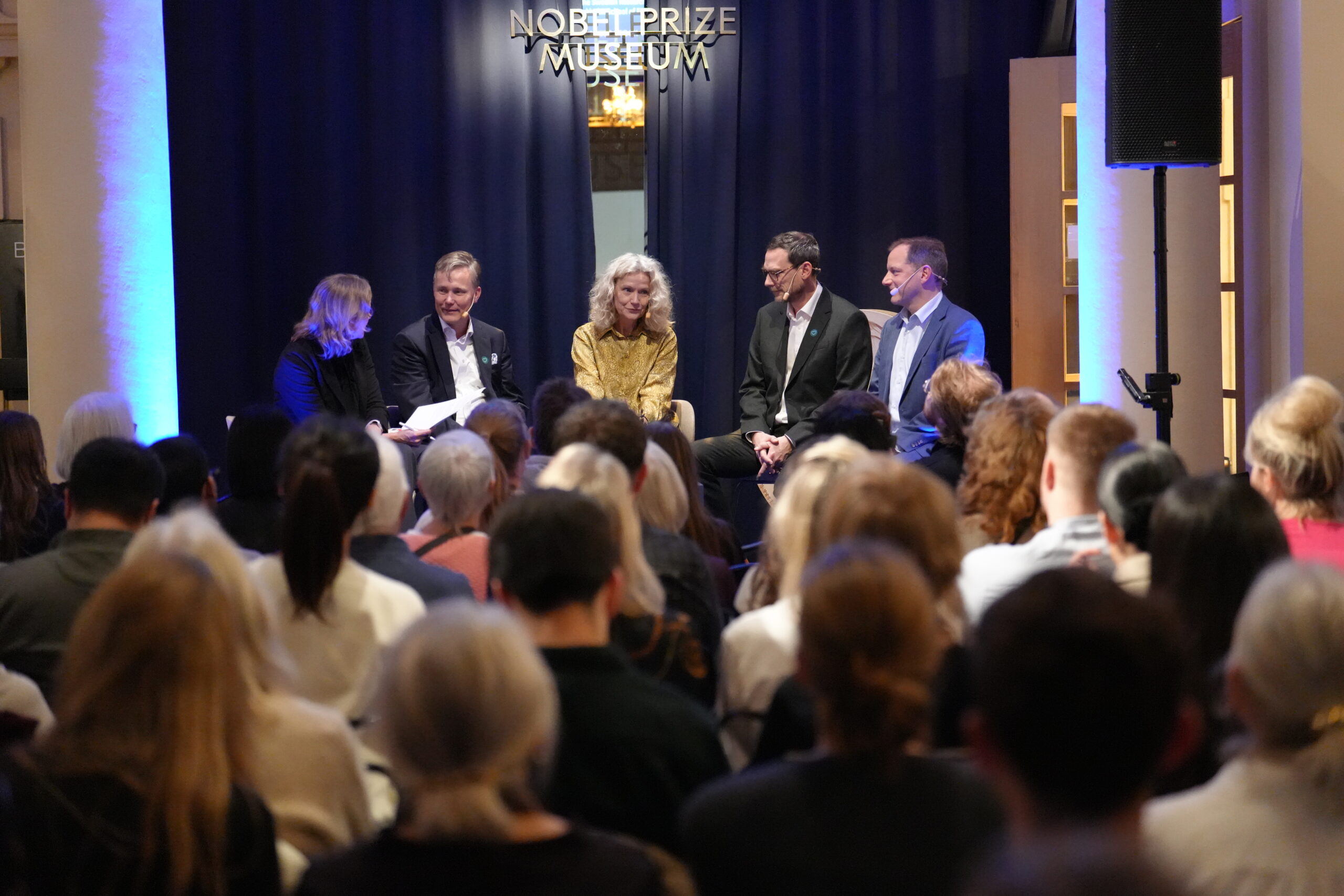
During his time at Digital Futures, he has contributed to discussions about how research organisations can create more inclusive environments and support a broader range of people to pursue careers in science and technology. As an example Walton gave the public seminar “Gender equality in sciences: why is it taking so long?”, addressing the persistent challenges facing women and underrepresented groups in science and discussing the importance of combining structural reforms with everyday cultural change.
For Digital Futures, his visit has provided an opportunity to exchange experiences and reflect on how research environments can support both scientific excellence and a more inclusive research culture.
A long-standing connection with Sweden
Walton’s relationship with Sweden extends well beyond his current residency. He was previously a Jubilee Professor at Chalmers University of Technology and has had longstanding academic collaborations in Sweden. In 2026, his connection to the country was further strengthened when he was elected a Foreign Member of the Royal Swedish Academy of Sciences in its Class for Chemistry.
You have a long-standing connection with Sweden, including your recent election to the Royal Swedish Academy of Sciences. How has this stay strengthened your connection to Swedish research, and what will you take with you when you return to York?
“My scientific roots in Sweden run deep, built across many years of close academic collaboration, including my previous time as a Jubilee Professor at Chalmers University of Technology. More recently, my election as a Foreign Member of the Royal Swedish Academy of Sciences in its Class for Chemistry was a great honour, and this residency has further grounded that connection.
“Living and working directly within the Swedish research ecosystem has transformed long-standing collegial relationships into active, day-to-day research partnerships. As I return to York, I’m carrying back more than just joint research projects; I’m taking a refreshed blueprint for how flat, inclusive team structures and a firm commitment to equity can elevate the entire scientific enterprise.
“I look forward to leveraging these strengthened ties to build lasting bridgeheads between York, KTH, Chalmers and the broader Swedish research community. I will also take back with me the warmth and acceptance shown to me by the staff at Digital Futures – that has been very special.”
As his Scholar-in-Residence period comes to a close, Walton leaves Digital Futures with new research connections and an expanded network across disciplines. His stay illustrates the value of creating space for researchers to cross traditional academic boundaries – connecting chemistry with AI, research with institutional development, and scientific collaboration with a commitment to a more inclusive research environment.
//
During his previous Digital Futures residency, Walton gave the public seminar “Gender equality in sciences: why is it taking so long?”, addressing the persistent challenges facing women and underrepresented groups in science and discussing the importance of combining structural reforms with everyday cultural change.