In a society where AI services are increasingly being introduced across welfare sectors—and where citizens often have limited influence over how AI is developed and deployed—it is crucial to discuss how civil society can make its voice heard and help uphold democratic principles in workplaces, non-profit organisations and the exercise of public authority.
Governments are in general enthusiastic about the potential of AI, while many citizens are concerned about its consequences. One thing is certain: understanding AI and its societal implications cannot be left to data scientists, AI developers and politicians alone. More people need to familiarise themselves with the choices and consequences that come with living in an AI-shaped society.
So, how can we ensure that citizens have a voice in the development and use of artificial intelligence in society?
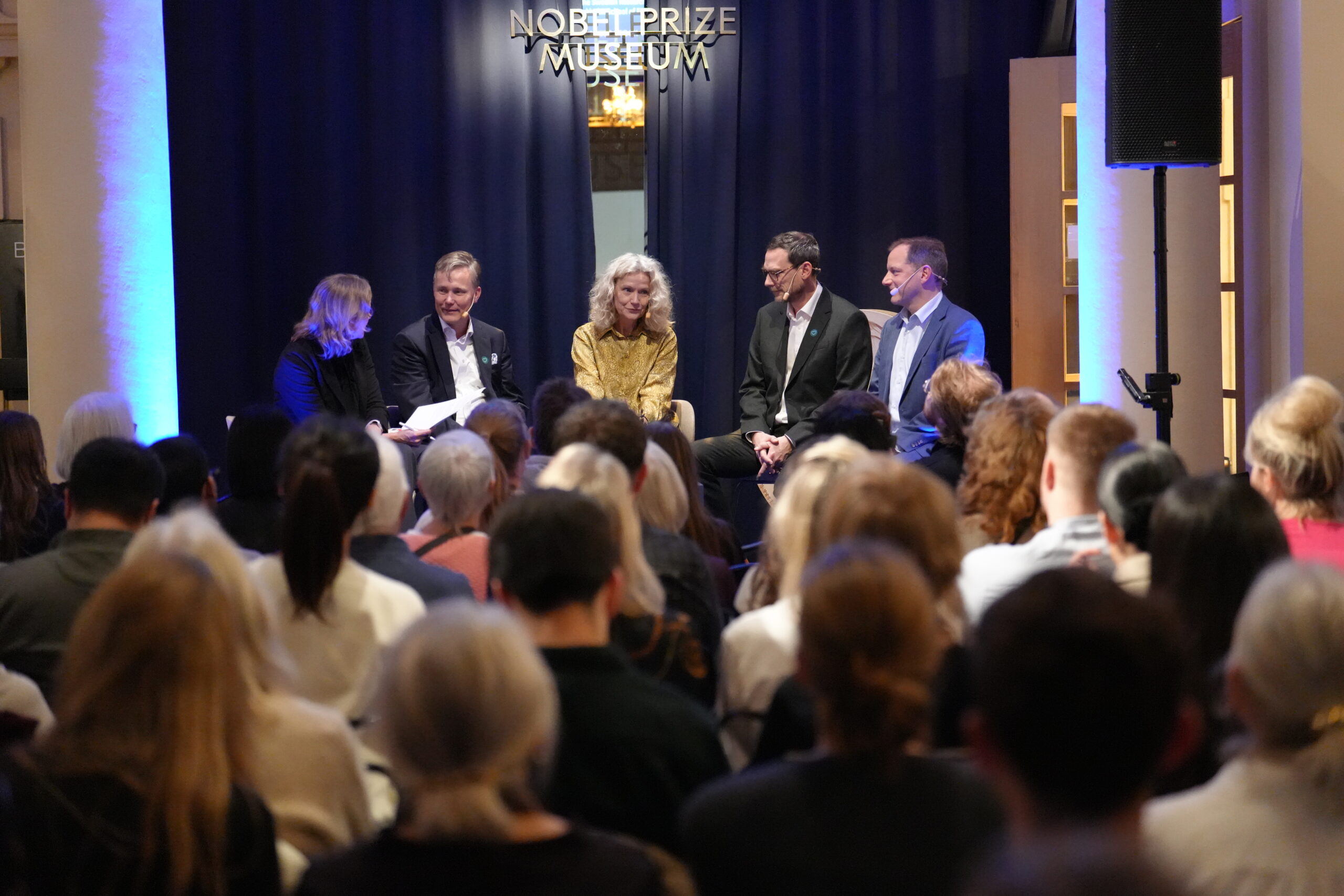
This question was at the heart of the Digital Futures event “How do we promote democratic participation in the AI society?”, held at the Digital Futures hub at KTH on 30 September.
The event brought together three different perspectives on AI and society. Mona Blåsjö, Professor Emerita at Stockholm University, explored knowledge, competence and critical perspectives in an AI society. Charlotte Ovesson, behavioural scientist, statistician and AI expert involved in EU AI standardisation and the AI Act Advisory Forum, addressed AI literacy and what people need to know to participate meaningfully in an AI-driven society. Fredrik Marcus, digital strategist, discussed the possible consequences of AI for creativity in working life, education and society.
The presentations were followed by a panel discussion moderated by Teresa Cerratto Pargman, Professor at Stockholm University and Associate Director Outreach at Digital Futures. The conversation continued in a World Café workshop, where participants reflected on AI’s role in society and how citizens and communities can influence its development.
During the workshop the speakers and the moderator emphasized the following insights:
“To ensure a democratic society in the AI era, we need to find ways to create a dialogue between users/citizens and developers/tech companies.”
— Mona Blåsjö, Professor Emerita, Stockholm University
“AI literacy isn’t merely the ability to use AI; rather, it is about navigating a society shaped by AI, understanding its impacts, and taking a stance on AI-related policy issues. It would be unfortunate if we concluded that AI issues should be left to tech companies; we need a diverse range of people and stakeholders to be involved.”
— Charlotte Ovesson, AI expert and Vice Chair, Institutet för demokratiutveckling
“AI can change not only what we create, but the conditions under which creativity happens. We need to think carefully about what we gain, what we risk losing and what kind of society we want to create.”
— Fredrik Marcus, digital strategist
“For citizens to shape society in an age of AI, knowing how these systems work is not enough. We must also be able to question how AI is transforming our world—and how it is shaping us in return. By understanding its impact on everyday life, we can challenge the futures presented as inevitable and imagine—and build—alternatives.”
— Teresa Cerratto Pargman, Professor at Stockholm University and Associate Director Outreach at Digital Futures.
Watch the presentations
The presentations from the event (in Swedish) were recorded and are available to watch on the Digital Futures YouTube channel. The recordings offer an opportunity to revisit the speakers’ perspectives on AI literacy, critical knowledge, creativity and democratic participation—and to continue the conversation beyond the event.