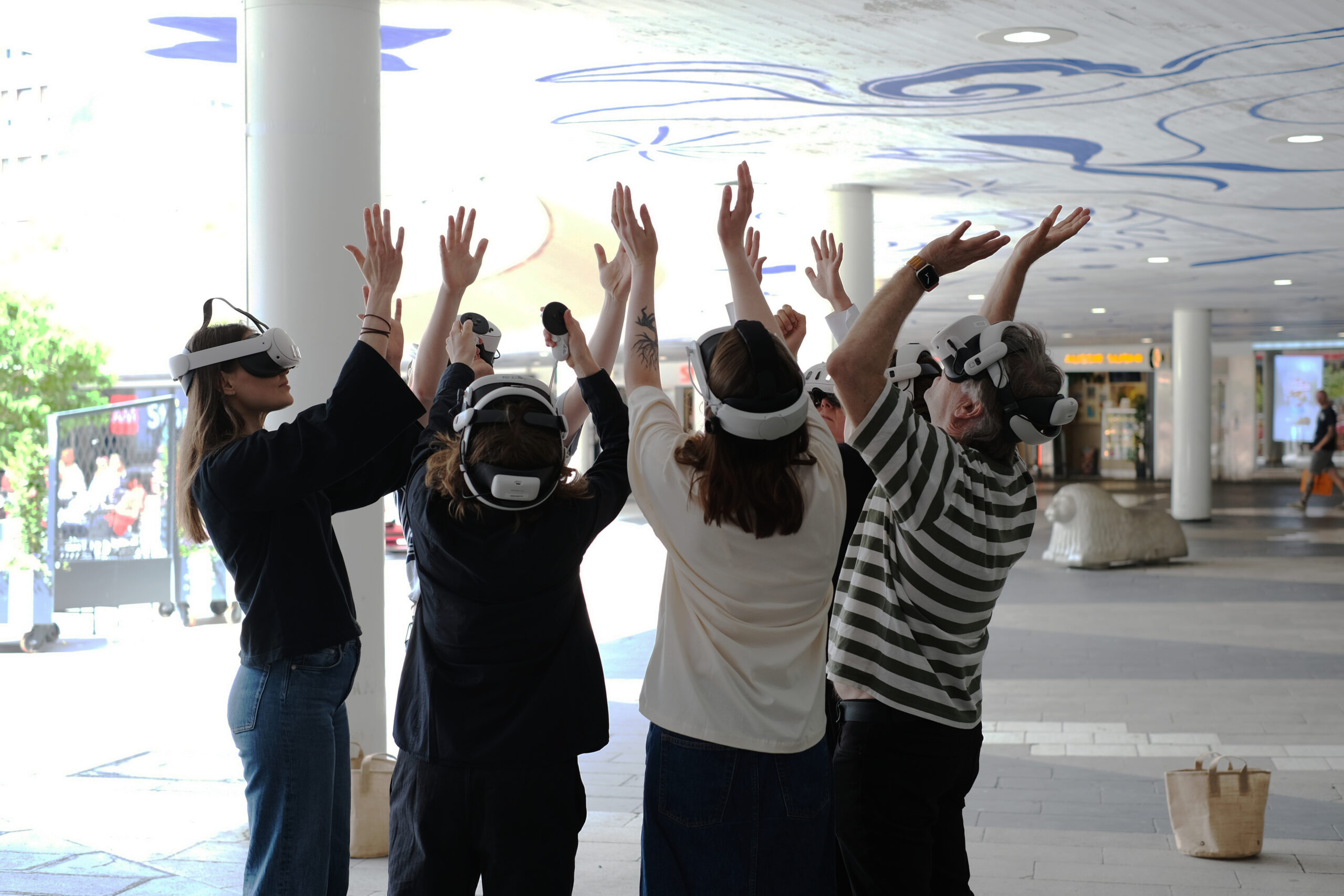
A world premiere at Sergels torg demonstrated how mixed reality can create new forms of shared cultural experiences. The Butterfly Effect performance marked the culmination of a two-year research project funded by Digital Futures and Ericsson Research.
On 4 June, Sergels torg in central Stockholm became the setting for an unusual cultural experience. In The Butterfly Effect, dancers and members of the public entered a shared virtual world using mixed reality (MR) headsets – while spectators followed the action on large screens.
The performance was the culmination of Mixed Reality Shared Engagement in Cultural Events (SECE), a collaboration between Stockholm University’s Department of Computer and Systems Sciences (DSV), Ericsson Research and Kulturhuset Stadsteatern. The project has explored how mixed reality and advanced wireless communication can create more interactive cultural experiences, blurring the boundaries between performers and audiences, and between the physical and virtual worlds.
From research to performance
Rather than presenting their findings solely through scientific publications, the researchers chose to demonstrate the technology through a live artistic production.
“We have worked with mixed reality to create experiences that combine real and virtual environments, objects and participants,” says Professor Uno Fors at DSV.
In the performance, a butterfly in distress set the story in motion. Participants wearing MR headsets were guided by dancers into a virtual environment where they had to work together to solve a problem and influence what happened next. For the research team, bringing several participants together in real time – and doing so in an outdoor public space – represented an important technological achievement.
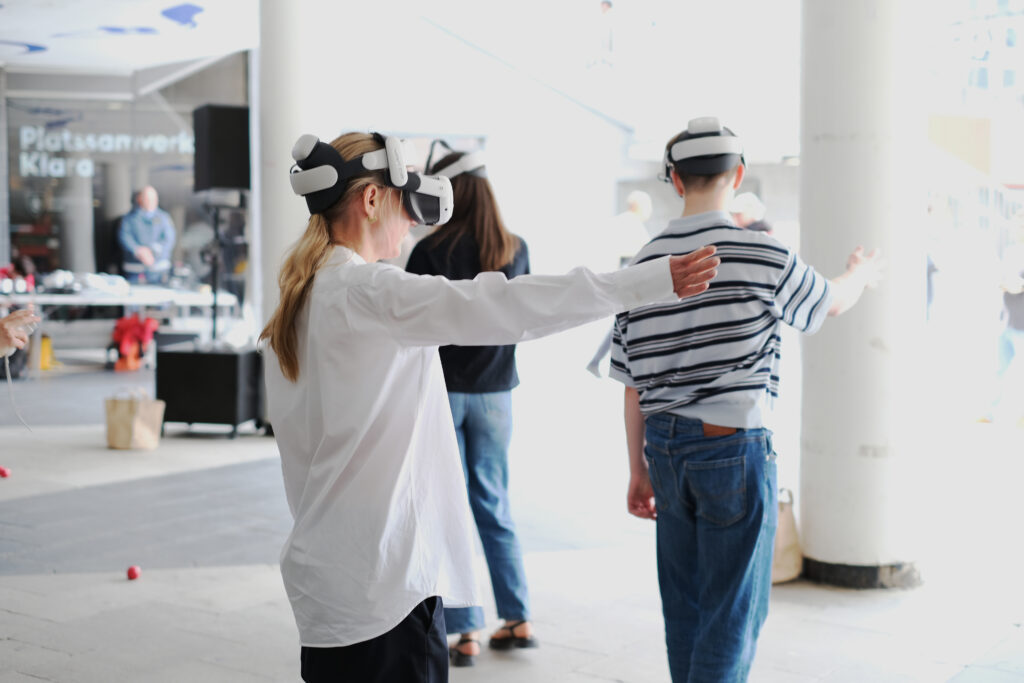
“It is unique that we can now do this in an outdoor environment. It is also unique that everything can happen in real time, with several people participating simultaneously,” says Fors.
The technology was first demonstrated in spring 2025 and has since been further developed and tested. The researchers see potential applications in the cultural and gaming industries, as well as in other settings where shared, interactive experiences can create new ways for people to engage with digital content. The project demonstrates the value of collaboration across research, industry and culture – and how research supported by Digital Futures can move from experimental technology to experiences that can be shared with the public.
Contact: Uno Fors, uno@dsv.su.se
Photo credit: Elin Sahlin, Stockholm University