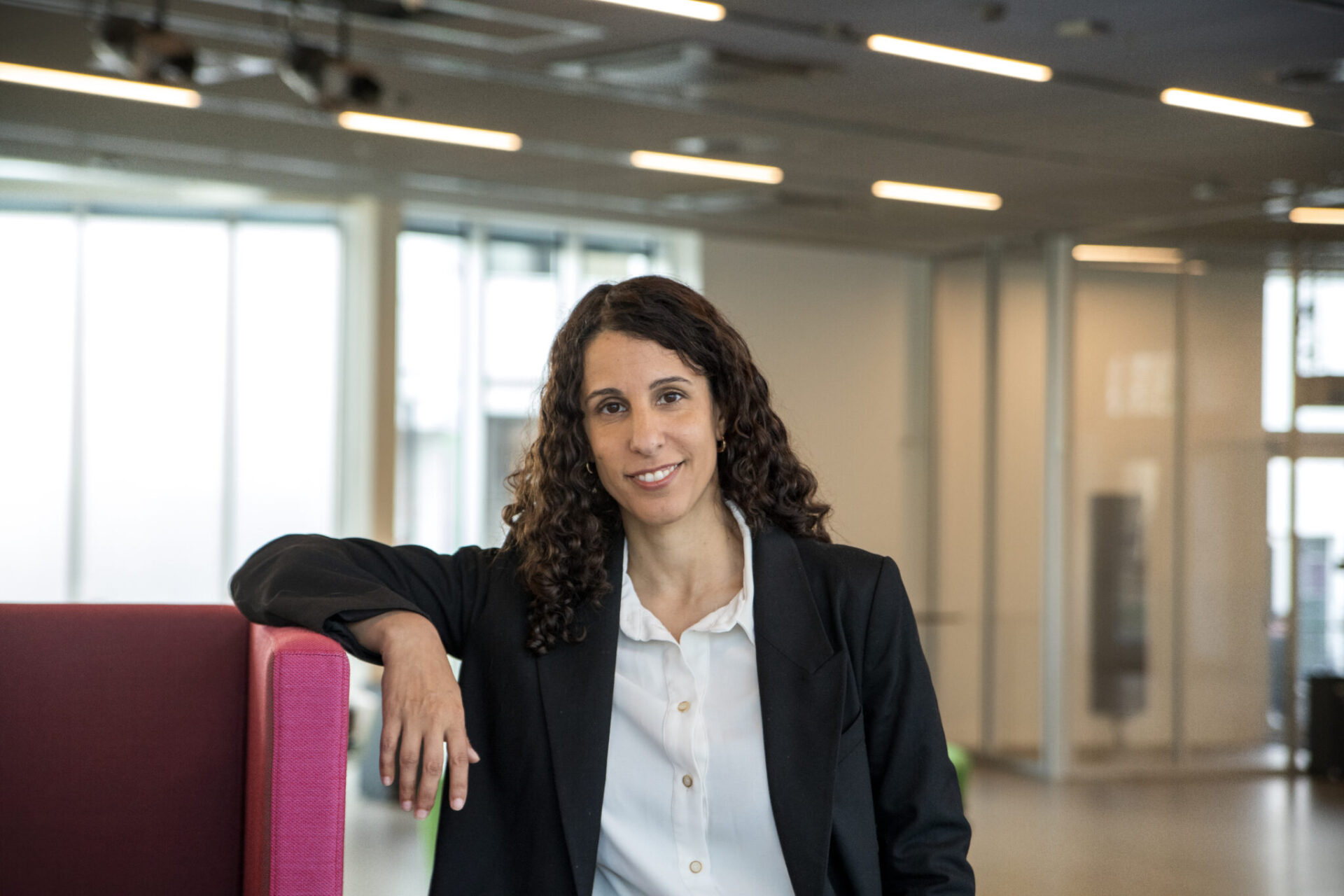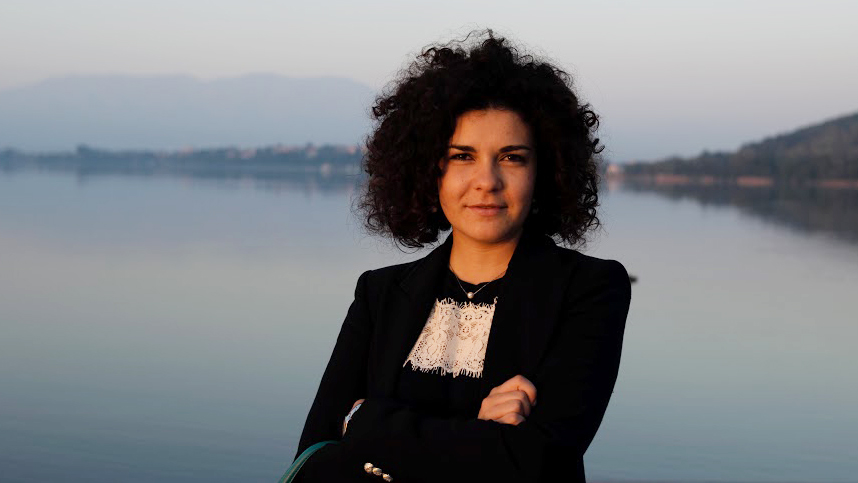
Francesca Larosa is a Digital Futures postdoctoral researcher at Engineering Mechanics, KTH. Francesca’s work revolves around the intersection of artificial intelligence and sustainability, and she recently secured a prestigious MSCA European Fellowship for her project, LIBRA – Leveraging artificial Intelligence to Balance tRade-offs in the digitAl economy. This fellowship, lasting for two years with a start date of May 1st, 2024, will be based at KTH with a secondment in Switzerland.
Francesca’s project is groundbreaking, aiming to compute the costs and benefits of AI investments in terms of environmental footprint and sustainability gains. Her interdisciplinary approach, bridging economics, AI, and sustainability sciences, promises innovative solutions to the challenges the digital economy faces.
Let’s get deeper into Francesca’s research and gain insights into her project’s objectives, methodologies, and potential impacts.
Hi Francesca, Can you elaborate on how your project LIBRA aims to leverage artificial intelligence to balance trade-offs in the digital economy, particularly regarding environmental footprint and sustainability gains? What specific methodologies or approaches do you plan to employ in your research?
– The efficiency and productivity gains AI will bring to our lives are frequently mentioned in policy and research. Instead, the impact of AI on sustainability (measured through environmental, social and governance metrics) remains unclear. LIBRA will focus on AI investments. It will use Large Language Models to identify sustainability gains and Deep Reinforcement Learning to assess how they can optimise and balance at the country and supranational levels, such as European ones.
As we know, AI still has an unmeasured but potentially significant environmental footprint. Within LIBRA, I aim to reveal both the carbon footprint – emissions – and material use (- natural resources – at the AI capability level. Rather than focusing on individual investments, I will try to estimate whether some capabilities – facial recognition, speech recognition, etc. – are more environmentally aggressive than others, so I suggest ad-hoc policies to develop a planet-friendly AI-enabled economy.
When it comes to bridging economics, AI, and sustainability sciences in your work – how do you envision this interdisciplinary approach contributing to addressing the challenges of sustainability within the digital economy?
– The AI market is predicted to be between 15 and 40 trillion USD by 2030 due to tremendous breakthroughs in generative AI models. The transformations that digital shifts will produce can drive our lives and societies towards more or less sustainable means of organising ourselves. The approach I describe in LIBRA is quantitative, replicable and holistic. These three characteristics all aim to support decisions. While theory-grounded, LIBRA is action-led and solution-oriented and does not push for a single angle but tries to embrace sustainability’s complexity and multi-faced nature.
As one of the few economists to secure funding for a Marie Curie fellowship in this field, what unique perspectives or insights do you bring to the project, and how do you see collaborating with Professor Ricardo Vinuesa and the Digital Futures faculty enhancing the impact of your research throughout the fellowship?
– Professor Vinuesa has been and is a terrific source of inspiration for pioneering methods and bringing them together in an interdisciplinary flavour. He has initiated a productive dialogue between the AI and sustainability community through some of his projects and works. I will be hosted at Engineering Mechanics while interacting with Digital Futures and its faculty. I see these knowledge exchanges as a two-way street. Methods developed within physics and the built environment are useful foundations of more complex human-environment interactions. On the other hand, social sciences and economics make societal impacts more visible by focusing on the “important” questions: those capable of sustainably advancing society and enabling inclusive progress.