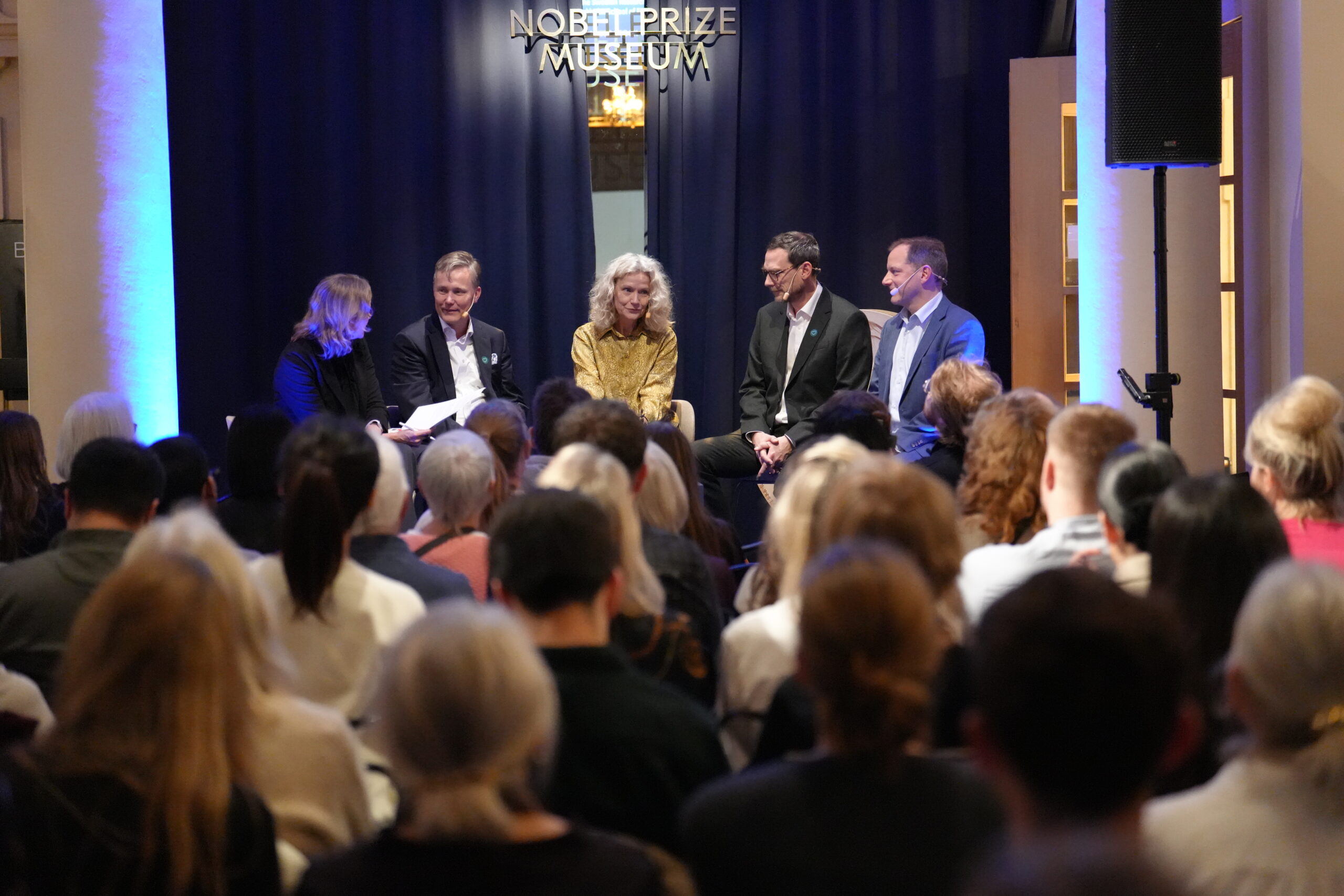
Digital Futures will be one of the world’s foremost research centres of its kind. The initiative is supported annually with SEK 115 million from the state budget. It is a collaboration between the KTH Royal Institute of Technology, Stockholm University (SU), and RISE Research Institutes of Sweden (RISE). On Thursday, October 1, the operations at KTH Campus were inaugurated.
A rich program featured speeches from, among others, the Minister for Higher Education and Research Matilda Ernkrans, County Mayor Region Stockholm Iréne Svenonius and Mayor City of Stockholm Anna König Jerlmyr, followed by demonstrations of various projects that are part of or have a direct connection to Digital Futures. Paulina Modlitba, Entrepreneur & KTH Alumni of the Year 2018, moderated.
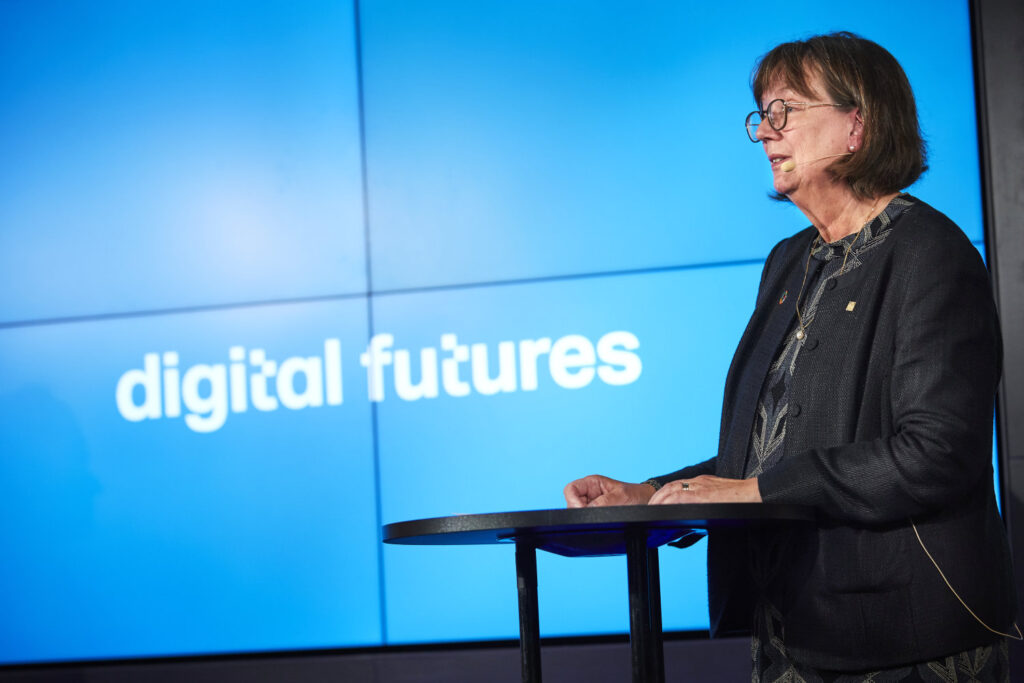
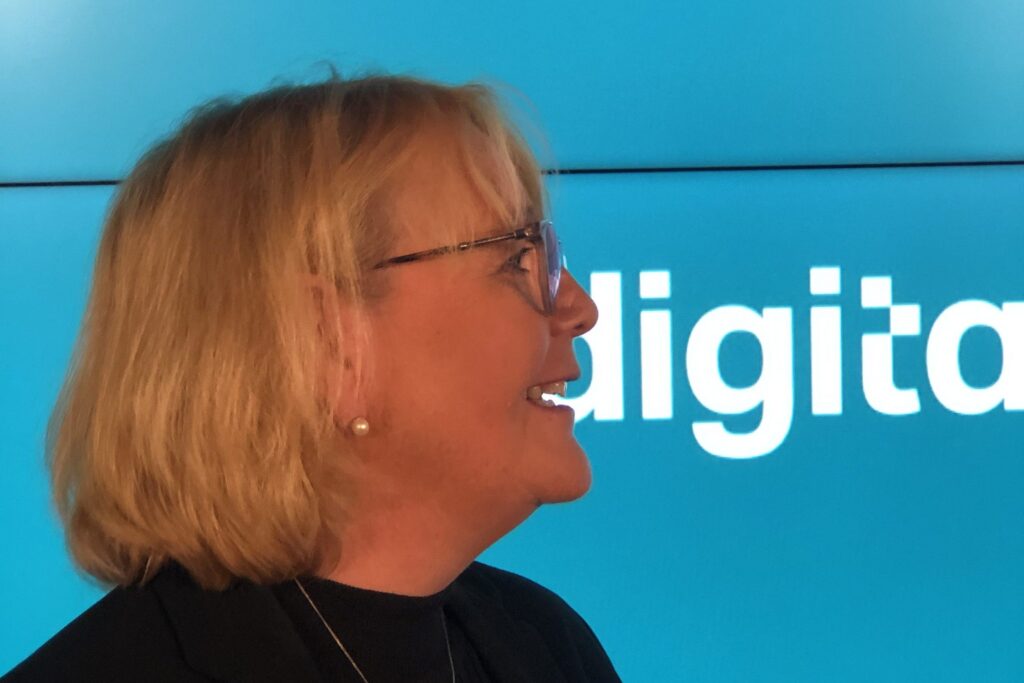
The selected group that was present or participated in the inauguration online was welcomed by Sigbritt Karlsson (picture to the right), President KTH, who spoke about the initiative based on one of the government’s strategic research areas (SRA). Karlsson also linked to how digitalisation can pave the way for climate goals in Agenda 2030 and how digitalisation has come into focus in the last six months during the pandemic.
Click here to watch the presentation by Sigbritt Karlsson
“Digital Futures opens up all areas of digitalisation. Cooperation is a key factor. It’s not just about technical solutions, we need more perspectives and that’s what Digital Futures will bring.” – Sigbritt Karlsson, President KTH
Matilda Ernkrans talked about how Digital Futures should strengthen Sweden’s competitiveness globally. The combination of open and applied research should strengthen our resistance to future crises, concerning the pandemic we have seen in 2020.
Click here to watch the presentation by Matilda Ernkrans
“It is easy to see what needs we have today, but difficult to predict future needs. That is why we need both applied research and basic research.”
– Matilda Ernkrans, Minister for Higher Education and Research
Anna König Jerlmyr, Mayor City of Stockholm, said that she sees AI, electrification and 5G as tools for making better decisions. For example, she mentioned the iWater-project, which can monitor the water quality in Stockholm, or sensors in beds in nursing homes that mean that the residents do not have to be disturbed by staff in the middle of the night.
Click here to watch the presentation by Anna König Jerlmyr.
Iréne Svenonius, County Mayor Region Stockholm, shared region Stockholm’s work with digitalized health care during the pandemic. The digital transformation’s focus is that it should make life better for people and reach citizens. Svenonius took the research project Advanced Adaptive Intelligent Systems as an example.
Click here to watch the presentation by Iréne Svenonius.
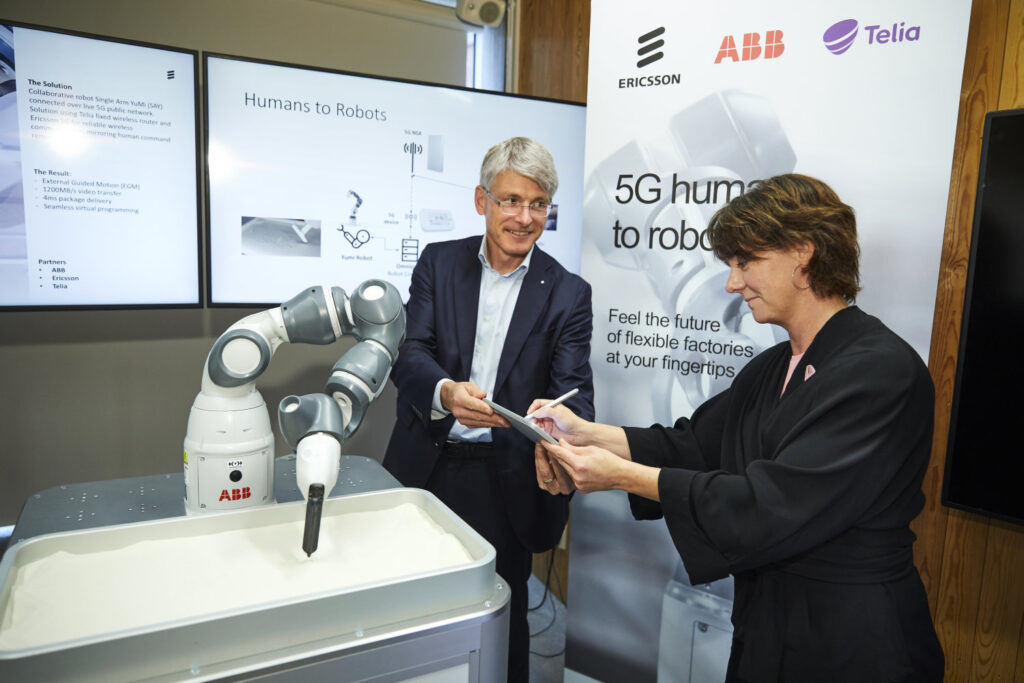
During the breaks, the Digital Futures Family offered theatre. The play showed a family in 2030, where the different family members’ life situation in different ways relates to issues and challenges linked to a digital society.
Erik Ekudden, Ericsson’s Chief Technology Officer (CTO), emphasized the role of research in developing digital technology in telecommunications, infrastructure, AI, smart materials, sensor technology and robotics.
Click here to watch the presentation by Erik Ekudden.
“Digital Futures is an environment for scientific excellence. And I think the future looks bright… digital technology will lead to breakthroughs for humanity.” – Erik Ekudden, CTO Ericsson.
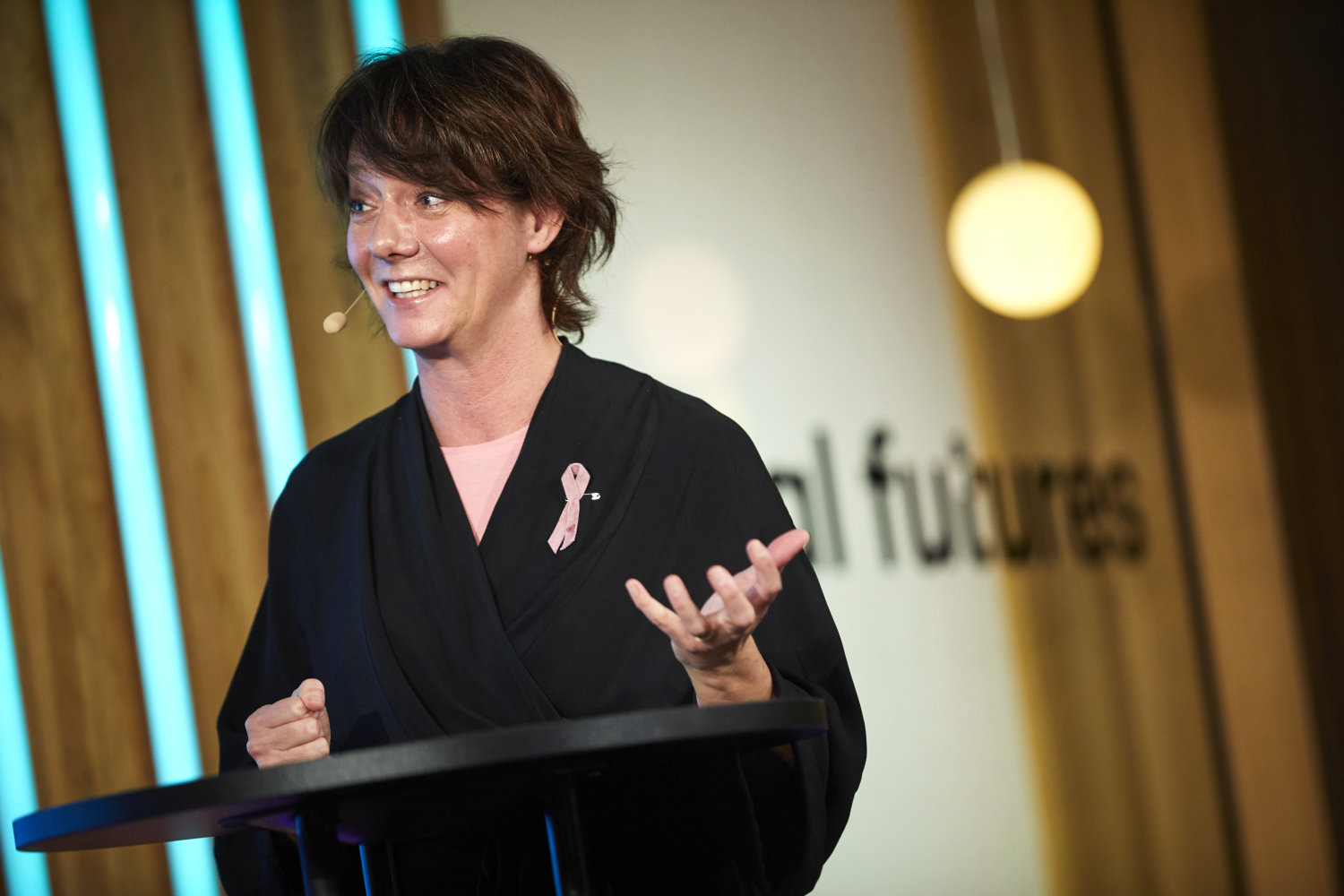
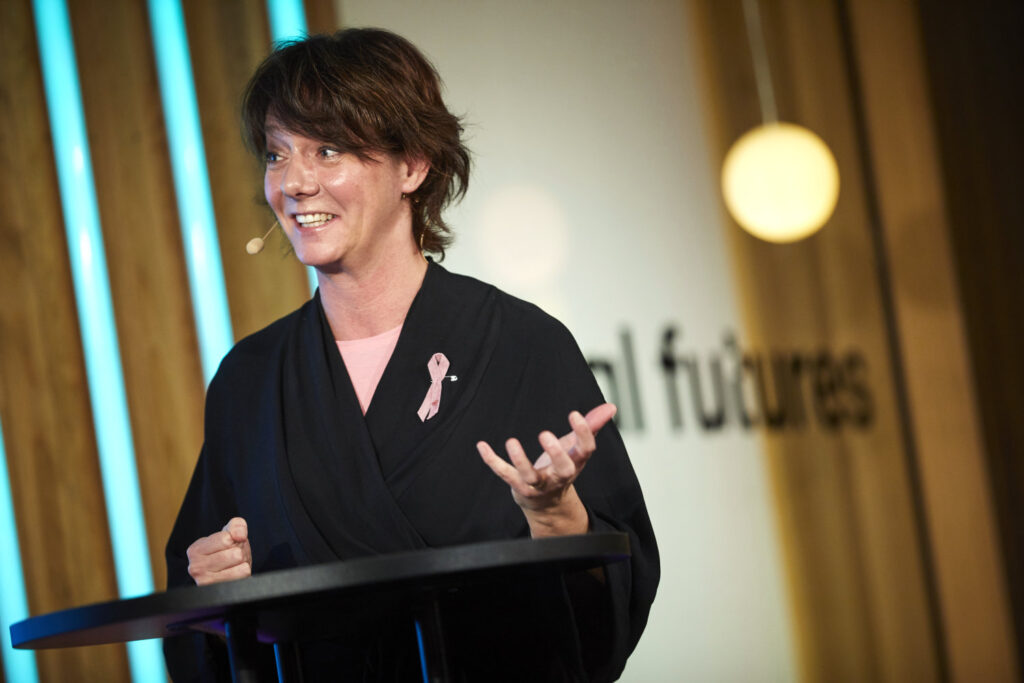
Sara Mazur (picture below), Director Knut & Alice Wallenberg Foundation and Chairman of the Board of WASP, spoke about how WASP started six years ago and how it has much in common with Digital Futures when it comes to collaboration between industry, the public sector and academia.
Click here to watch the presentation by Sara Mazur.
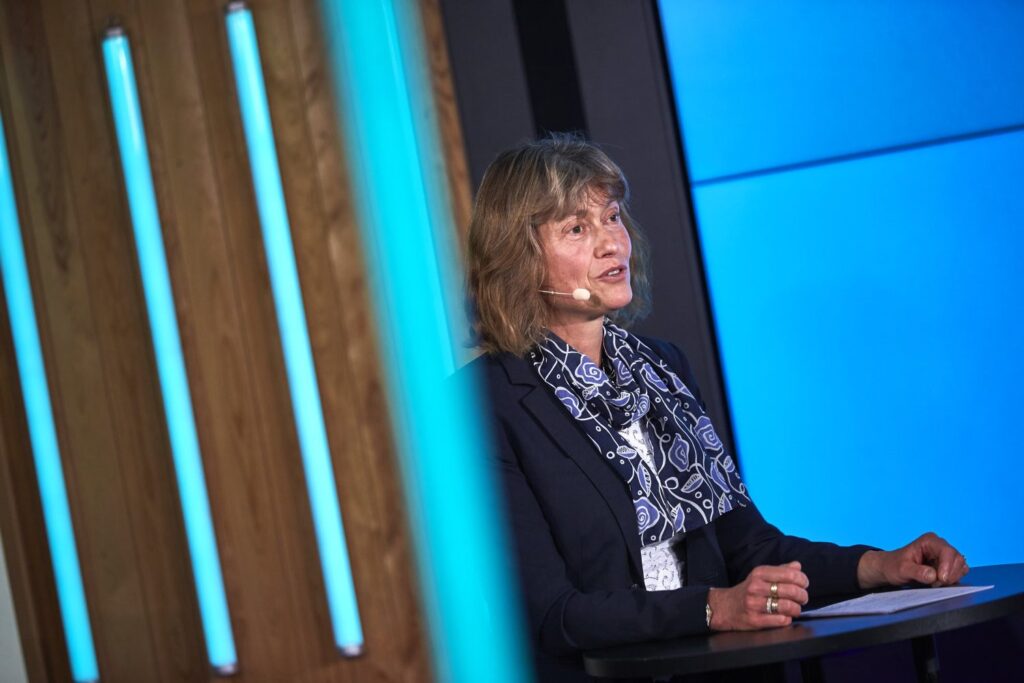
“What we are doing here today, the opening of Digital Futures, is something that will have a huge impact on the future for all of us. I am pleased to be here today, and I look forward to many years of a fruitful collaboration between WASP and Digital Futures.” – Sara Mazur, Director of the Knut & Alice Wallenberg Foundation, Chair WASP.
S Shankar Sastry, Prof UC Berkeley, Director Digital Transformation Institute and Honorary Doctor at KTH, spoke about the great financial gains that can be achieved with, for example, massive data collection, machine learning and AI.
Marina Petrova, Vice Director Digital Futures, emphasised one of the projects in Digital Futures – Earth Observation Big Data and Deep Learning for Change Detection and Environmental Impact Assessment – where with advanced analysis of radar images, for example, you can follow the development of forest fires in real-time, to be able to put resources in the right place at the right time.
Karl Henrik Johansson, Director Digital Futures, underlined that digitalisation can create a more resource-efficient and sustainable society while presenting some of the greatest scientific and technological challenges of our time.
Click here to watch the presentation by Marina Petrova and Karl Henrik Johansson.
“There is still a lot to do when it comes to AI, cloud solutions and integrity related to self-driving vehicles, the manufacturing industry, healthcare and community service in general. We, therefore, gather the main competencies within different guilds to tackle our greatest societal challenges,” concluded Karl Henrik Johansson.