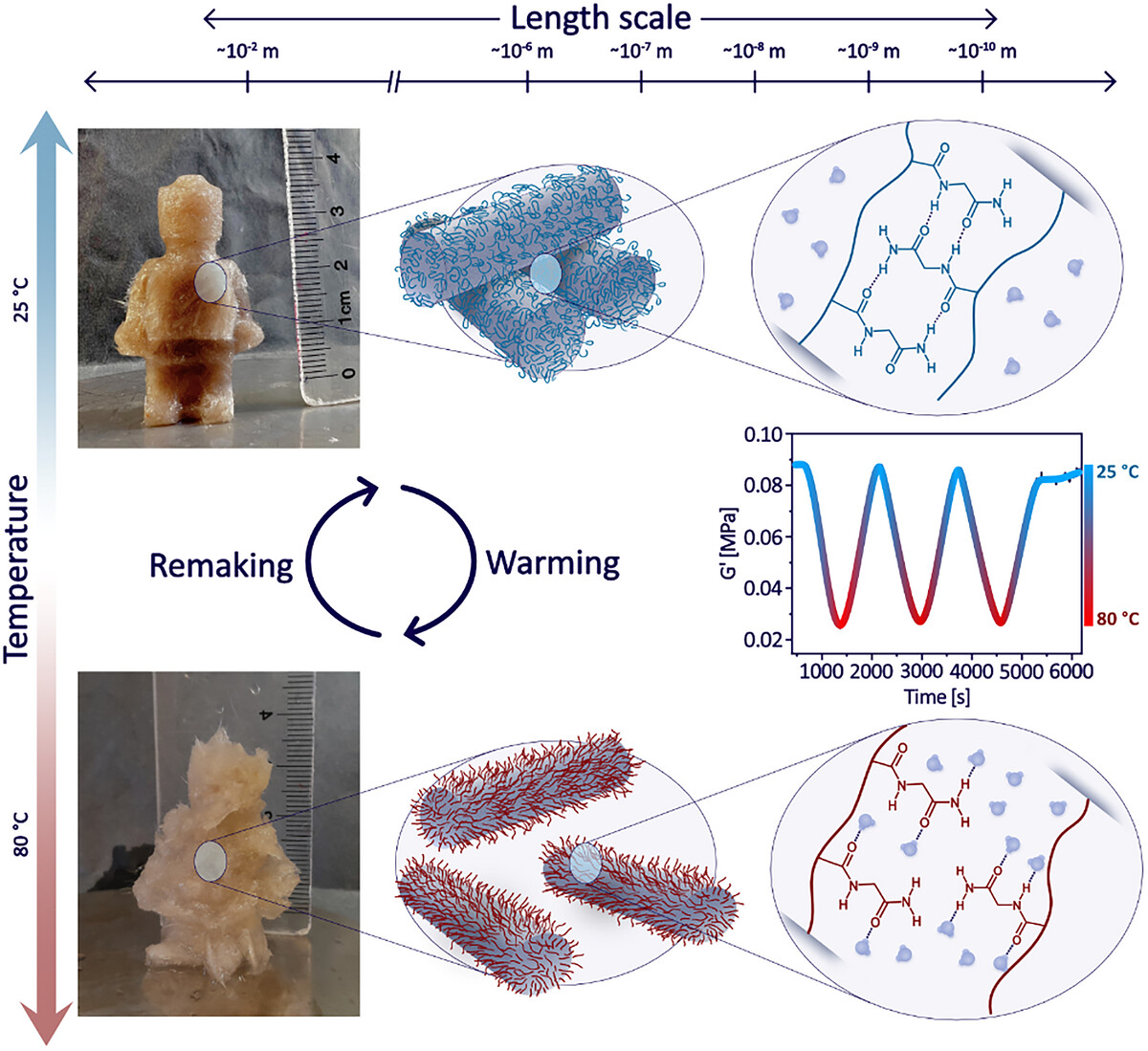
Researchers from KTH have developed a new approach to making materials that can be reshaped and reused many times at low temperatures. The work, published in Advanced Functional Materials, offers a promising new route towards more circular manufacturing.
The research was carried out as part of the completed Robotic Matter project, funded by Digital Futures. The project explored new approaches to materials and manufacturing, with the aim of enabling more sustainable and flexible ways of producing objects.
“The new method uses a very thin temperature-responsive polymer coating to bind microparticles together, without the need for a conventional material matrix. We thus created recyclable composites starting from waste collected directly from our own workshop – including aluminum dust from CNC machining, wood dust from sawing, and crushed glass fibres – all processed at temperatures below 80°C,” explains Wouter van der Wijngaart, Professor, Division of Micro and Nanosystems, KTH.


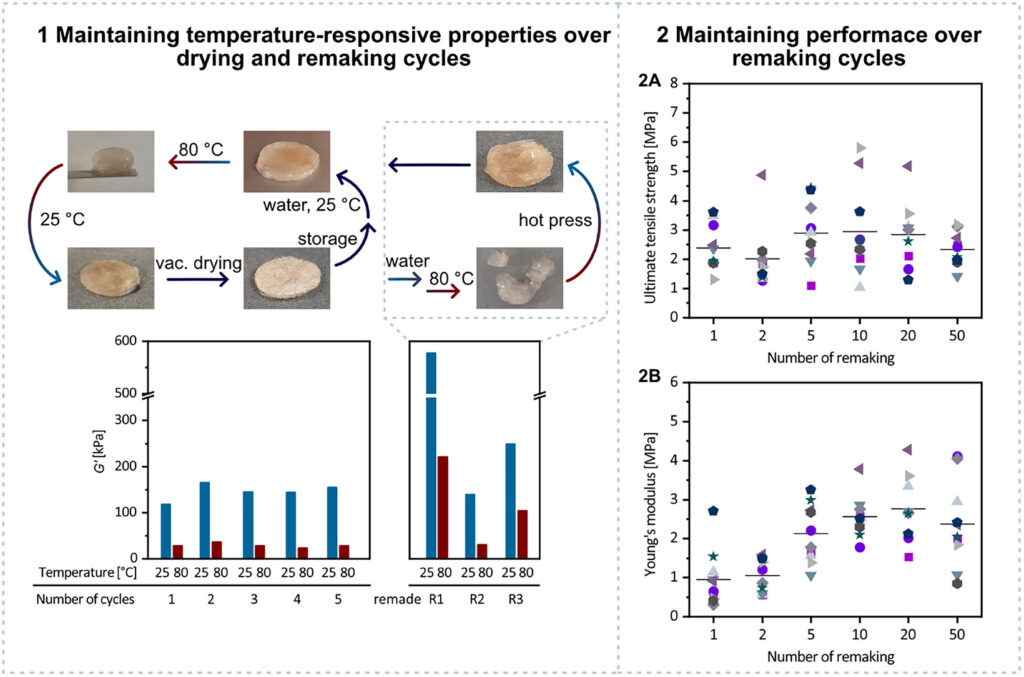

Importantly, the materials can be broken down and processed again using warm water. The researchers demonstrated that the materials maintained their performance through at least 50 complete regeneration cycles, without adding new, or “virgin”, material.
“We are exploring a new way of making materials that treats them as resources that can be repeatedly transformed, rather than products that are eventually discarded. Our results show that diverse materials can be combined, reshaped and reused many times at low temperatures, opening up new possibilities for more circular manufacturing,” sayss Wouter van der Wijngaart.
The approach could help address some of the challenges associated with today’s material production and recycling, including high energy use, environmental impact and the loss of material quality during recycling.
The findings are presented in the publication “Make-Use-Remake: Toward Indefinite Low-Temperature Material Loops”, authored by Nikola Křivánková, Wouter van der Wijngaart and Ulrica Edlund.
Publication: Make-Use-Remake: Toward Indefinite Low-Temperature Material Loops
First published: 7 August 2026
DOI: 10.1002/adfm.77589