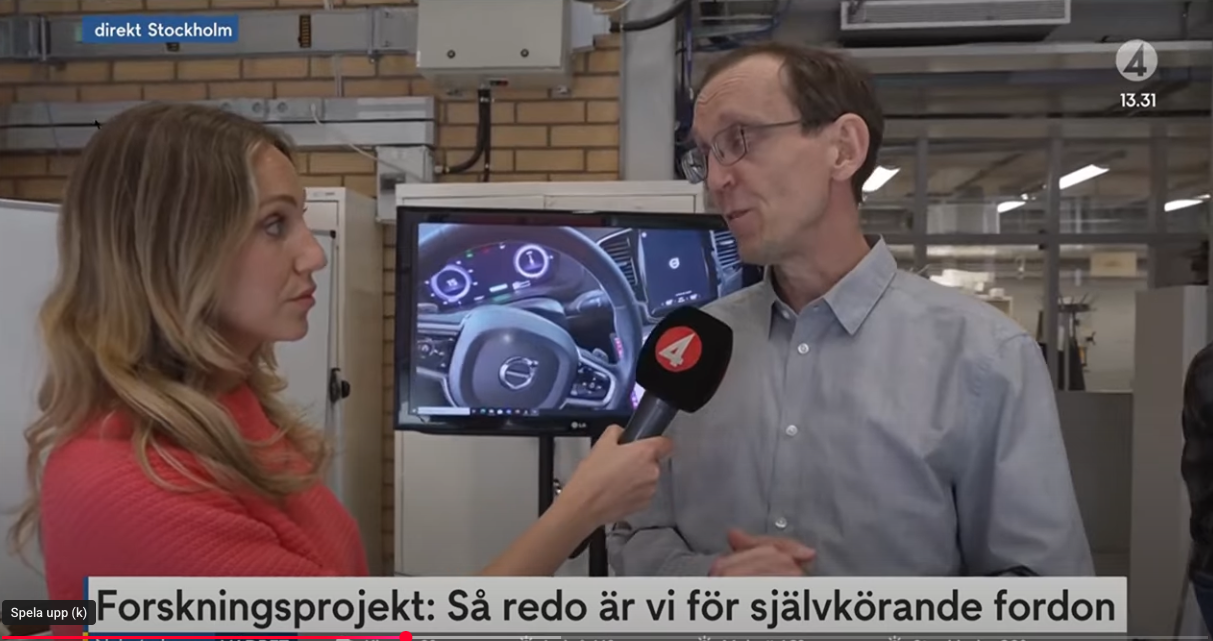
On 5 June 2025, the Connected Automated Vehicles trialling and Trustworthiness (CAVeaT) project at KTH was highlighted on Nyhetsdagen, a popular Swedish news program broadcast on TV4. Two dedicated segments showcased the operations of the AD-EYE testbed and explored the cutting-edge research driving safer and more trustworthy autonomous vehicle technologies.
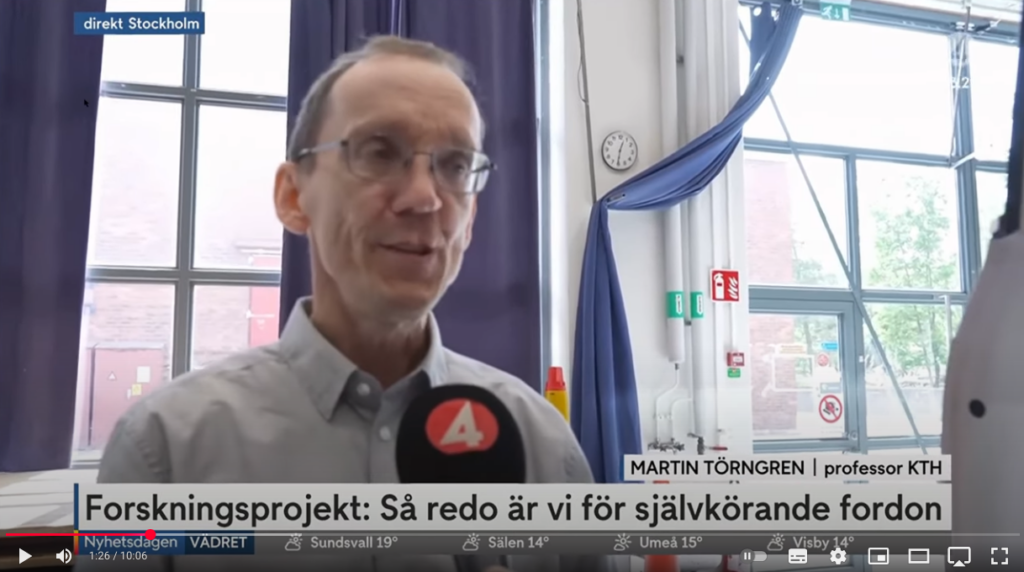
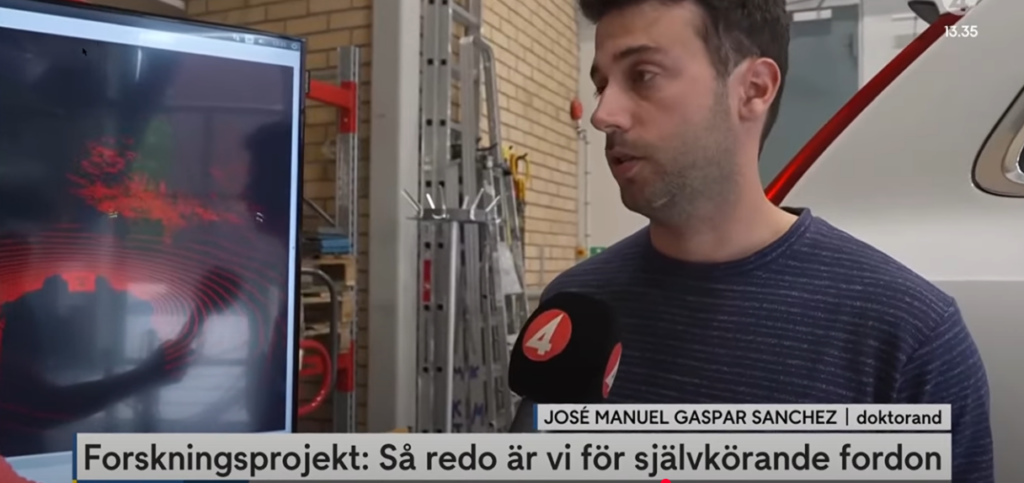
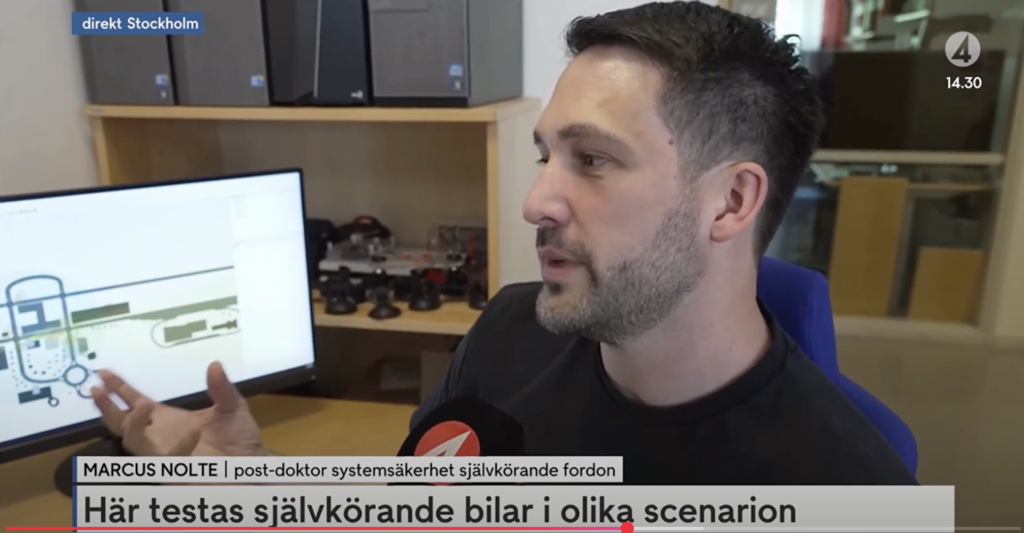
The broadcasts featured interviews with Professor Martin Törngren (PI, Mechatronics and Embedded Control Systems, ITM), José Manuel Gaspar Sanchez (PhD student, KTH), and Marcus Nolte (Postdoc, Technische Universität Braunschweig and Guest Researcher at KTH). The interviews were conducted in both Swedish and English, reflecting the international and collaborative nature of the project.
CAVeaT, funded by Digital Futures, is developing the software, systems, and safety frameworks needed to enable automated vehicle trials on the KTH campus roads. The project aims to:
- Secure approval from the Swedish Transport Agency for public road trials, with plans to gradually expand the operational design domain.
- Provide open, GDPR- and Data Act-compliant datasets from on-vehicle and roadside sensors to foster open science.
- Enhance open-source toolchains to support demonstrations and research, particularly in the areas of safety, cybersecurity, and adversarial attack resilience.
Despite massive global investments in automated driving, significant challenges remain in safety, security, and trustworthiness. CAVeaT directly addresses these gaps by building a cross-disciplinary, open research testbed, leveraging resources from industrial partners, the TECoSA edge-computing and 5G testbed, and expertise from KTH’s ITM and EECS schools.
The research team is led by Professor Martin Törngren (PI, Mechatronics and Embedded Control Systems, ITM) and Professor György Dán (Co-PI, Network and Systems Engineering, EECS).
The two Nyhetsdagen clips featuring the project can be viewed here:
This national exposure underlines the importance of building public trust in automated mobility and highlights KTH’s role at the forefront of autonomous vehicle research and innovation.
Text: Johanna Gavefalk