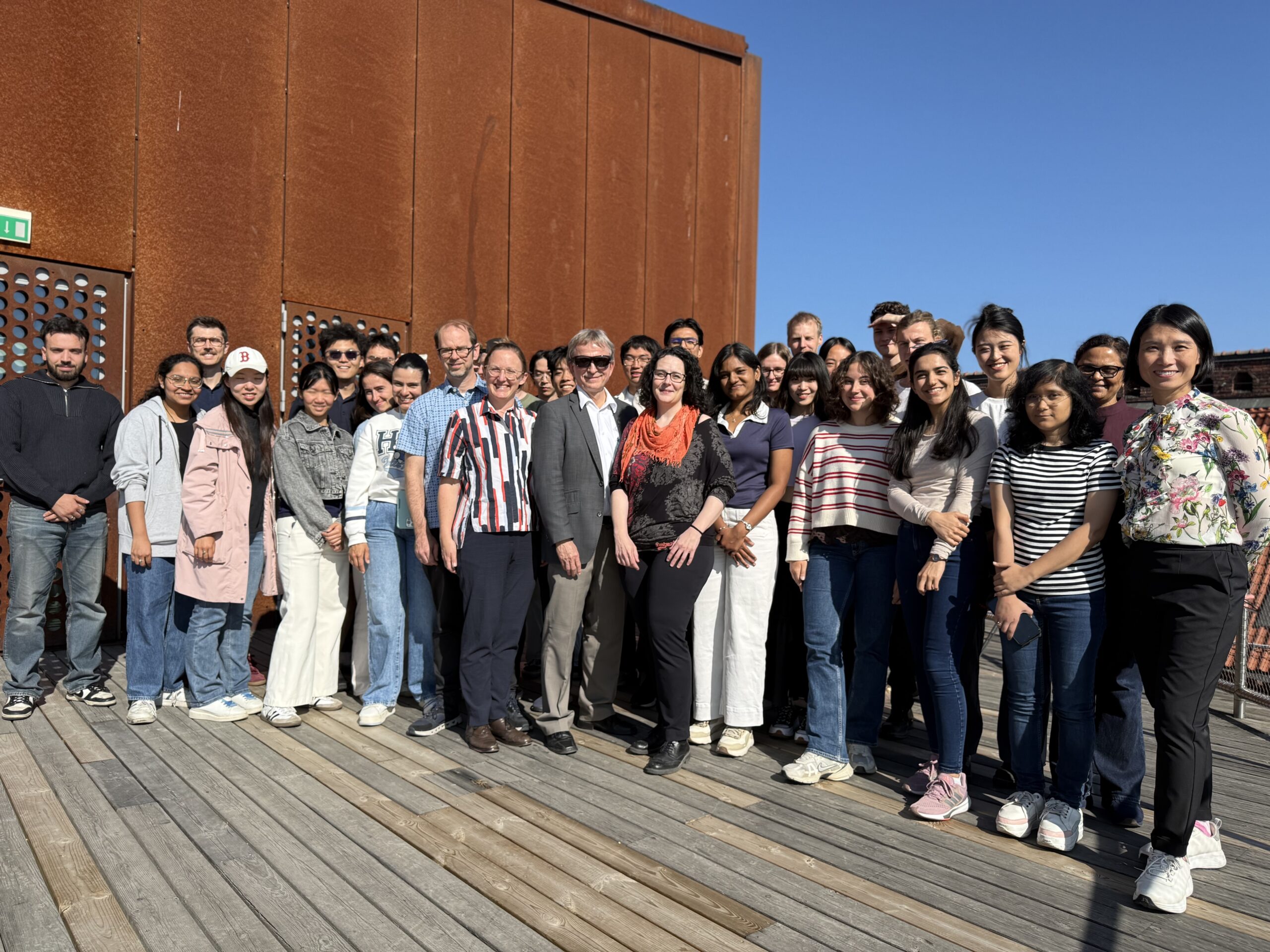
International students, senior business leaders, and academic representatives gathered Tuesday at KTH Campus for the “Emerging Leaders Workshop: The Human Advantage,” a collaborative event focused on how organizations can redesign talent models in the age of artificial intelligence.
Hosted by Digital Futures and offered as part of a Wharton course focused on “Doing Well by Doing Good,”, the workshop brought together participants from North America and Europe.
The event was organized in collaboration with The Wharton School and KTH/Digital Futures, with discussions centered on the Future Talent Council’s 2026 strategic theme, “The Human Advantage” — a concept examining the growing value of uniquely human skills such as ethical judgment, empathy, curiosity, communication, and collaboration alongside AI technologies.
Consistent with the Future Talent Council’s 2026 strategic theme, “The Human Advantage,”discussion centered around the growing value of uniquely human skills such as ethical judgment, empathy, curiosity, communication, and collaboration alongside AI technologies.
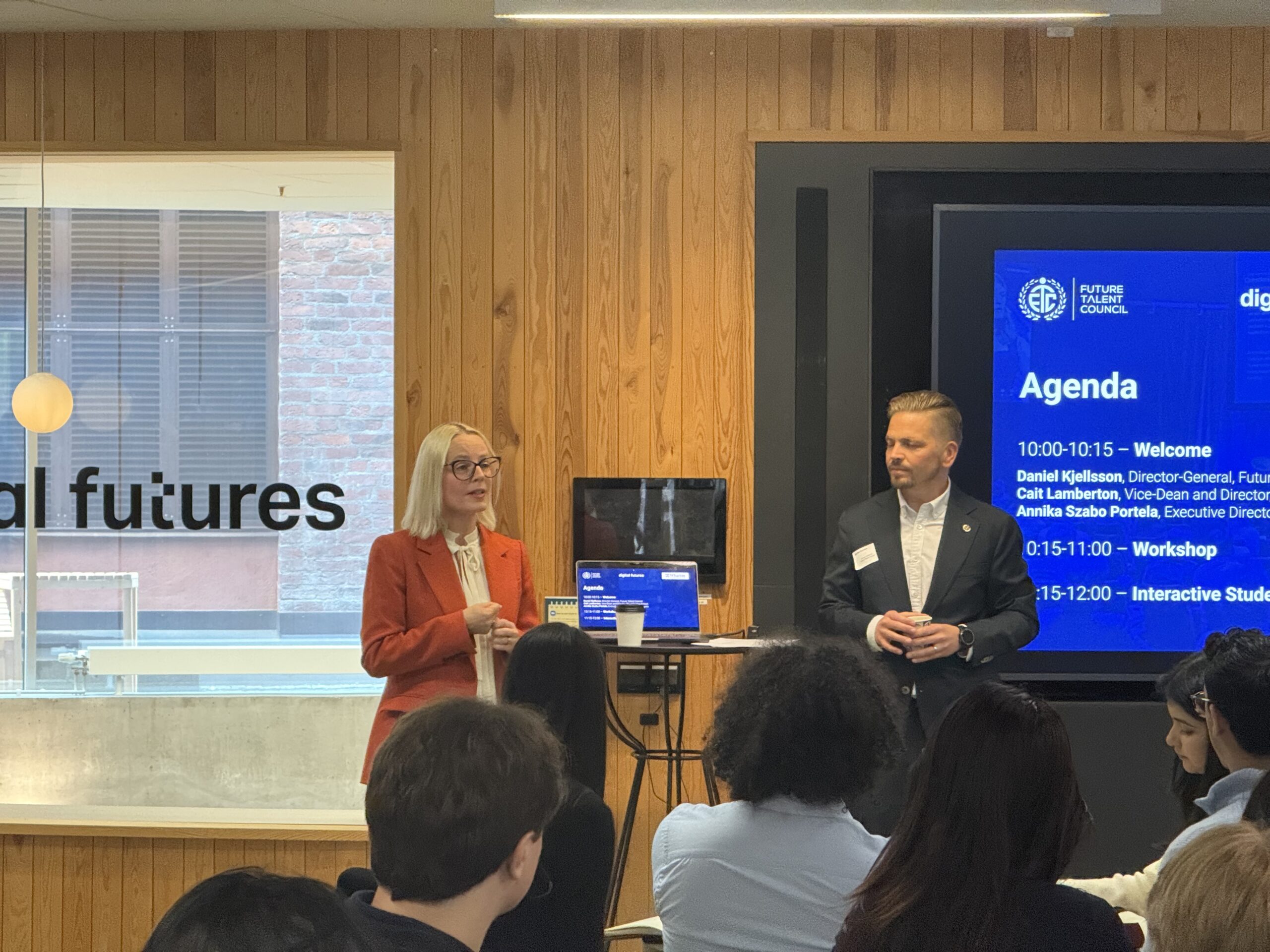
Opening remarks were delivered by Daniel Kjellsson (Director-General, Future Talent Council), Annika Szabo Portela (Executive Director Digital Futures), and Cait Lamberton (Vice-Dean and Director, The Wharton School).
“What makes this workshop unique is that students are not being asked to react to existing systems — they are helping redesign them,” said Kjellsson. “The future of talent strategy cannot be built only from executive boardrooms; it has to be co-created with the generation entering the workforce.”
Szabo Portela emphasized the importance of connecting technological innovation with societal outcomes.
“Digital transformation is ultimately about people, not only technology,” she said. “By bringing together students, researchers, and industry leaders, we create the kind of interdisciplinary dialogue needed to ensure innovation strengthens both competitiveness and societal progress.”
Throughout the morning, students from both Wharton and KTH and industry leaders worked in mixed discussion groups to examine how current hiring practices and workplace structures may be misaligned with younger generations’ expectations for meaningful work and social impact. Participants explored how employers could better assess human-centered capabilities beyond academic credentials and AI proficiency, while also discussing new approaches to developing and supporting early-career talent.
The workshop was structured around three central questions: where today’s labor market feels out of sync with students’ aspirations, how employers should rethink evaluation of future talent, and what principles should guide next-generation talent models. Students framed their discussions through a shared structure of identifying observed gaps, articulating unmet needs, and proposing practical organizational changes.
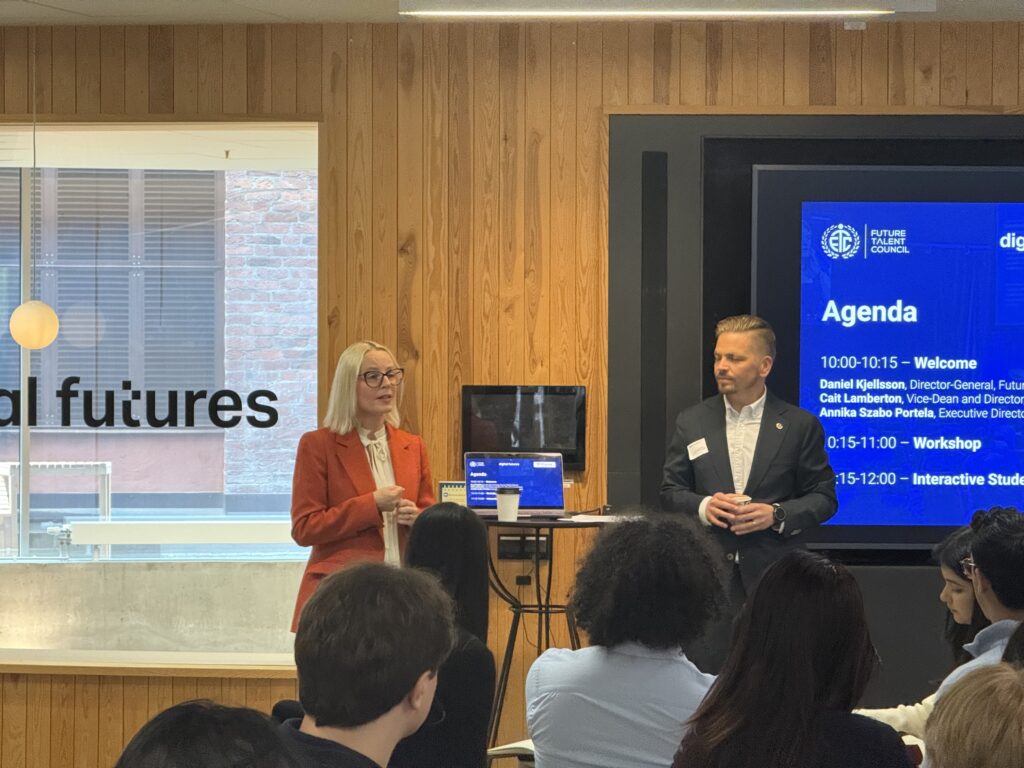
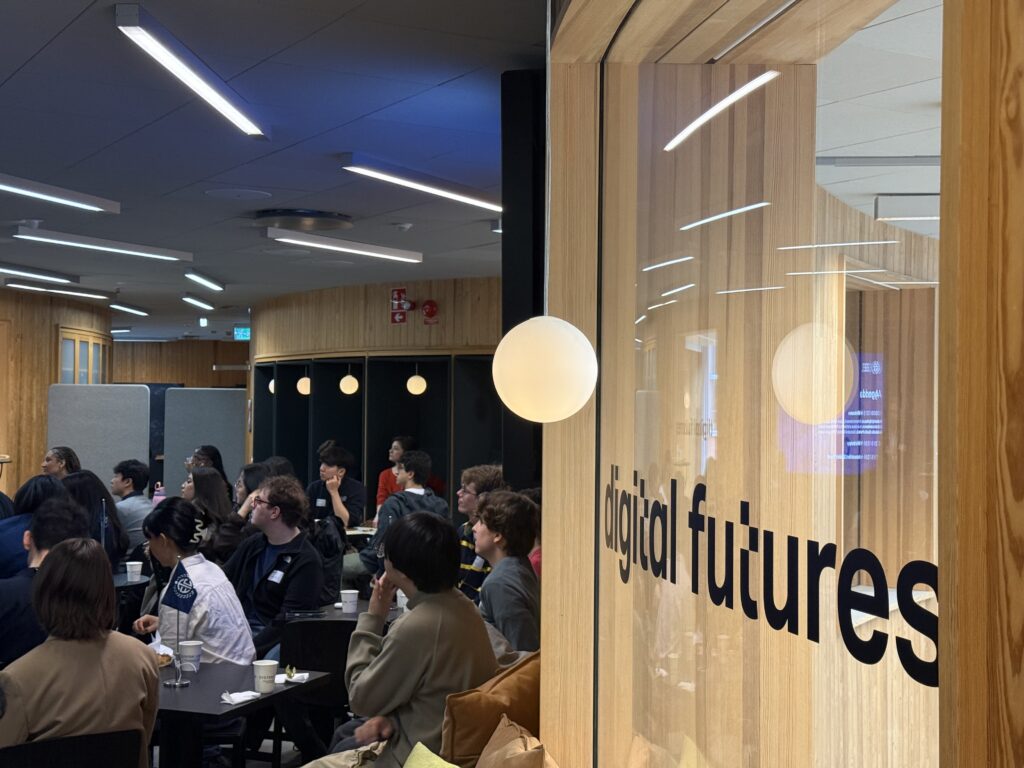
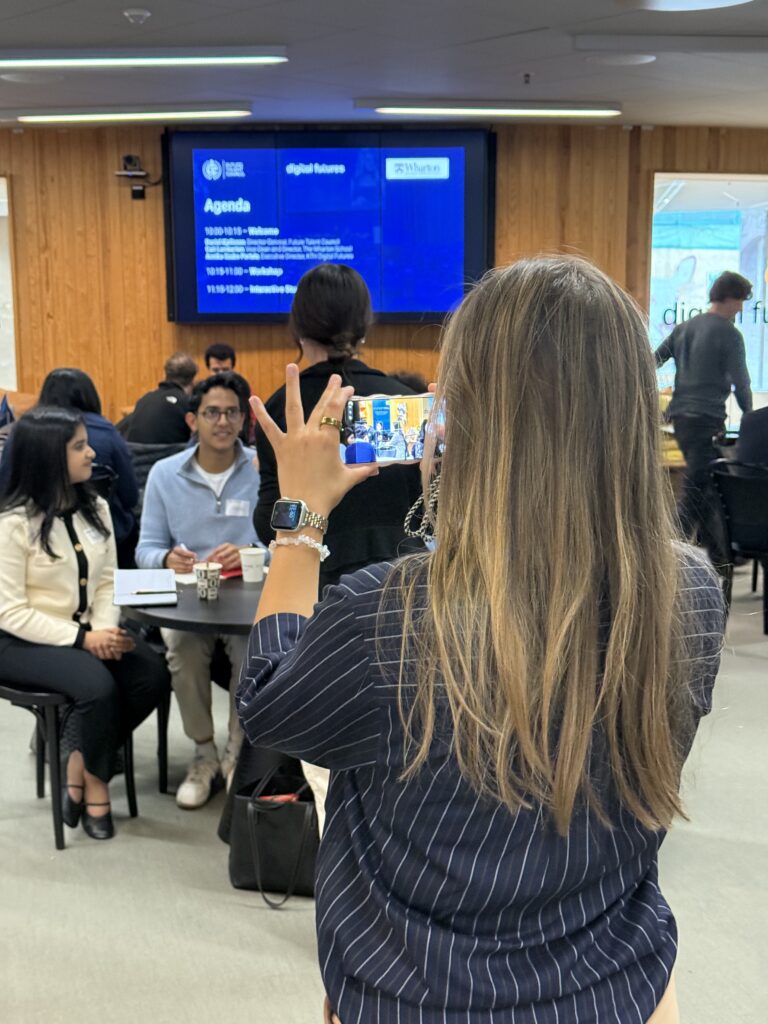
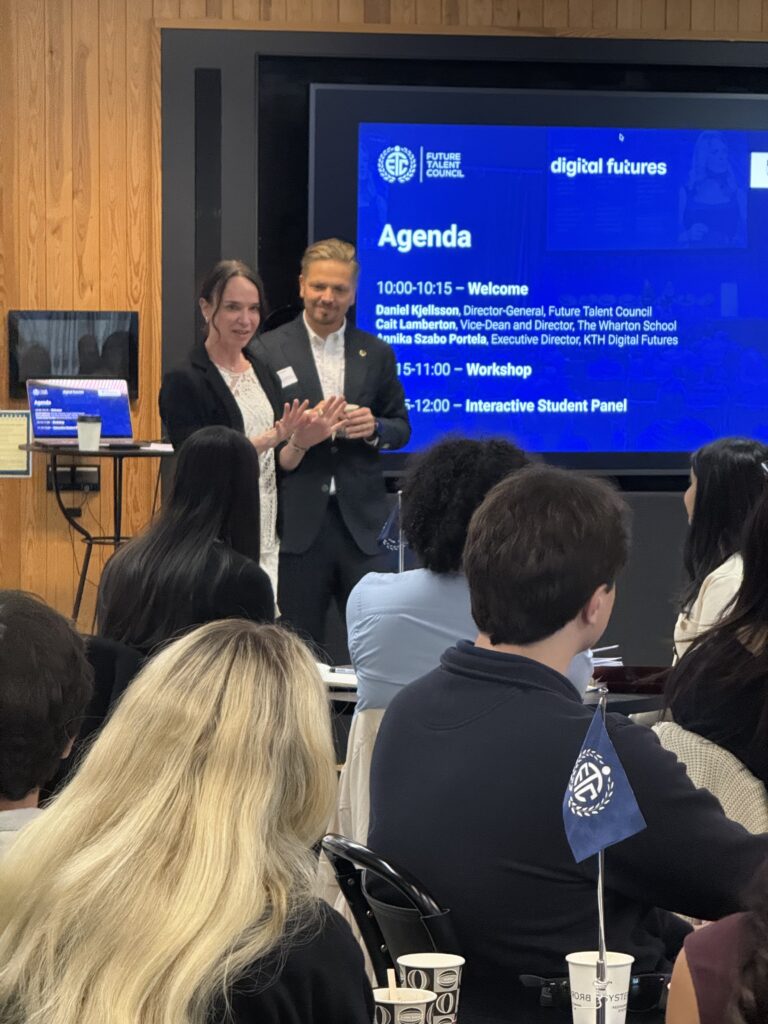
A later interactive student panel, facilitated by Lamberton and Kjellsson, synthesized insights from the roundtable discussions and highlighted how emerging leaders envision future workplaces that combine organizational performance with societal progress.
Lamberton said the conversations reflected a growing recognition that technological advancement should be used to amplify, rather than substitute for, distinctly human skills.
“Both Wharton and KTH students expressed a deep commitment to creating not only economic, but also social value. Without discussions like those we had today, technology may be used – even with the best of intentions – in ways that support the former at the expense of the latter. But by bringing diverse, multigenerational, multinational perspectives together., we can learn how to avoid that tradeoff, and in doing so, to truly enhance the power of the next generation,” she said.
According to organizers, outcomes from the workshop — including student presentations, structured notes, and collaborative recommendations — will contribute directly to agenda development for the Future Talent Summit 2026. Finalized findings will also be shared with senior executives globally as part of ongoing discussions around implementation pilots and future workforce strategy.
The Future Talent Council said participating students will continue to be involved through future engagements connected to the summit and related global talent initiatives.