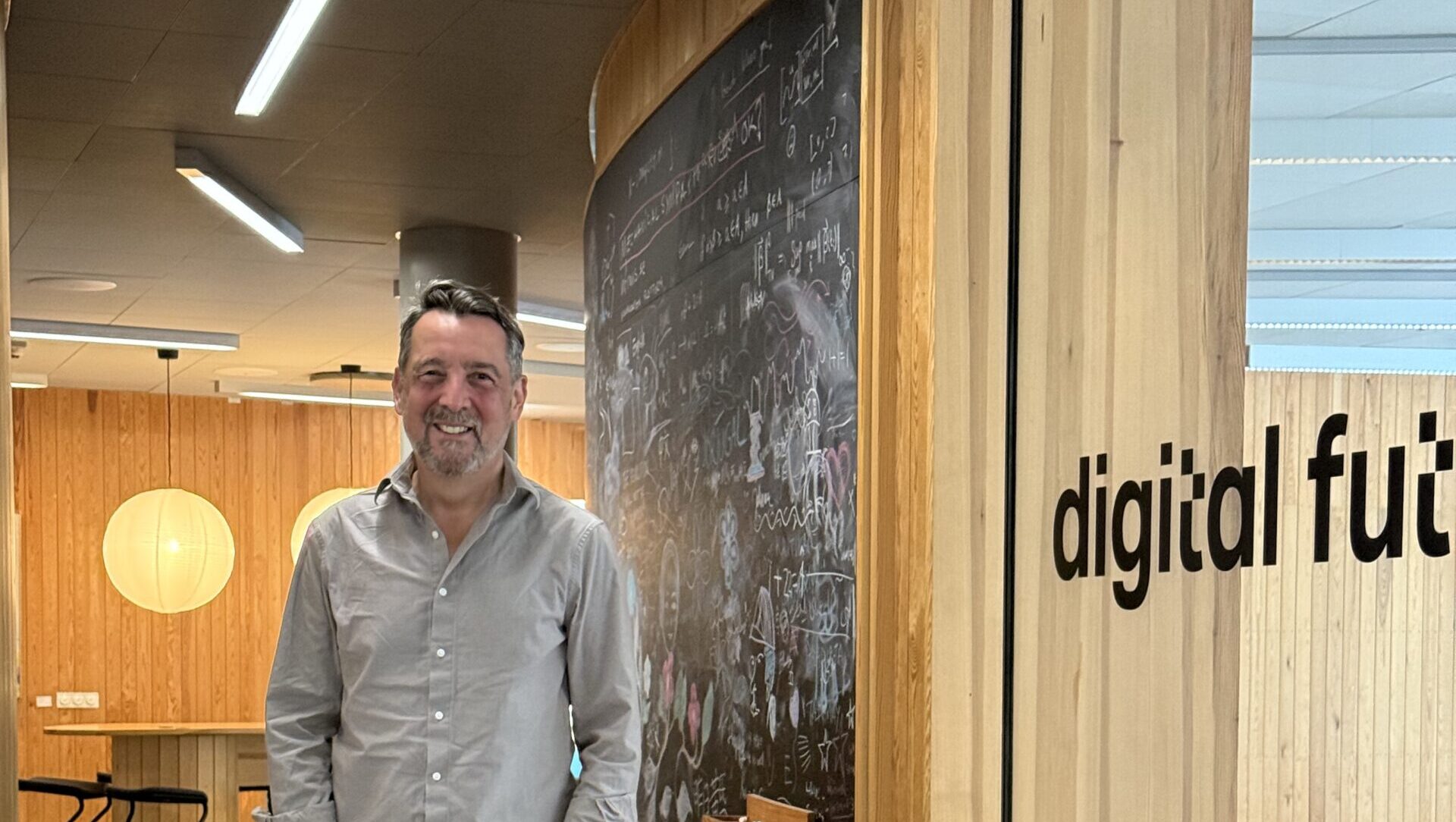
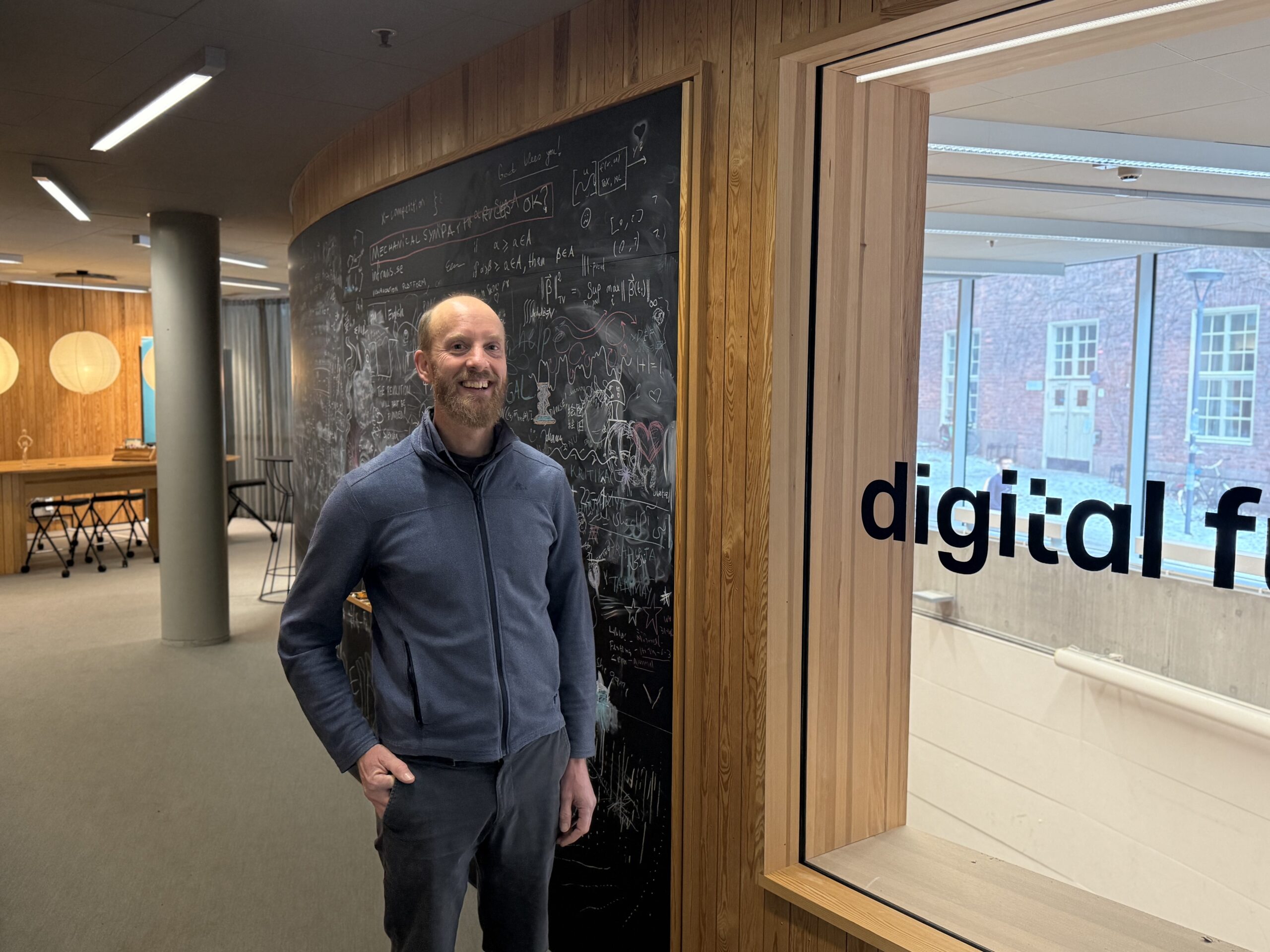
From January to March 2026, Digital Futures welcomes Charlie Wilson as Scholar in Residence, hosted by Mattias Höjer. Charlie is Professor of Energy and Climate Change at the University of Oxford and a Senior Research Scholar at the International Institute for Applied Systems Analysis (IIASA). His research explores how innovation, people, and policy interact in the context of energy and climate change, with a particular focus on digitalisation and AI.
Drawing on historical analysis, scenarios, and modelling, Charlie’s work seeks to better understand how energy transitions unfold—and how they might be accelerated in ways that support human wellbeing and climate goals. During his time at Digital Futures and KTH, Charlie is collaborating with researchers across disciplines to examine the systemic impacts of digital transformation on energy use, emissions, and climate governance.
In this interview, he reflects on his research, his residency in Sweden, and the future of digitally enabled energy transitions.
Your research sits at the intersection of innovation, people, and policy in energy and climate change. Looking across your work, what do you see as the most underappreciated driver of successful low-carbon energy transitions today?
– I think the two most appreciated drivers are climate policy and the falling costs of low carbon technologies like renewable energy. Compared to these, I think the two most under-appreciated drivers are firstly that low carbon energy transitions improve lives and human well-being in many different (like health, resilience, reduced exposure to geopolitical uncertainty) and secondly that progress is the result of the sustained, cumulative, and purposeful efforts of actors right across scales from international to local. It’s this institutional momentum which is so critical for us to nurture and expand.
Digitalisation and AI are often presented as either powerful tools for climate action or as sources of new risks and energy demand. Based on your current research and modelling, where do you see the most significant opportunities—and the most critical challenges—emerging?
– I will actually be presenting the results of a new global modelling study of digitalisation opportunities and challenges for climate change on February 26 at a Digital Futures seminar! Of all of the specific digital applications we analysed in this study, the biggest opportunity comes from digital platforms to enable multi-modal car-free mobility, particularly in cities. But, the biggest risk or challenge also comes from digitally-enabled car dependence and an increase in travel activity, particularly if autonomous vehicles become not just a way of getting from A to B, but also our offices, social spaces, and private cinemas!
Many of your projects emphasise everyday practices and systemic effects in energy transitions. How can policymakers and researchers better capture these social and behavioural dimensions in energy and climate policy analysis?
– Social and behavioural change is often perceived as being harder to reliably capture and quantify – it’s seen as being less certain, more context dependent, with people being less predictable than the cost trajectory of a piece of hardware like a computer chip or an electric vehicle. This is definitely true to an extent, but a lot of my work is about trying to unearth consistent, stable, predictable relationships between how people behave and broader economic and policy environments. This enables us to do a better job of capturing social and behavioural change in the models that can be used as policy laboratories.
During your time as Scholar in Residence at Digital Futures, you are collaborating with colleagues at KTH and across disciplines. What are you hoping to gain from these collaborations, and what perspectives do you think the Swedish research context brings to questions of digitalisation and sustainability?
– I see Sweden as really the home of digitalisation and sustainability research – it has been at the frontier of this field for many years now. I’m excited to be collaborating at KTH with people like Mattias Höjer, Francesco Fuso Nerini, and Francesca Larosa who have written widely on these topics. I also look forward to developing links with colleagues at SEI and RISE. I’m particularly looking forward to gaining a richer insight about the policy and multilevel governance agenda for aligning digitalisation with sustainability outcomes, and also insights from the Stockholm innovation ecosystem about aligning business models and innovation investments with climate action.
Finally, while you’re in Sweden from January to March, is there anything—academically, culturally, or personally—that you are particularly looking forward to seeing, doing, or experiencing?
– It’s a cliche, but when I think of Sweden, I think singing, fika and coffee, and snow. I am indulging in all three, with ice skating on a lake the highlight so far! I have even signed up for the 30 km version of the Vasaloppet to test my newfound cross country ski skills!
Like to learn more? Recorded presentation, a published paper and slides from Charlie Wilson’s seminar on “Digitalisation and AI impacts on long-term climate targets” can be found here.