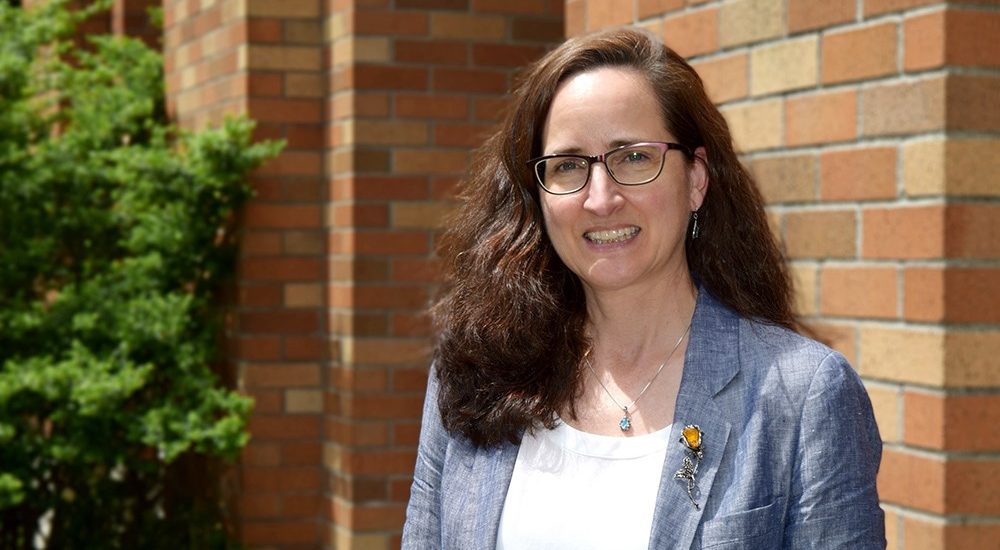
Linda Bushnell, a Research Professor at the University of Washington – Seattle, brings a wealth of expertise to her role as a Digital Futures Scholar-in-Residence at KTH, hosted by Professor Karl H. Johansson. With a PhD in Electrical Engineering and Computer Sciences from UC Berkeley, and degrees in mathematics and electrical engineering from the University of Connecticut and UC Berkeley, Linda’s career spans academia, government, and interdisciplinary innovation.
Linda is also a WASP Guest Researcher, supported by the Wallenberg AI, Autonomous Systems and Software Program, hosted by Bo Wahlberg.
Previously at the US National Science Foundation, Linda is now exploring AI, smart and connected communities, and cyber-physical systems during her residency in Stockholm. Alongside research, she’s engaging with students and fostering collaborations across disciplines, bringing her deep knowledge and enthusiasm to KTH and Digital Futures.
Hi Linda, in June you arrived in Stockholm as a Digital Futures Scholar-in-Residence. What inspired you to take on this opportunity, and what were your goals for this residency?
– Kalle Johansson invited me to KTH and Digital Futures when I met him at the IEEE Conference on Decision and Control in Singapore in December 2023. I was soon ending my four years at the US National Science Foundation in March 2024 and thought taking a sabbatical at KTH would be perfect timing. My goal for this sabbatical is to learn about AI and explore its applications in smart and connected communities.
Your research spans areas like networked control systems, cyber-physical systems (CPS), and smart & connected communities (S&CC). What do you find most exciting about these fields, and how have they evolved during your career?
– I am particularly excited to see how control systems problems can leverage AI in algorithm development, performance guarantees, and stability analysis. For S&CC, small Internet of Things (IoT) devices can now assist city managers in monitoring and addressing maintenance issues. In CPS, AI and cybersecurity have become critical topics for ensuring system reliability and guarantees.
You’ve had a diverse career, from academia to working with the US National Science Foundation. How have these experiences shaped your approach to research and collaboration during your time at KTH?
– I spent 10 years working with US government funding agencies (Army Research Office and NSF), in addition to over 30 years in academia. These experiences have provided me with a broader perspective on control systems and their applications in CPS and S&CC. Tackling large-scale challenges requires interdisciplinary collaboration among researchers, and my background has equipped me to approach such problems effectively.
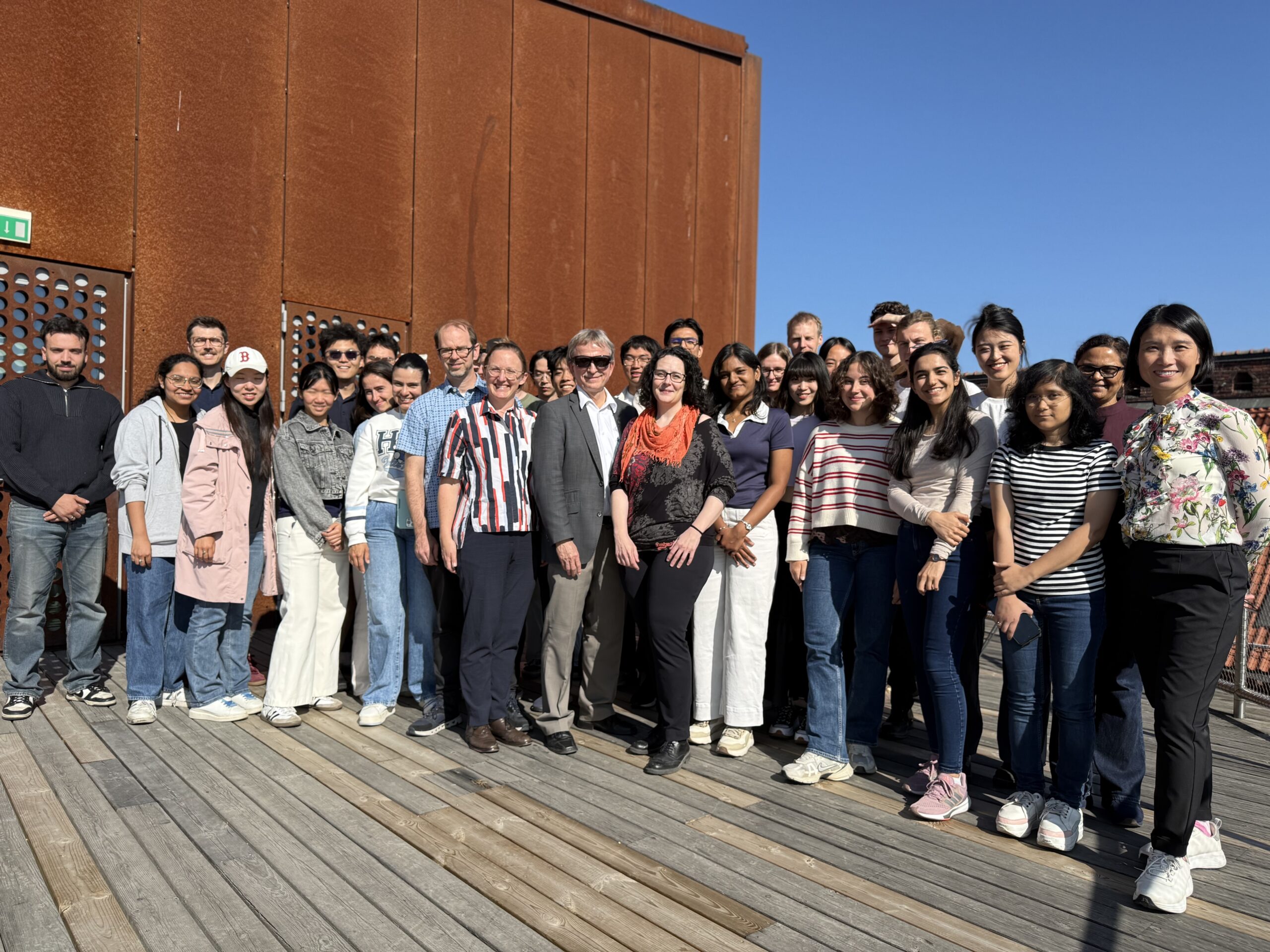
Teaching is an important part of your residency, including the TinyML course for the Digital Futures Summer Research Internship Program. What do you hope the students took away from this course, and how does it connect to your broader research interests?
– Teaching the TinyML mini-course was a rewarding experience. We condensed four weeks of our quarter-based course at UW into this program, and the students produced fascinating projects based on the foundational material. I hope they learned that machine learning can be effectively applied using tiny, resource-constrained IoT devices and that this topic is accessible to students at various levels. While TinyML is more related to my teaching than my primary research, it has inspired me to explore practical uses for these low-cost devices in real-world applications.
What has your experience in Stockholm been like so far? Have you discovered any new ideas or collaborations here, and are there places in Sweden you’re eager to explore during your stay?
– This is my first visit to Stockholm, and I discovered that I have Swedish ancestors who emigrated to the US in the 1870s. I visited the Tranemo parish, where they originated, and spoke with local residents to learn more about the area’s history. I’ve thoroughly enjoyed exploring Stockholm’s museums, parks, and castles. On the research front, I initiated a meeting with city officials at Stockholm City Hall to discuss their priorities for S&CC and explore how tiny IoT devices could support their efforts.