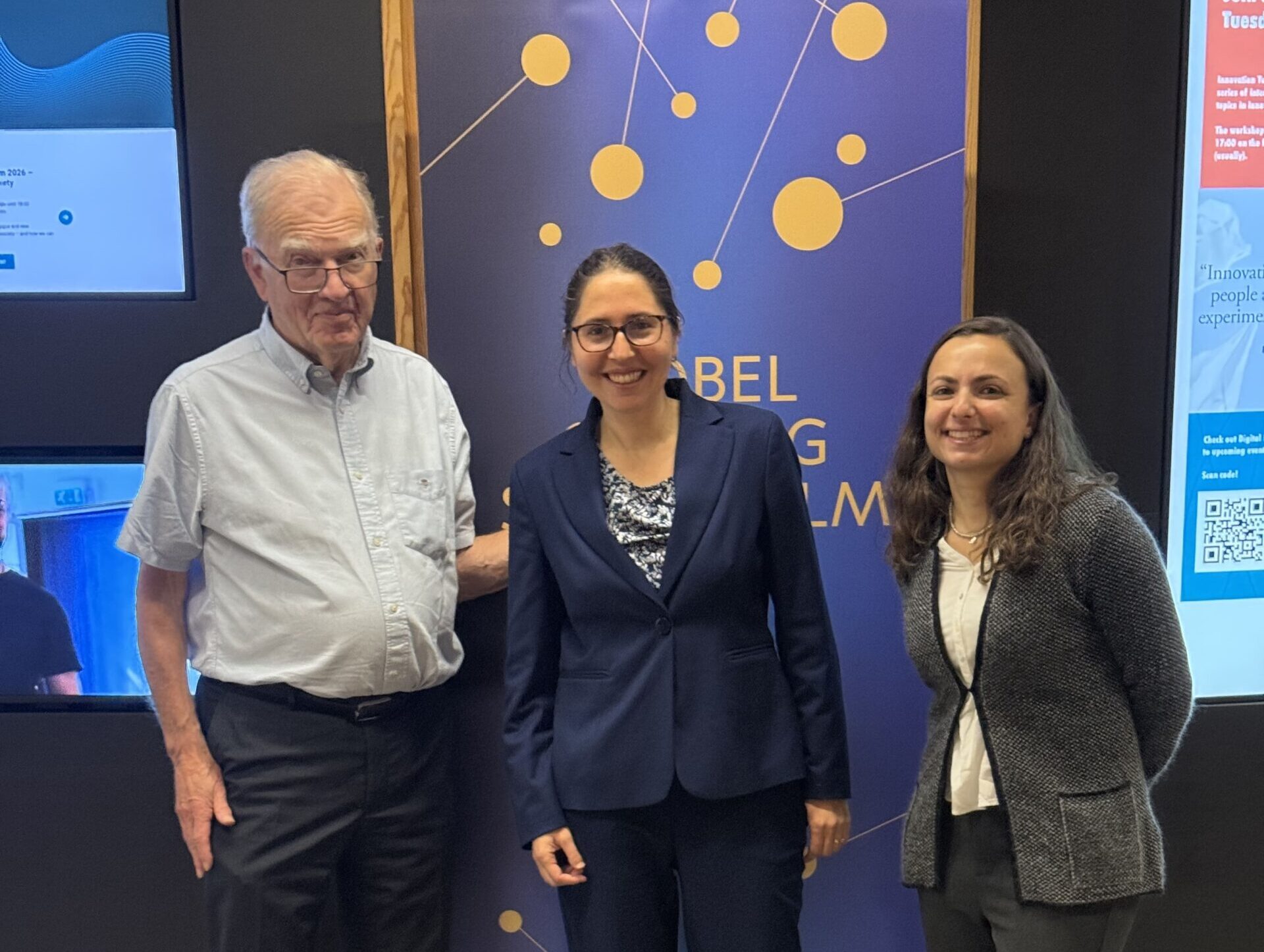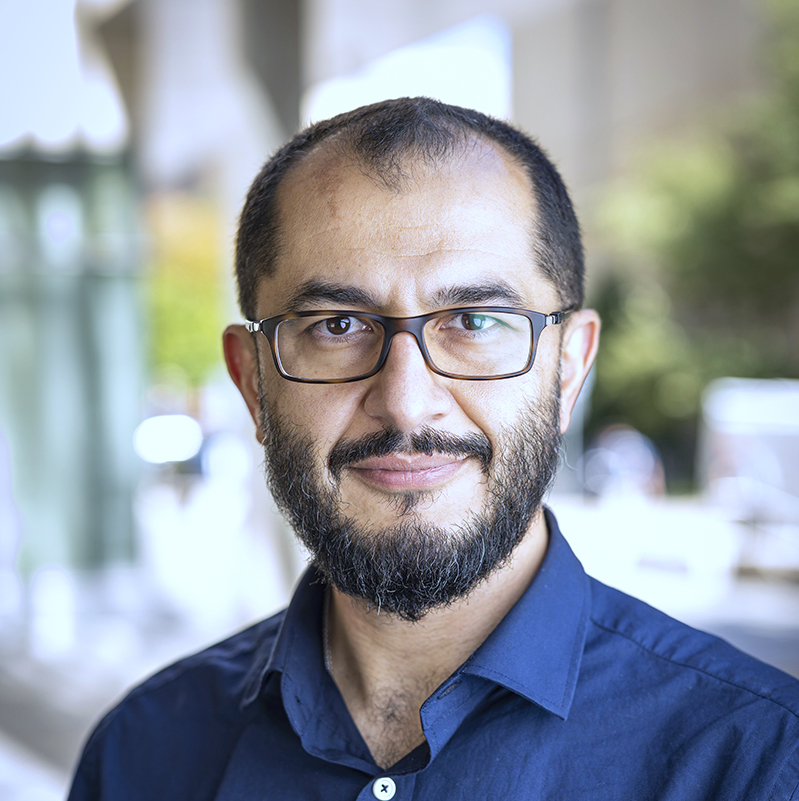
Bilge Mutlu is a professor of computer science at the University of Wisconsin–Madison and the director of the People and Robots Laboratory. He directs the NSF Graduate Research Traineeship (NRT) program called “INTEGRATE: Integrating Robots into the Future of Work.” He is the founding chief editor of the HRI section of Frontiers in Robotics & AI and the secretary-treasurer of the Human-Computer Interaction Consortium. Dr. Mutlu has an interdisciplinary background that combines design, computer science, and social science and a PhD in Human-Computer Interaction from Carnegie Mellon University. Mutlu is a Digital Futures Scholar in residence from December 2023 to January 2024, hosted by Digital Futures faculty member Iolanda Leite.
Hi Bilge, your research revolves around building human-centered methods for the design and integration of robotic technologies into human environments. Could you share some key principles and methodologies that you believe are crucial for ensuring the successful integration of robots into various aspects of daily life?
– I believe that a human-centered design must be at the center of designing these technologies that have unique qualities and unique challenges. Specifically, participatory design that engages individuals and communities who are envisioned to adopt the technology to better understand the context of use and how the technologies might deliver value is critical. Finally, intelligent technologies must be designed with long-term use in mind with the ability to learn from and adapt to the changes and emerging patterns in their use.
With your interdisciplinary background in design, computer science, and social science, how do you approach the intersection of these fields in your research? What advantages does this interdisciplinary perspective bring to the study of human-computer interaction and user experience design in the context of robotics?
– An interdisciplinary approach is critical in addressing complex design challenges, such as designing robotic technologies for human environments. The field of human-computer interaction provides an excellent methodological foundation for such an approach. It relies on computer science to explore technological possibilities; social science to understand human expectations, needs, and values; and design to integrate these perspectives within a process. My group’s approach to designing robotic technologies follows this approach, specifically a three-phase design process: understand, build, evaluate. We seek to understand problems, needs, or situations using social science methods; design and prototype technologies using computer science methods; and evaluate the effectiveness of the technologies using user-centered design methods.
Your achievements include being a former Fulbright fellow, recipient of the NSF CAREER award, and co-recipient of the Allen Newell Award for Research Excellence. Has this influenced your research and teaching philosophies, and what advice do you have for aspiring researchers in the field of human-robot interaction and robotics design?
– One of the “values” we embrace in my research group is “be the best work out there,” which means that we value quality over quantity and aim for maximum impact. Accordingly, my advice would be to do the highest quality work you can, and others will see the value in your work. I am very proud of the nearly two dozen paper awards my students and I have received, which I believe highlights the recognition and impact of our work.
Your research has received numerous best paper awards and international recognition in the press. Can you highlight one or two projects that you find particularly impactful or innovative?
– One project that I think is particularly impactful is a body of work my collaborators and I have done on the development of end-user robot programming tools since 2018. The innovation in this work is the use of formal methods, particularly program verification and synthesis methods, in end-user design and programming tools.
To this date, we have built a total of 7 unique and highly innovative systems that enable users to program robots using visual programming, acting, demonstration, and multimodal input and to assist, and often automate, programming using program verification and synthesis techniques.
In another project, our interdisciplinary team – including computer scientists, mechanical engineers, and industrial engineers – explored the design of robotic tools to assist aircraft manufacturing workers in tasks that are difficult to automate. We have identified task characteristics that make automation difficult and developed a family of technologies, including new shared control methods, new end-user programming methods, and new haptic input methods, and eventually integrated these technologies in a prototype system that we demonstrated at our collaborator’s facility – The Boeing Company. The prototype system helped workers with sanding surfaces of an aircraft in construction and repair tasks. (Note: sanding applications can be seen here and here).
Finally, tell us a little about yourself. What have you done in Stockholm?
– I came to Stockholm with my family of 6, including my wife, who is a professor of economics, and my four children, aged 9, 6, 4, and 1. Outside my time at KTH, we have been exploring the area. We made trips to Uppsala to visit our friends, Sigtuna, and several museums and attractions within Stockholm. We also tried to experience the day-to-day Swedish life, food, and habits, including adapting a daily Fika schedule.
Your scholarship ends soon – what will you do next?
– Soon after we return to Madison, Wisconsin, our semester starts. I will be teaching a class, called ”Building User Interfaces,” to approximately 300 students, and getting back to my regular research activities. However, I also look forward to continuing some of the collaborations I have started here and staying in touch with the students and faculty I have met at KTH.
Bilge Mutlu gave a much appreciated Distinguished lecture at Digital Futures hub on 12 December, 2023 on “Enabling Everyday Use of Robots as Products, Tools, and Platforms”. Click here to watch the recorded presentation on YouTube. He also gave a talk at the Department of Information Technology at Uppsala University on January 11 2024.