Date and time: Thursday 25 June 2026, 14:00-15:00 CEST
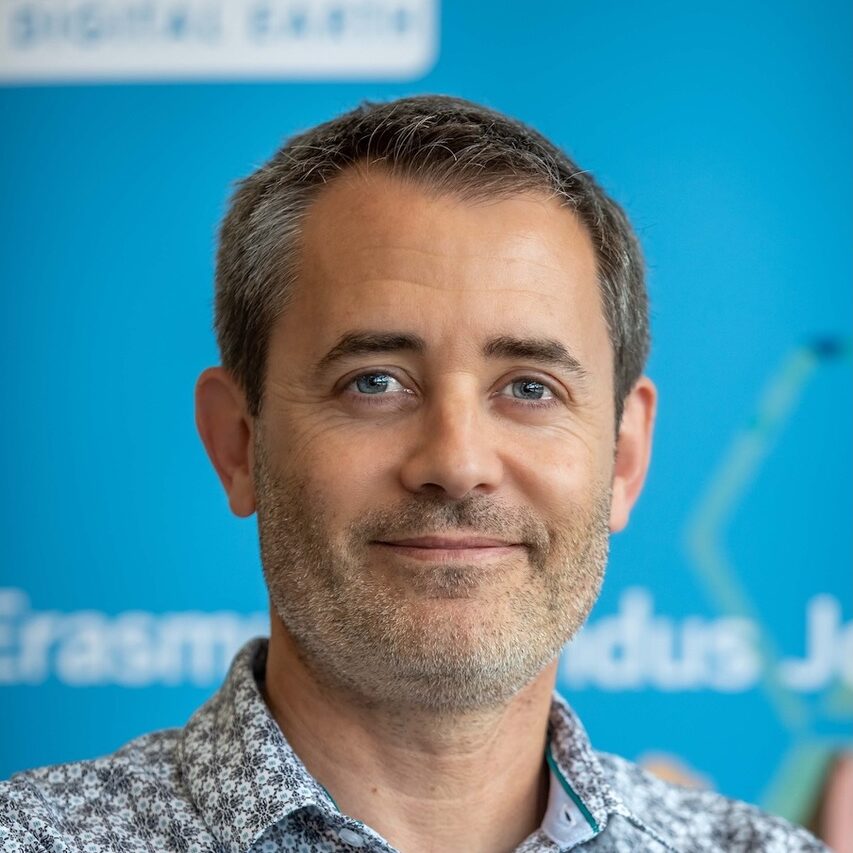
Speaker: Flavio P. Calmon, Harvard John A. Paulson School of Engineering and Applied Sciences
Title: Inference-Time Information Theory
Where: Digital Futures hub, Osquars Backe 5, floor 2 at KTH main campus OR Zoom
Directions: https://www.digitalfutures.kth.se/contact/how-to-get-here/
OR
Zoom: https://kth-se.zoom.us/j/69560887455
Host: Tobias Oechtering oech@kth.se
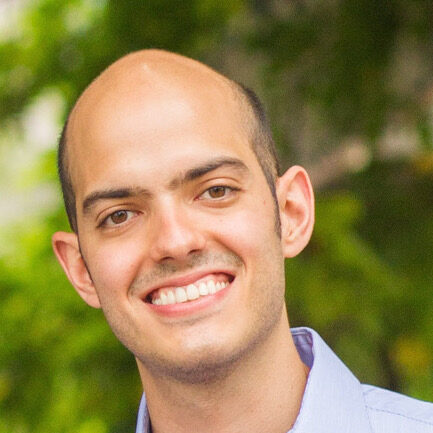
Bio: Flavio P. Calmon is the Thomas D. Cabot Associate Professor of Electrical Engineering at the Harvard John A. Paulson School of Engineering and Applied Sciences and a Visiting Faculty Researcher at Google Research. Before joining Harvard, he was the inaugural Data Science for Social Good Post-Doctoral Fellow at IBM Research in Yorktown Heights, New York. He received his Ph.D. in Electrical Engineering and Computer Science from MIT. His research develops the information-theoretic foundations of trustworthy and reliable machine learning and artificial intelligence.
Prof. Calmon received the 2024 James L. Massey Award from the IEEE InformationTheory Society, the NSF CAREER award, faculty awards from Google, IBM, JPMorganChase, and Amazon, the Harvard Dean of Undergraduate Studies Commendation for “Extraordinary Teaching during Extraordinary Times,” and the Capers and Marion McDonald Award for Excellence in Mentoring and Advising at Harvard SEAS. He also received the inaugural “Título de Honra ao Mérito” (Honor to the Merit Title) given to alumni from the Universidade de Brasília (Brazil).
Abstract: In this talk, we argue that “inference-time” large language model (LLM) operation, where we interact with models without modifying their weights, is fertile ground for information-theoretic methods. As LLMs increasingly serve as black-box components of more complex systems, information and coding theory offer a principled toolkit for shaping, verifying, and controlling their outputs. We focus on one challenge in particular: watermarking LLM-generated text. Watermarks enable authentication of text provenance and help curb misuse of machine-generated content.
We present recent results demonstrating a close connection between LLM watermarking and coding theory, showing that classical tools such as the Plotkin bound yield fundamental limits on watermark performance. This perspective also informs the design of two practical watermarks: SimplexWater and HeavyWater. We also briefly survey other inference-time challenges that can be addressed with informationtheory, such as inference-time alignment.