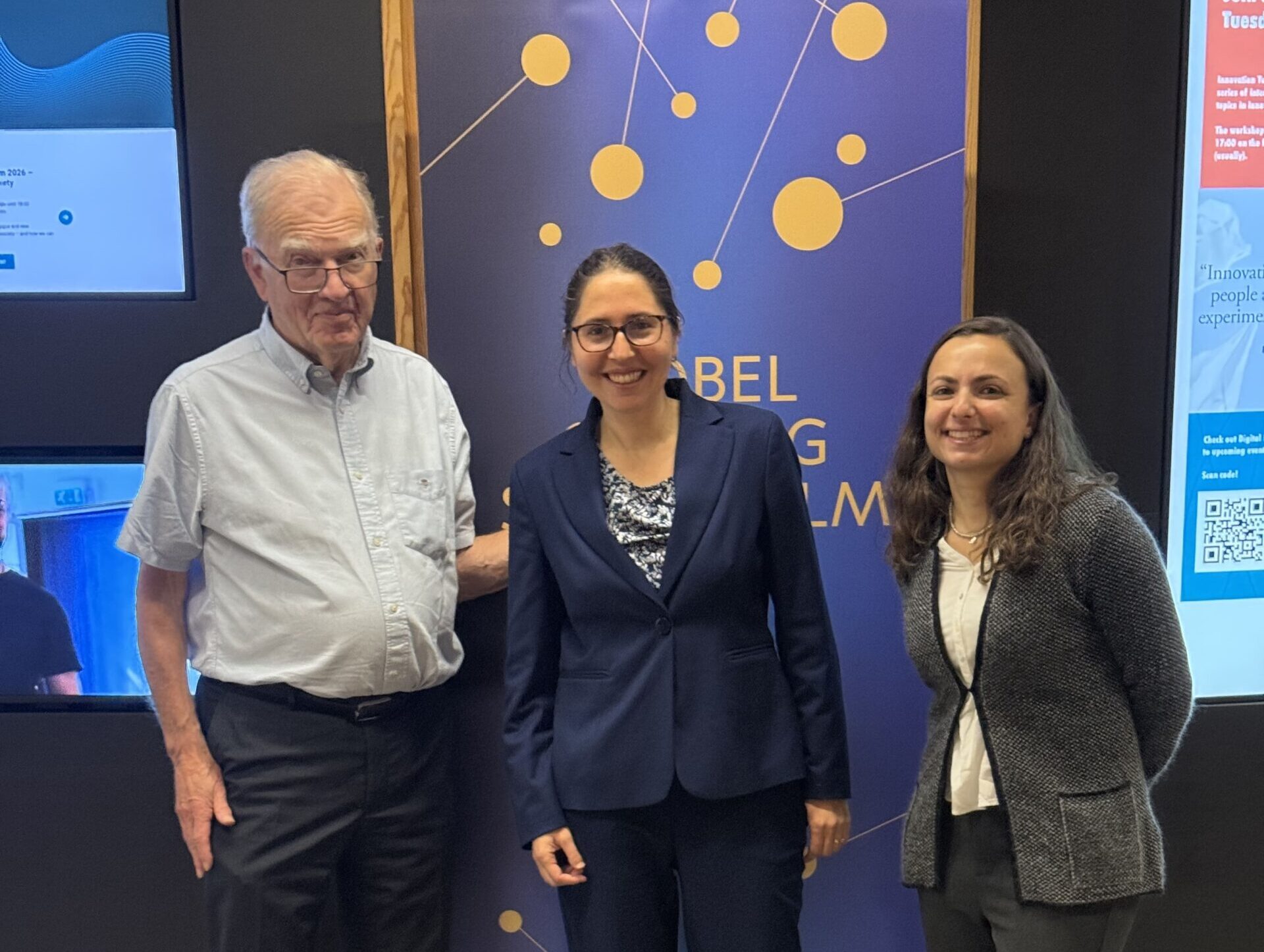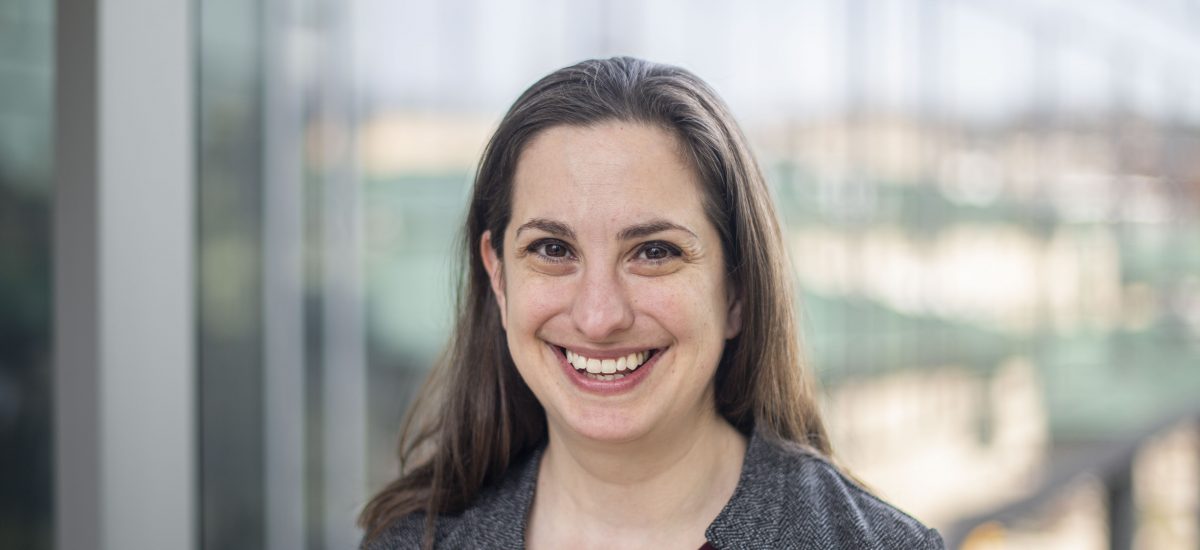
From September 2024 to August 2025, Dr. Henny Admoni, Associate Professor at Carnegie Mellon University’s Robotics Institute and leader of the Human and Robot Partners (HARP) Lab, joins KTH as a Digital Futures Scholar in Residence, hosted by Associate Professors Iolanda Leite and Jana Tumová. Renowned for her work in assistive and collaborative robotics, Dr. Admoni explores how natural human communication, like eye gaze, can improve human-robot interactions.
With numerous prestigious accolades, including an NSF CAREER grant and funding from industry leaders like Google and Meta, Dr. Admoni has dedicated her career to making intelligent robots safer and more intuitive partners in daily life. During her residency at KTH, she will collaborate with the Division of Perception, Robotics, and Learning to tackle one of robotics’ biggest challenges: ensuring safety in unpredictable human-robot interactions using cutting-edge AI and formal methods.
This interview dives into her inspirations, groundbreaking research, and vision for the future of assistive robotics.
Hi Henny, you arrived in Stockholm in September as a Digital Futures Scholar in Residence. What inspired you to take on this year-long opportunity, and what are you hoping to achieve during your time at KTH?
– As a professor, I have the privilege of taking a sabbatical every seven years to focus on professional development in a new environment. When the time came, I reached out to my hosts, Iolanda Leite and Jana Tumová, to explore spending the year at KTH. I was drawn by the cutting-edge robotics research happening here, particularly in human-robot interaction. My goals for this year are to collaborate on exciting projects, connect with diverse researchers, and gain a deeper understanding of the academic landscape in Europe.
Your research focuses on how natural human communication, such as gaze, can enhance human-robot collaboration. What fascinates you most about this interaction, and how do you see it transforming the way we work with robots?
– I’m fascinated by how humans collaborate so seamlessly in everyday tasks, like cooking a meal together, without needing to explicitly spell out every step. Instead, we rely on nonverbal cues—eye gaze, gestures, body posture—and shared context to coordinate actions. I aim to bring similar capabilities to robots, enabling them to interpret and respond to human cues naturally. This could revolutionize human-robot collaboration by making it more fluid, intuitive, and efficient. Imagine robots that proactively assist without needing constant instructions—this is the future I’m working toward.
One of the challenges you’re addressing during your residency is ensuring safety in human-robot interaction, particularly given the unpredictability of machine learning. Can you share more about your approach to tackling this issue and the potential impact of your work?
– When I think about robots supporting people in homes, offices, or schools, their safety and reliability are paramount. The field of formal methods offers mathematical tools to define and ensure system safety. However, applying these tools to human-robot interaction (HRI) is challenging due to the unpredictability of human behavior and robots trained with machine learning. At KTH, I’m collaborating with researchers to explore how we can provide provable guarantees for robotic behaviors in collaborative settings. For example, we’re trying to enable a robot to accurately monitor its own uncertainty and ask questions when it needs help. This work could pave the way for safer, more trustworthy robots in everyday environments.
You’ve led groundbreaking research through the HARP Lab at Carnegie Mellon and received numerous prestigious grants. How have these experiences influenced your vision for assistive robotics, and what are the biggest challenges still ahead?
– Thank you! I’m fortunate to work with an incredible team at Carnegie Mellon. Together, we’ve tackled diverse questions in assistive and collaborative HRI, like designing robotic arms to aid individuals with upper motor impairments, developing intelligent vehicles to improve driving safety, and creating robots that ask targeted questions to better understand human needs. These experiences have deepened my vision of robotics as tools for empowerment and independence. Looking ahead, one of the biggest challenges is ensuring that robots can generalize their behavior across diverse users and unpredictable scenarios while remaining safe and reliable.
Your residency involves collaborating with researchers in the Division of Perception, Robotics, and Learning at KTH. What has the experience been like so far, and how do you see these collaborations shaping your research?
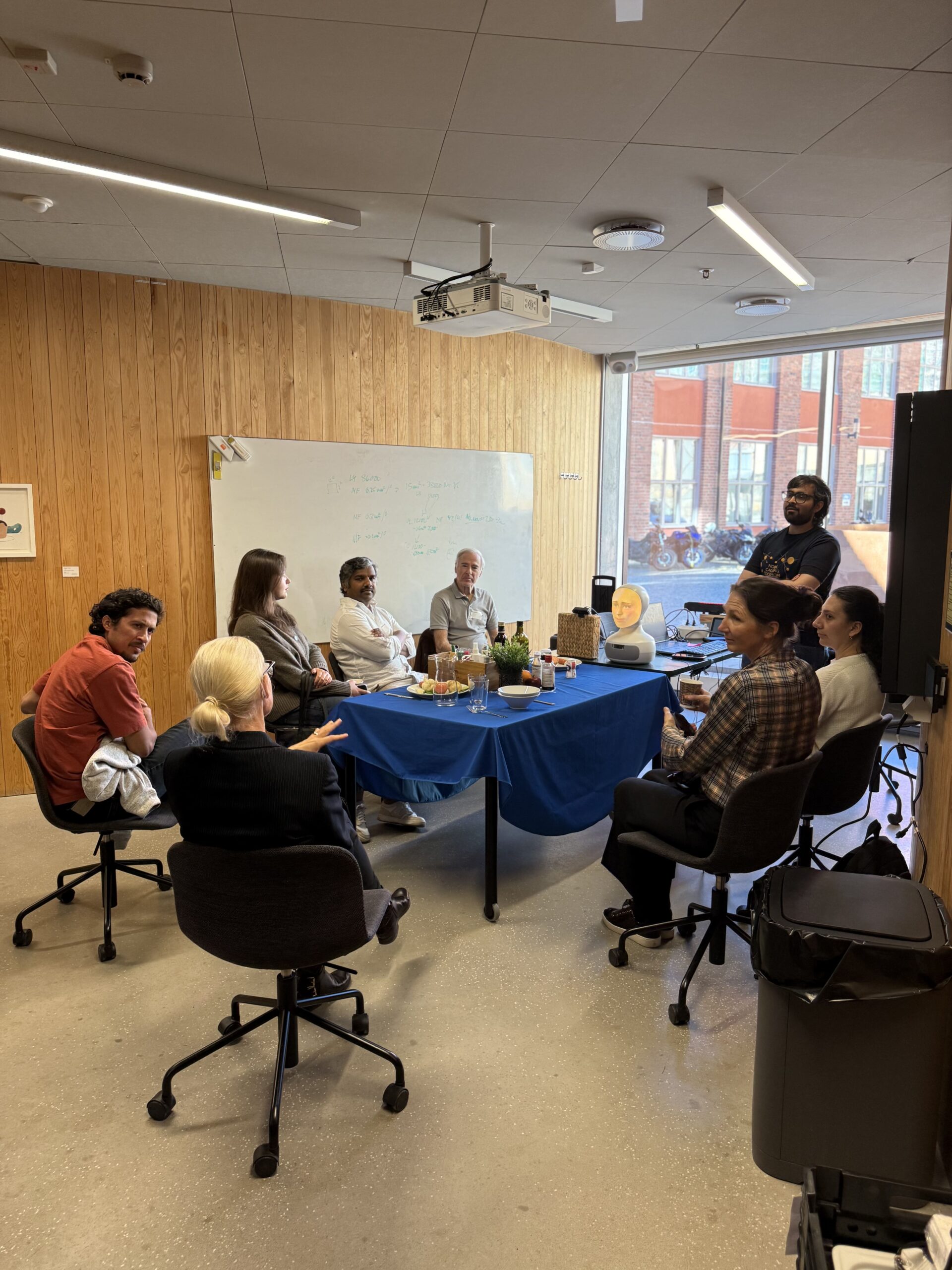
– Being at the RPL division has been such a pleasure. I’ve had the chance to learn from brilliant colleagues and discover intriguing links between my own work and ongoing research at KTH. In particular, I’m excited to see how our work on safety in HRI evolves through these collaborations. Since arriving, I’ve also participated in division events like the “What’s Cookin’” research symposium, the faculty retreat, and the Christmas lunch, all of which have been wonderful opportunities to engage with the community and have some fun along the way!
Text: Johanna Gavefalk