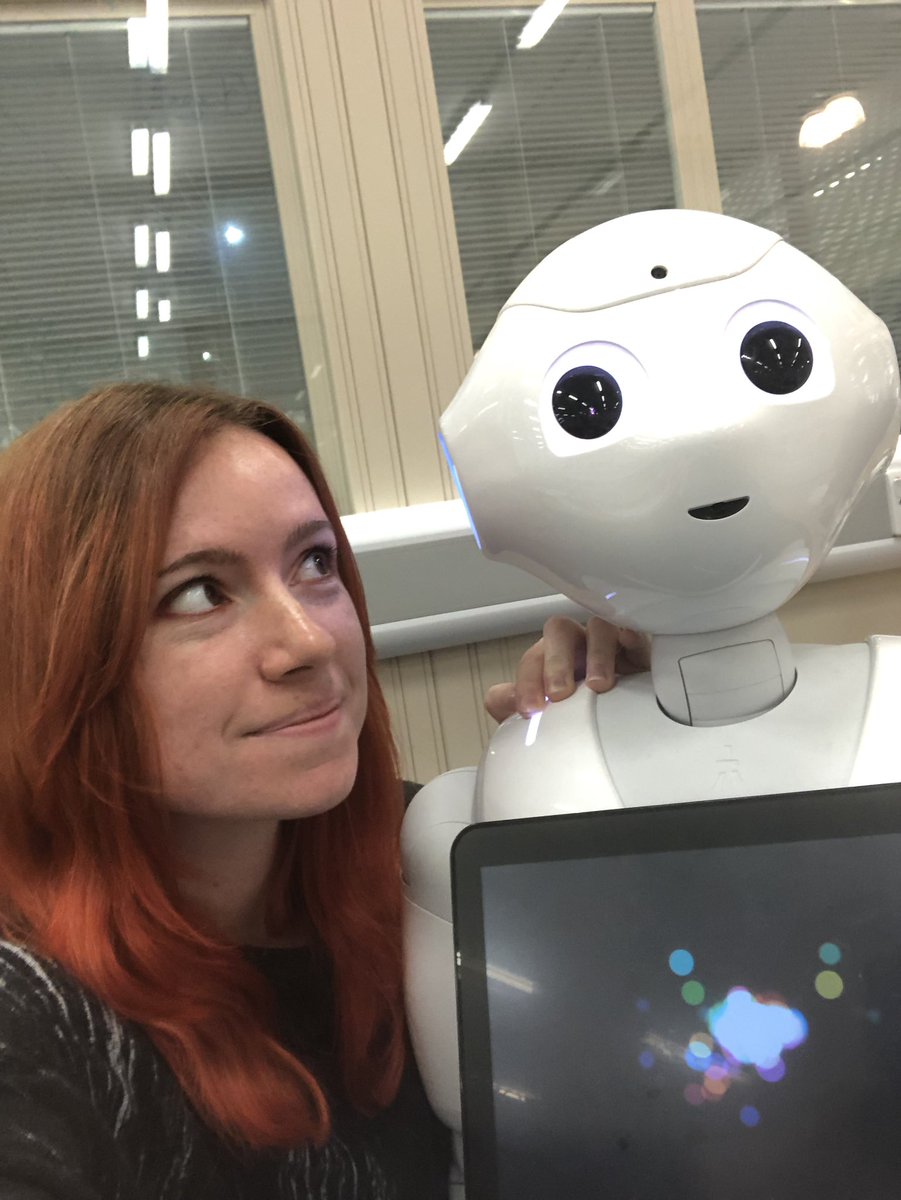
After originally studying to be a mechanical engineer, Katie Winkle undertook a PhD in social robotics at the Bristol Robotics Laboratory in the UK, where she also undertook work on responsible robotics with partners from the University of Oxford. She successfully defended her thesis ‘Expert-Informed Design and Automation of Persuasive, Socially Assistive Robots’ in Summer 2020.
Since September 2020 Katie is a Digital Futures Postdoc Fellow, based in the Social Robotics group at the Division of Robotics, Perception and Learning at KTH. Her research is hugely interdisciplinary, drawing on psychology and the social sciences as well as the latest in robotics and AI to engineer effective, meaningful and impactful human-robot interactions.
Hi Katie, being a Postdoc Fellow at Digital Futures as part of the fellowship mobility program – what has it been like and what did you learn?
– It’s been great! I learned a lot about working with interdisciplinary and international researchers, as well as the research culture within Sweden.
Katie, your postdoc project is On The Feminist Design of Social Robots and Designing Robots For Young People, With Young People – tell us shortly about the project? Who could use the results?
– Yeah, so this was really like two different projects, one looking at how we can use gendered robots to challenge gender stereotypes around women in computer science and another looking at how we could better involve young people in developing robots ultimately designed for them. In both cases the results should inform the ways robot designers and developers are creating human-robot interactions, and hopefully, improve the positive impacts such robots can have on society.
What is the most surprising you came across during your research?
– Probably on the stuff I’ve been doing around challenging gender norms, it was surprising how polarising that can be, but also for the most people how supportive and excited people have been about that work! In the work with young people designing robots, I’m amazed at how seriously our students took it and what great robot ‘teachers’ they made – they created a robot that was useful but also could have ‘a bit of fun’ when it was appropriate, and I think that’s a level of creativity you wouldn’t get from typical, adult robot designers.
During your time as Postdoc Fellow you have also been engaged in other activities at Digital Futures – what did you do?
– I got to co-organise a workshop around time management for early career researchers which was a great exercise in thinking about the pressures on ECRs and how we can prioritise what we’re doing and why.
Finally, what will happen now and what you are going to do next?
– Having fallen in love with Sweden I decided to stay and I’m making a move to Uppsala University where I am joining the Department of Information Technology as an Assistant Professor in Social Robotics with a specialization in Trustworthy Human-Robot Interaction.
Link to the project On The Feminist Design of Social Robots and Designing Robots For Young People, With Young People
Link to the profile of Katie Winkle