Date and time: Thursday 5 November 2026, 13:00-14:00 CEST
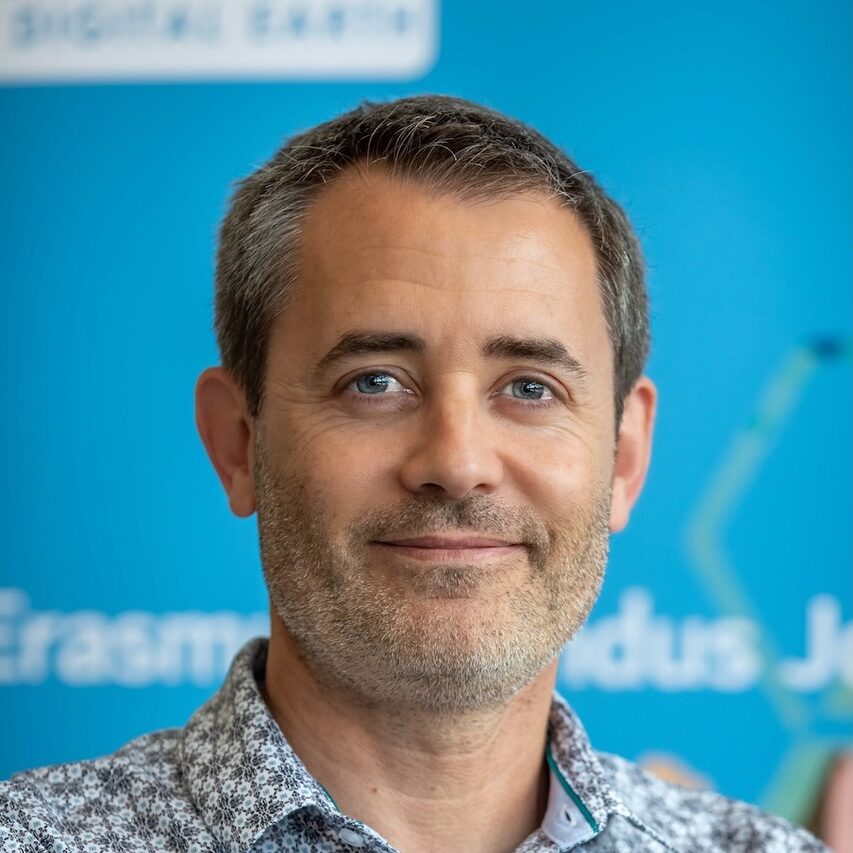
Speaker: Domenico Guarino, HABS
Title: The organisation of experience: Neural persistence from neuronal ensembles to EEG microstates
Where: Digital Futures hub, Osquars Backe 5, floor 2 at KTH main campus OR Zoom
Directions: https://www.digitalfutures.kth.se/contact/how-to-get-here/
OR Zoom: https://kth-se.zoom.us/j/69560887455
Host: Ilaria Carannante ilariac@kth.se
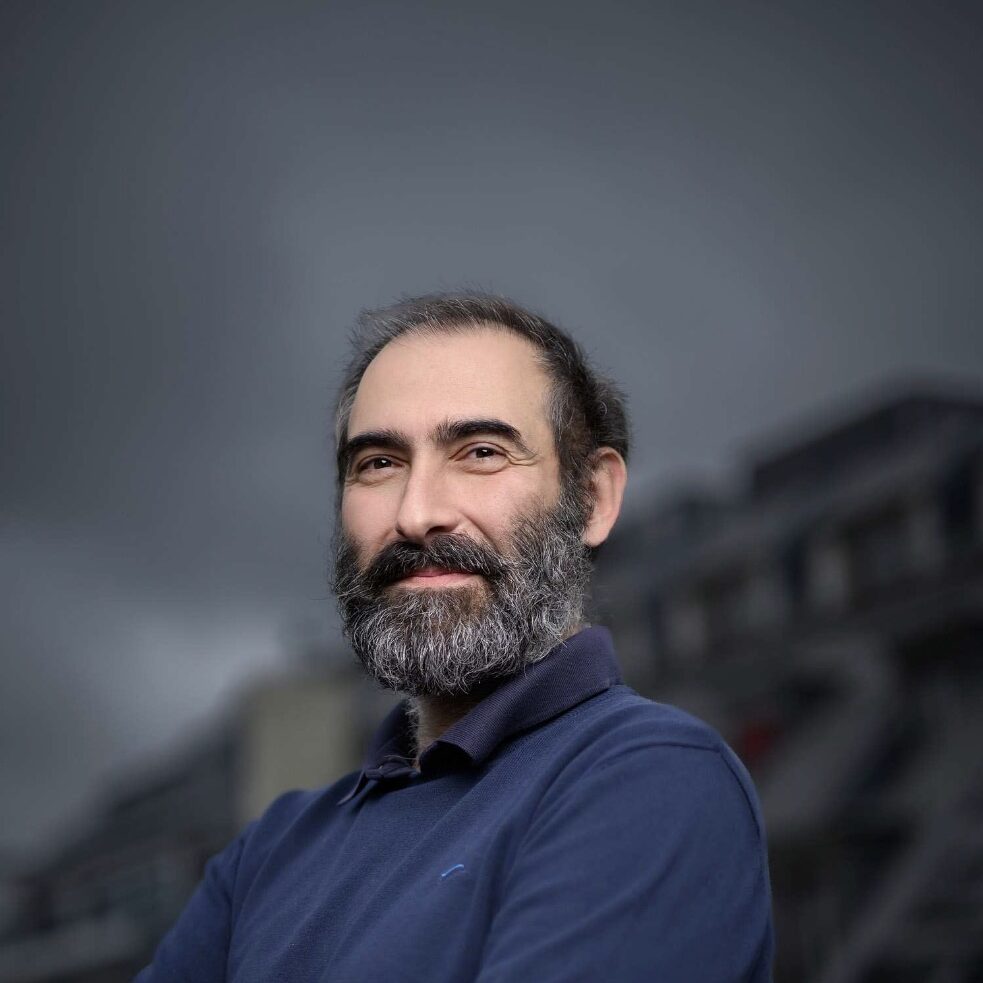
Bio: Domenico Guarino is a computational neuroscientist and Chief Scientific Director at HABS. His research investigates how coherent patterns of brain and bodily activity emerge, persist and evolve during interaction with the environment. His work spans several levels of description, from neuronal excitability and cortical population dynamics to multimodal measurements of human behaviour.
He combines computational modelling with large-scale electrophysiology, EEG, and other biometrics. His recent systems-neuroscience research examines how reproducible neuronal ensembles arise from cortical network organisation and how population states preserve their recent history, incorporate context and progressively constrain action. At HABS, he leads research using multimodal recordings to study how people attend to, explore and respond to complex environments, including media, physical spaces and vehicles.
Abstract: Experience is not merely a succession of perceptions and actions, but the continuous process through which an organism remains situated in, and responsive to, a changing world. Our lived experience is therefore an embodied, temporally organised process of engagement. Its present state is constrained by what preceded it, incorporates changing context, and structures the actions that can follow. This view yields a testable prediction: experience should leave measurable traces in neural dynamics, with neuronal population states forming reproducible trajectories rather than isolated, independent events. At the neuronal level, population events form self-persistent trajectories whose transition structure reflects both prior states and activity in other brain areas, providing neural signatures of continuity and contextual dependence.
Extending this analysis to human EEG, we find that microstate sequences contain dependencies beyond dwell time and first-order Markov predictions, while stimulus presentation systematically reshapes those dependencies. These dynamics may allow us to identify classes of individual responses and use them to inform general AI models that predict responses to stimuli. Together, these findings connect the claim that experience unfolds through constrained temporal dynamics with observable signatures of neural organisation.