Date and time: Tuesday 27 October 2026, 15:00-16:00 CEST
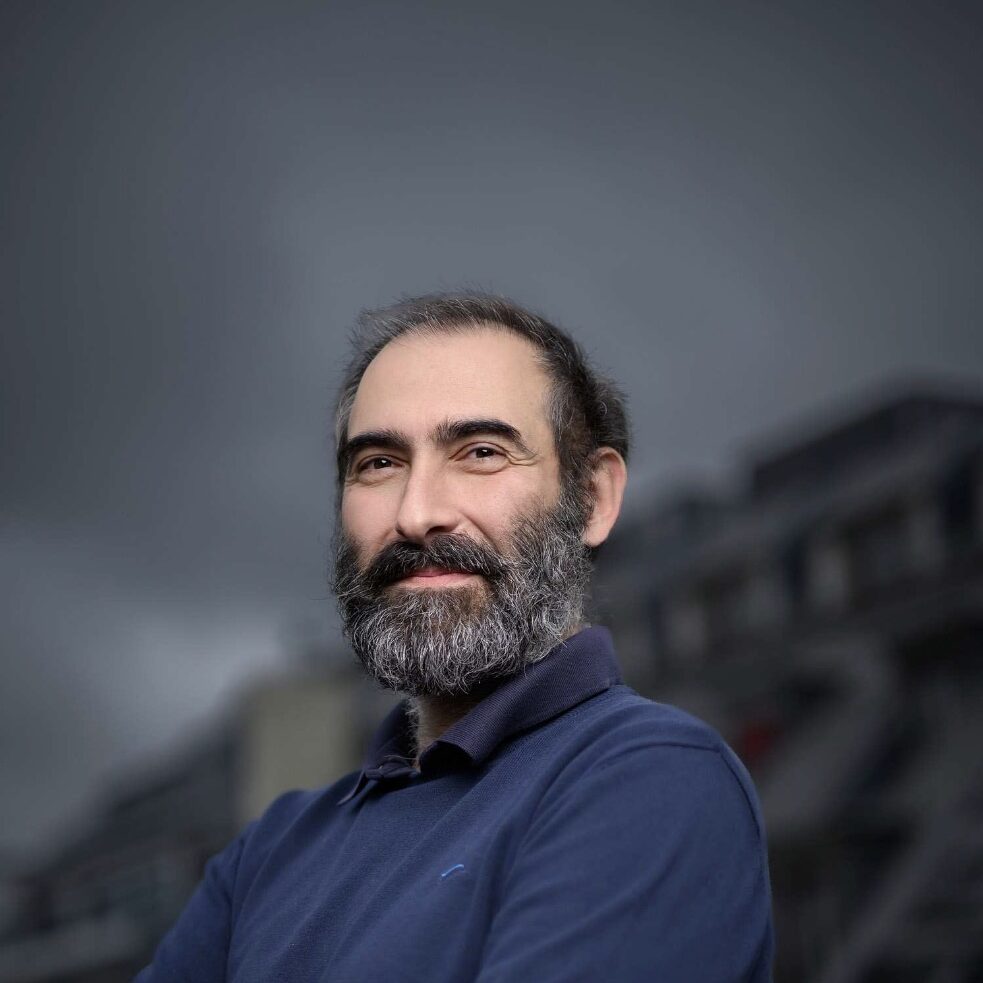
Speaker: Sébastien Lefèvre, Université Bretagne Sud
Title: Are Foundation Models Really Meeting Earth Observation?
Where: Digital Futures hub, Osquars Backe 5, floor 2 at KTH main campus – ONSITE only
Directions: https://www.digitalfutures.kth.se/contact/how-to-get-here/
Host: Yifang Ban yifang@kth.se and Josephine Sullivan sullivan@kth.se
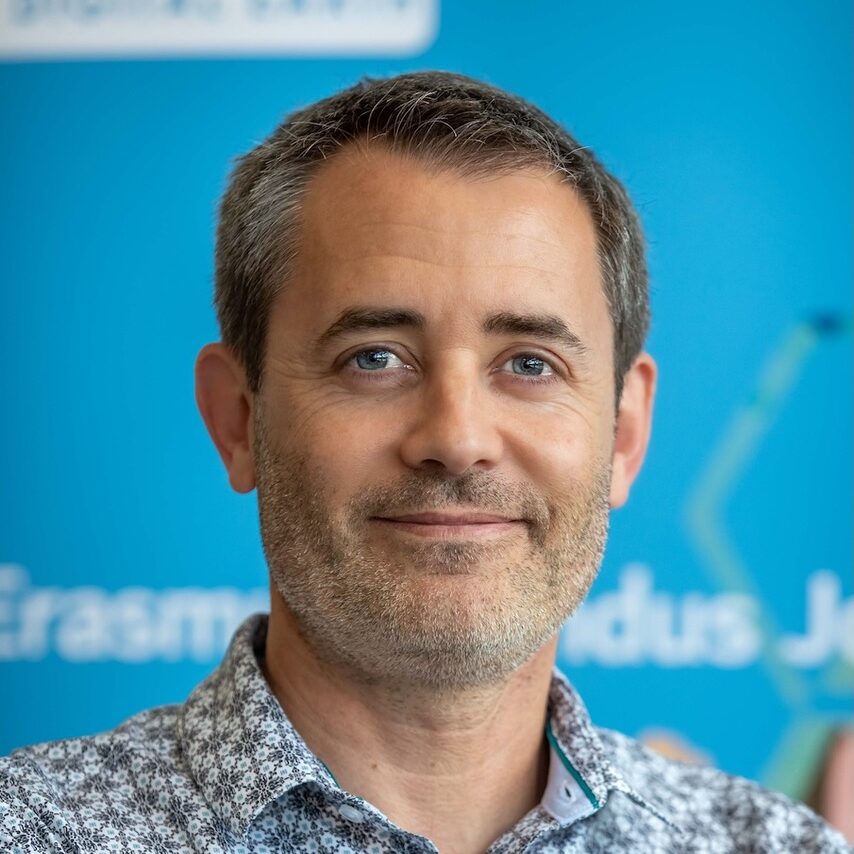
Bio: Sébastien Lefèvre holds a Master of Science (1999), a Ph.D. (2002), and a Habilitation (2009) in Computer Science. He has been a Full Professor at Université Bretagne Sud since 2010, promoted to the exceptional class by the National Council of Universities in 2023. He is also Adjunct Professor at UiT – The Arctic University of Norway and Visiting Professor at ESA Phi-lab.
His work focuses on Artificial Intelligence for Earth and Environmental Observation. He founded the OBELIX team at IRISA and currently chairs the GeoData Science track of the EMJM Copernicus Master in Digital Earth. He co-founded the ECML-PKDD MACLEAN workshop series, chairs the AI4EO 2025 symposium, coordinates the UBS–JRC Doctoral Program on AI4EO, and holds the PANORAMIX chair within the SequoIA AI cluster (2025–2029).
He serves on the scientific committee of IGN – the French Mapping Agency, and is active in ELLIS, IEEE GRSS, ISPRS, and IAPR. His research interests include image analysis and deep learning for remote sensing. As Earth Observation requires more than standard AI solutions, Prof. Lefèvre aims to conduct cutting-edge research in Artificial Intelligence to develop novel, efficient, scalable, and responsible solutions to address high-impact tasks using complex remote sensing data.
Abstract: Foundation models represent a significant paradigm shift in Earth Observation (EO), similar to the one brought by deep learning a decade ago. While the field of geospatial foundation models (GFMs) is expanding very quickly, with hundreds of models and thousands of publications, it remains unclear how well these contributions align with the principles, requirements and objectives of EO.
In this talk, I will present recent work from our group aimed at bridging GFMs and EO, focusing on two main aspects: (i) the ability of models to cope with the diversity of EO data modalities and sensors, including SAR, point clouds, VHR imagery and CubeSats; and (ii) the sustainability of the full GFM ecosystem, from benchmarking to pre-training and fine-tuning.