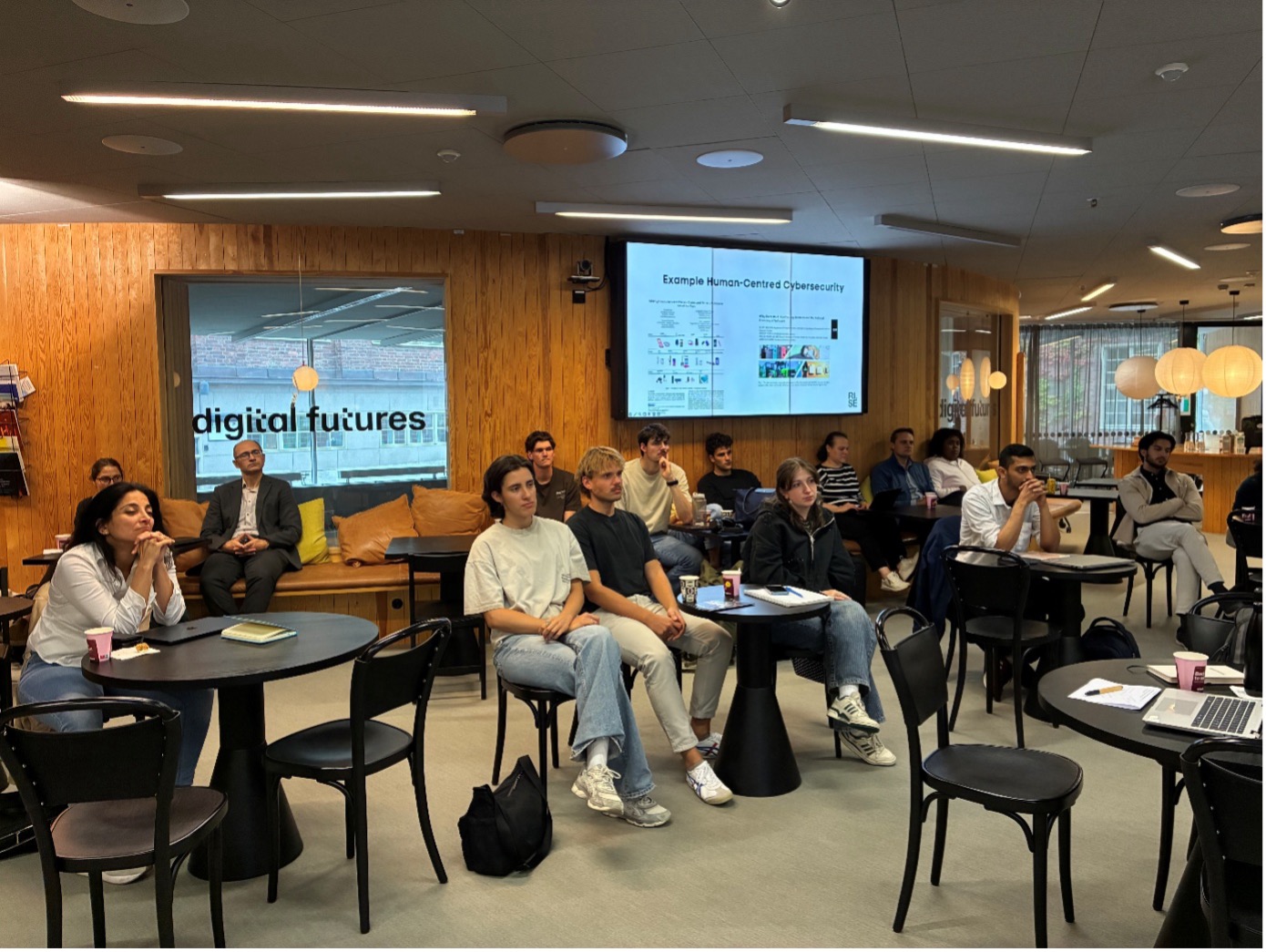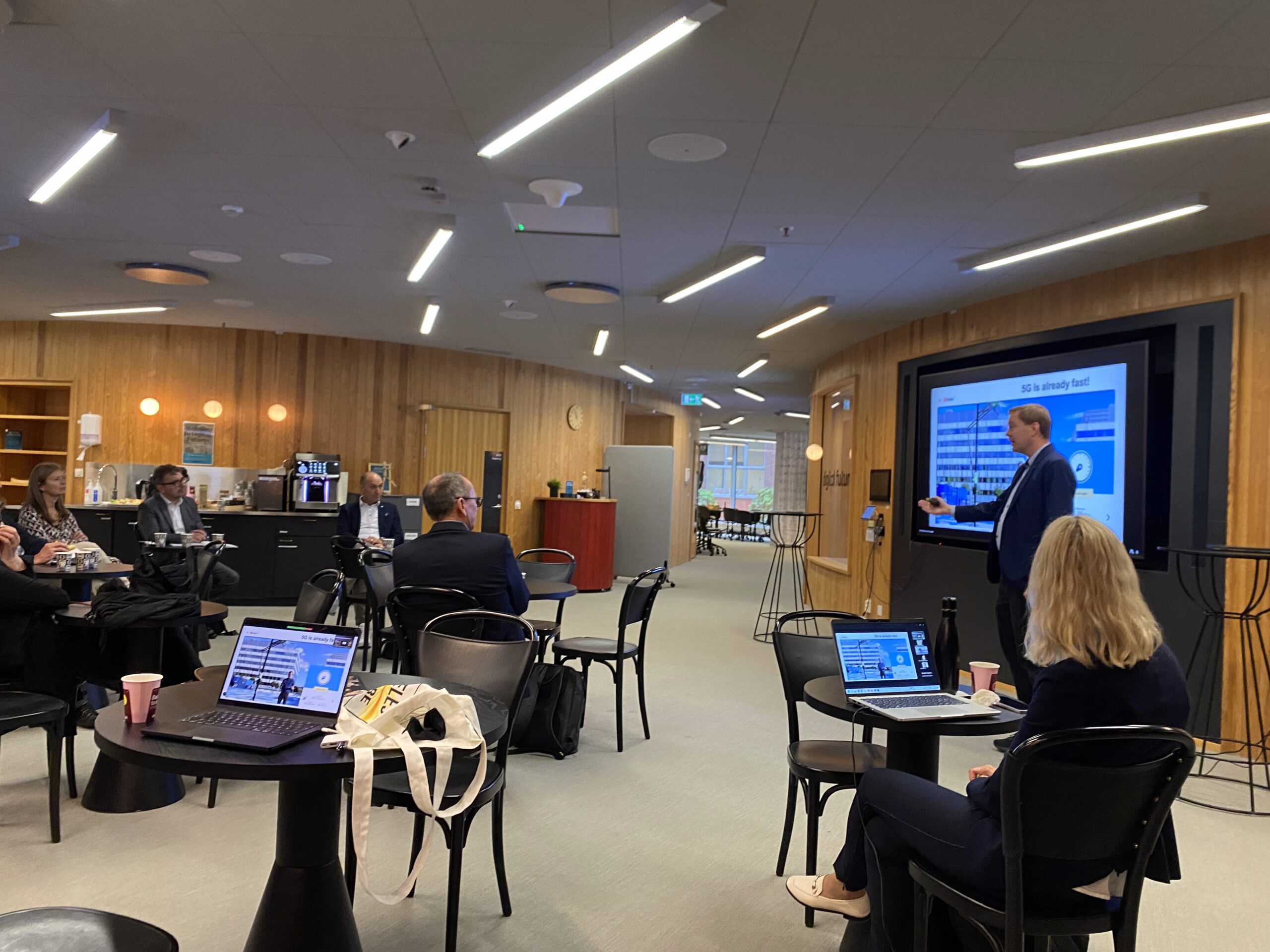
On 10 September, Digital Futures welcomed a delegation from the Swiss Federal Communications Commission (ComCom) for a morning of presentations and discussions on digitalisation, research and innovation in Sweden and Switzerland.
ComCom is the independent national regulatory authority for the Swiss telecommunications market. Its responsibilities include spectrum licensing, monitoring service quality, promoting competition and enabling new technologies. The Commission is composed of independent experts in areas including ICT, law, economics and entrepreneurship, and works closely with the Swiss Federal Office of Communications (OFCOM).
The visit provided an opportunity to compare the Swedish and Swiss digital ecosystems and explore areas of mutual interest. The programme opened with an introduction to Digital Futures, followed by presentations on the national AI landscape, including WASP, and the regional innovation ecosystem, with a focus on the Stockholm Digital Sandbox.
The Swiss delegation also presented the Swiss innovation and technology landscape, including the Greater Zurich Area, Switzerland’s strong academic base and its growing ecosystem of AI and deep-tech companies. The presentation highlighted both the strengths of the Swiss ecosystem and challenges related to scaling companies, academia–industry collaboration and fragmentation.
The programme then turned to the future of mobile networks and SweWin, followed by a presentation on research at Digital Futures and a discussion on opportunities and challenges in the development of future communication technologies.
The visit ended with an informal exchange – and a fitting exchange of gifts. The Digital Futures representatives received Swiss Army knives, while the Swiss delegation was given Digital Futures-branded umbrellas. With heavy rain falling over Stockholm, the umbrellas proved particularly well timed for the delegation’s continued visit to the city.
The meeting highlighted the many similarities between the Swedish and Swiss innovation ecosystems, as well as opportunities to learn from each other’s approaches to research, technology development, regulation and innovation.