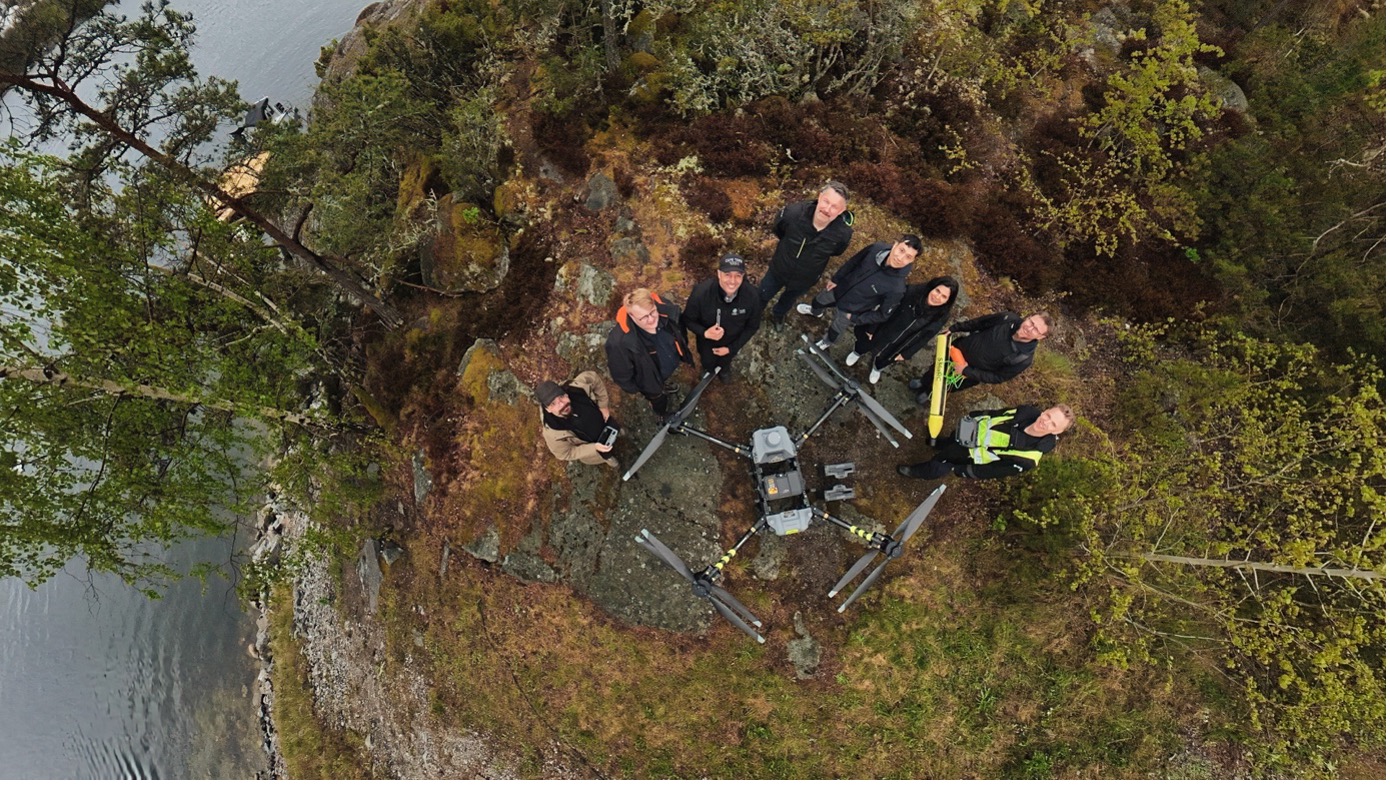
Aerial view of eight people standing on a rocky, forested cliff near water, looking up at the camera. Several drone devices and equipment are arranged on the ground in front of the group.

ALARS and ADAPCOS projects conclude with final presentations at Djurönäset

Building on the collaboration between Digital Futures, Purdue University, Saab AB and Saab Inc, researchers and industry partners gathered at Djurönäset this week for the final presentations and demonstrations of two projects: Autonomous Launch and Recovery System (ALARS) and AUV Data Processing, Communication and Swarm Optimisation in Contested and Denied Undersea Environments (ADAPCOS).

Both projects, launched in 2024, are now reaching completion. ALARS focuses on aerial–subsea vehicle interaction, while ADAPCOS addresses data processing, communication, and coordination of autonomous underwater systems.

The two-day workshop opened on 19 May with presentations summarising the projects’ key results. Researchers from KTH Royal Institute of Technology and Purdue University highlighted advances in adaptive control, autonomous learning, and intelligent system behaviour.
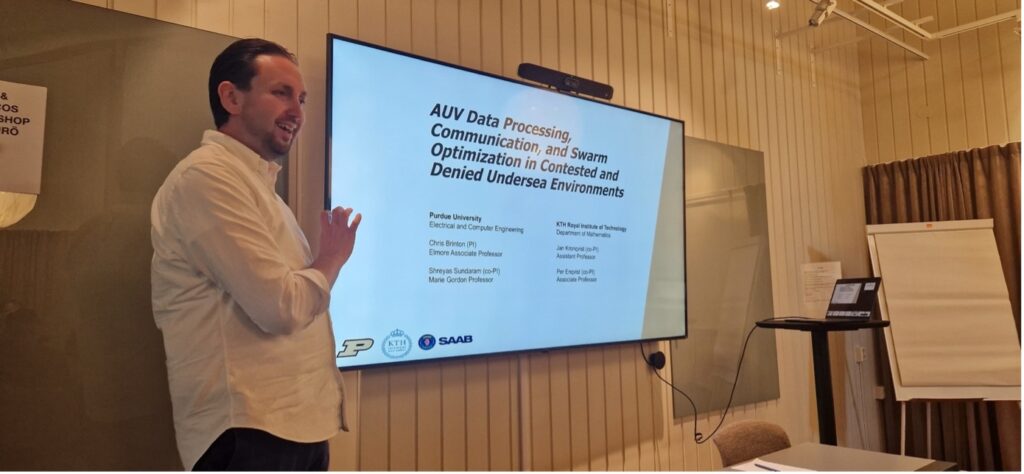
A man stands and gestures towards a large screen displaying a presentation titled AUV Data Processing, Communication, and Swarm Optimisation in Contested and Denied Undersea Environments in a meeting room.
Jan Kronqvist, ADAPCOS. Photo: Anna Kiefer
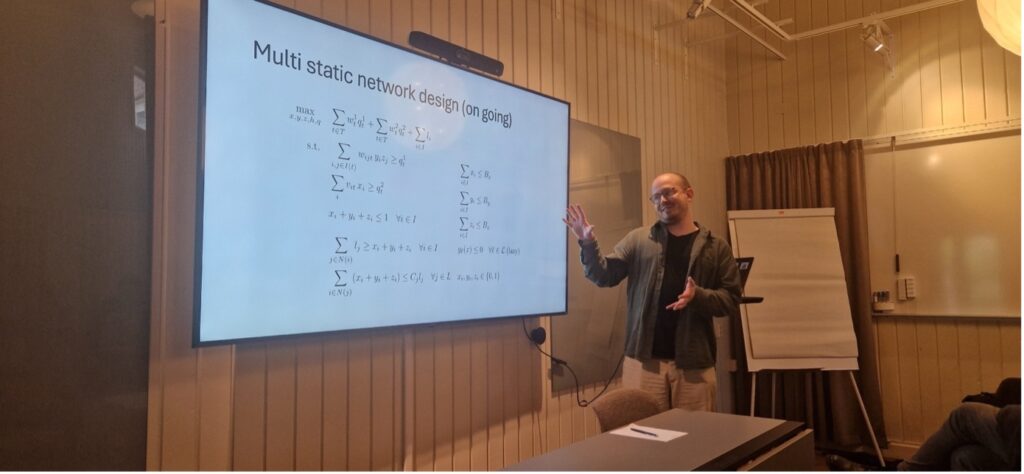
A man is giving a presentation in a conference room, pointing at a large screen displaying mathematical equations under the title Multi-static network design (ongoing). A flip chart is in the background.
Axel Kärrholm, ADAPCOS. Photo: Anna Kiefer

While ADAPCOS centred on underwater communication and swarm optimisation, ALARS focused on the physical deployment and recovery of unmanned undersea vehicles (UUVs) using unmanned aerial vehicles (UAVs). A central highlight of the workshop was a live demonstration at the Djurö Marine Station, organised by Ivan Stenius, principal investigator of the ALARS project, showcasing the system in a real-world operational setting.

The ALARS system is designed to address one of the key challenges in maritime robotics: the handling of small UUVs using UAVs. Potential applications include the recovery of disabled or depleted underwater vehicles, as well as persistent undersea surveillance and inspection operations.
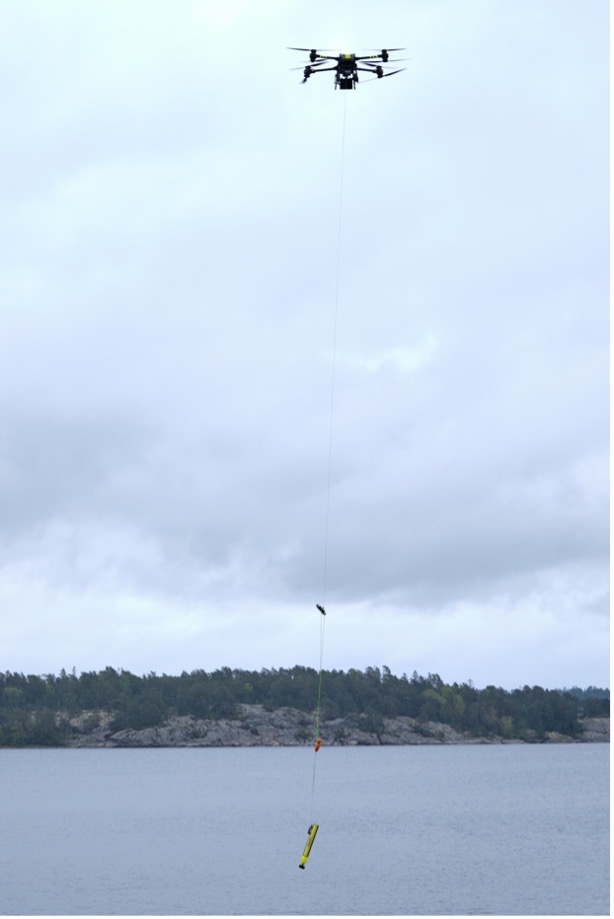
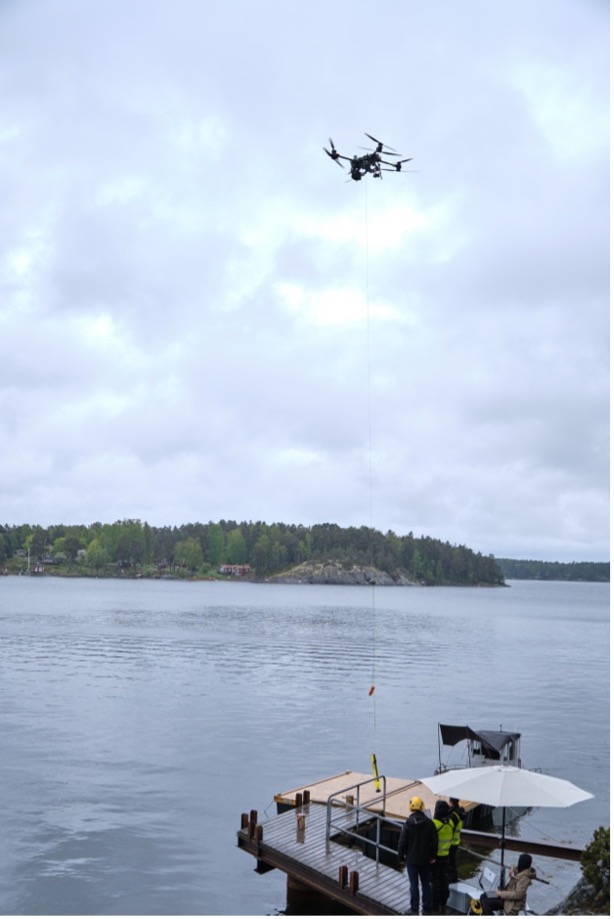
The demonstration illustrated the project’s rapid progress from concept and simulation to a functional prototype. It also underscored the value of cross-disciplinary collaboration, bringing together expertise in perception, localisation, planning, and maritime and aerospace mechanical engineering.
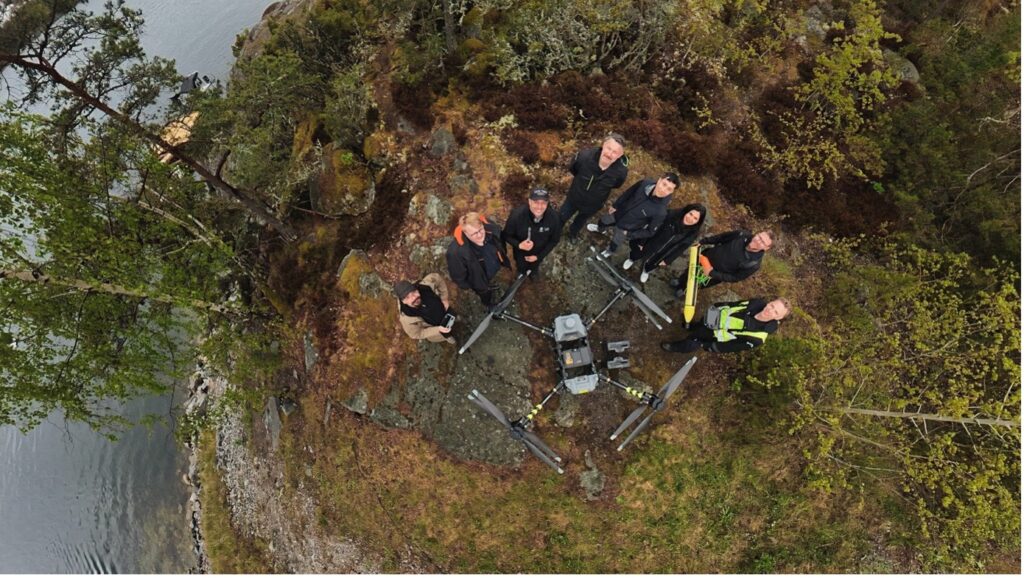
Aerial view of eight people standing on a rocky, forested cliff near water, looking up at the camera. Several drone devices and equipment are arranged on the ground in front of the group.
From left: Özer Özkahraman, Carl Ljung, Christo van Zyl, Björn Wallinius, Christopher Vo, Nina Mahmoudian, Ivan Stenius and Rikard Tyllström. Photo: Christopher Vo and Özer Özkahraman

The demo involved teams from KTH Royal Institute of Technology, Lund School of Aviation and Purdue University, with support from Saab AB, Saab Inc and Digital Futures.

The second day of the event focused on future collaboration and next steps for the respective project teams. The ALARS consortium also discussed the continuation of its work through the newly granted project Integrated Aerial–Surface–Subsurface Autonomy for Extreme Environments (I-SEE).
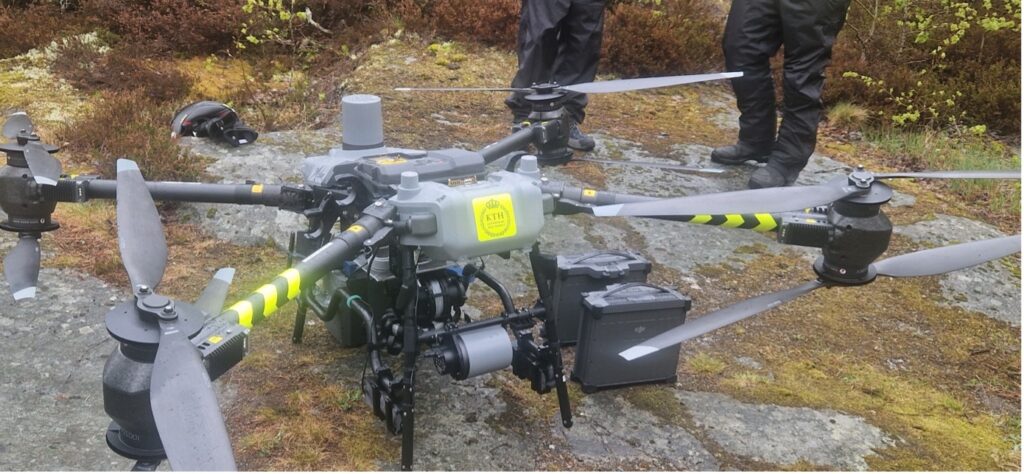
A large industrial drone with four rotors, cameras, and sensors is on the ground outdoors. Two people in black clothing stand nearby, and foliage is visible in the background.
Photo: Anna Kiefer

More news

A group of people in formal attire stand outside a building, smiling and holding a long blue and yellow ribbon for a ribbon-cutting ceremony. Two banners are displayed behind them.

Stockholm invigde ny AI-sandlåda för framtidens hållbara städer – Stockholm Digital Sandbox

29/05/2026

Den 29 maj invigdes Stockholm Digital Sandbox och Stockholm Urban Innovation Lab vid Kristinehovs Malmgård...

A person stands in front of a screen giving a presentation. The slide reads, Women don’t need more sympathy. We need more engineering. A laptop sits on a small stand nearby. The setting appears to be an indoor meeting room.

Breakfast seminar highlighted new technology for Home-based Hormone Diagnostics

28/05/2026

On Thursday 28 May, researchers, students and guests gathered at the Digital Futures hub for...

People are seated at tables in a modern conference room, attentively listening to a presentation titled digital futures displayed on a large screen at the front. The atmosphere is professional and collaborative.

Swedish Ministry of Finance visits Digital Futures to discuss public sector digitalization

26/05/2026

On 25 May, around 20 representatives from the Unit for Digitalization of Public Administration at...

A large group of people are gathered in a brightly lit room with arched windows, conversing and mingling during what appears to be a professional networking event or conference.

Digital Futures Faculty Workshop explores entrepreneurship, innovation, and societal impact

26/05/2026

On 21 May 2026, around 70 researchers, innovators, entrepreneurs, and invited guests gathered at the...