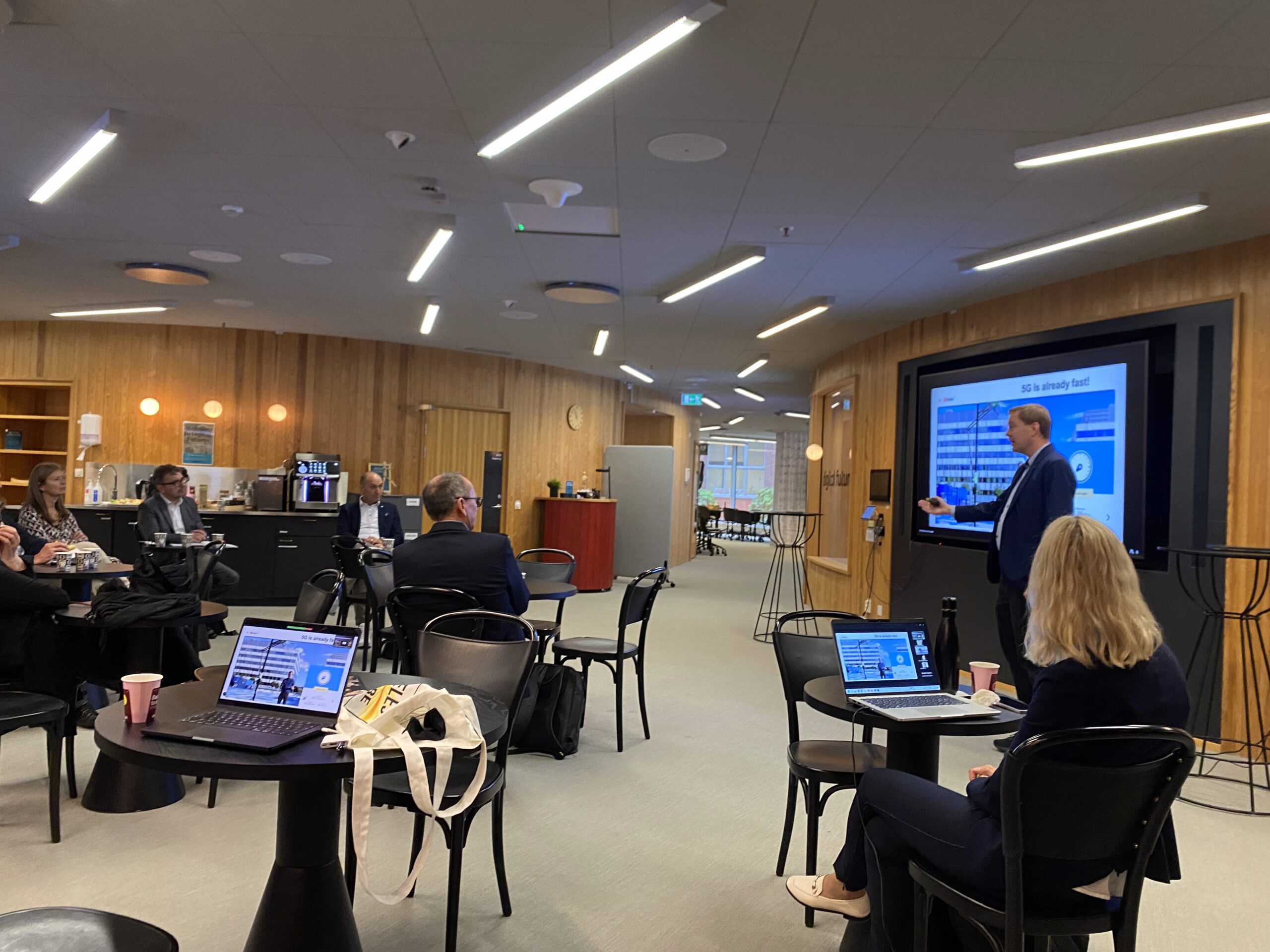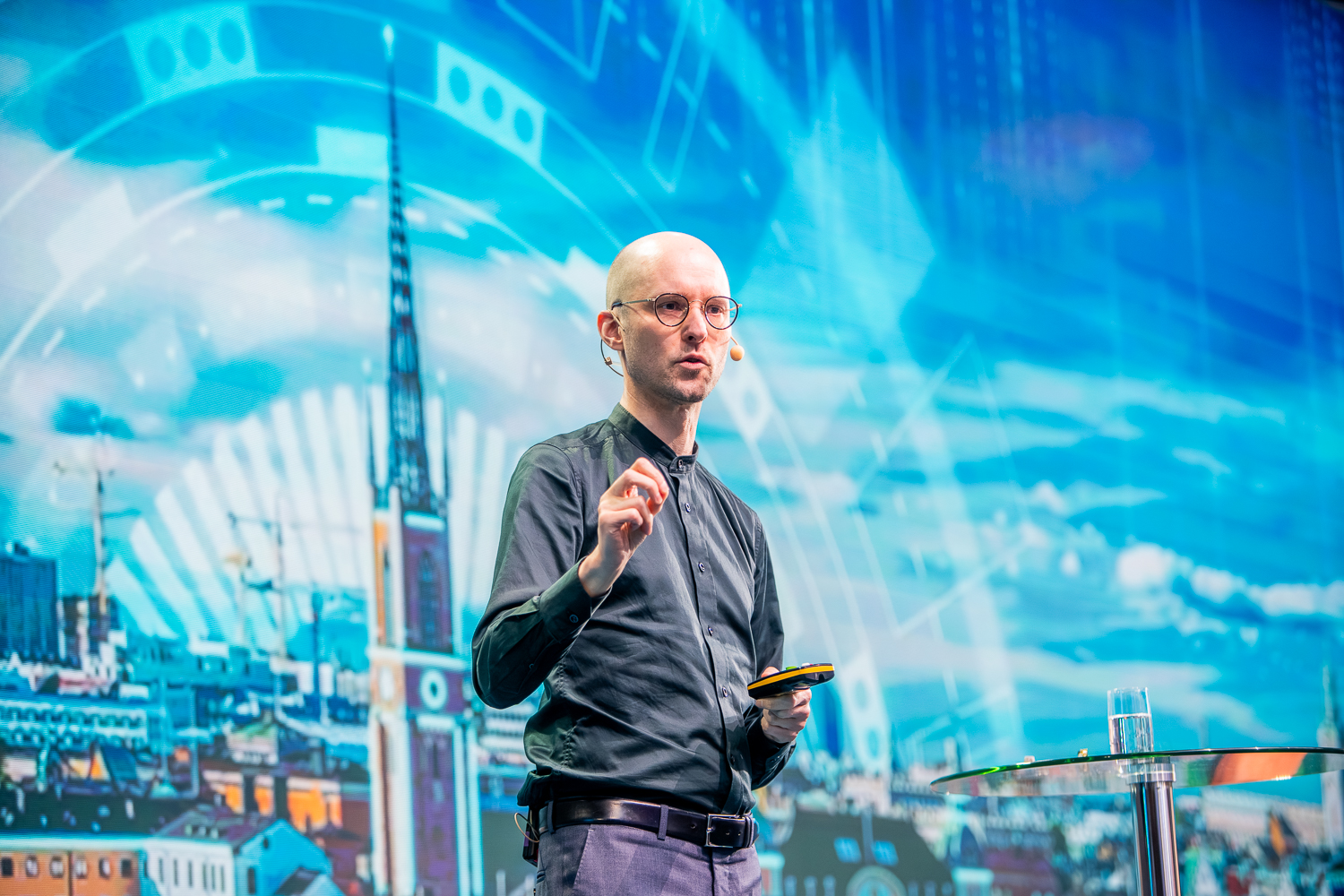
“Our really big societal challenges require AI to be integrated with the physical world,” said Marcus Weiland, Vice VD & Deputy MD at Savantic AB, giving examples from nuclear power, steel manufacturing, and water management, at this year’s Digitalize in Stockholm.
Keynote speaker Marcus Weiland, began by demonstrating an artificial “nose” that uses AI to assess the ripeness of fruit and its expected shelf life, thereby reducing waste. Other AI sensors can detect mold on food and prevent it from spreading in warehouses. His message was that it is time to start using AI in the physical world.
Link to the recorded presentation “Meaningful AI in Industry: Creating Value in a Physical World“on Youtube: https://youtu.be/vbI9qnU5VhA
“Our Silicon Valhalla has become internationally known for AI companies that are revolutionizing administration, entertainment, and finance. I would argue that such AI is only the beginning. The big revolution will come with physical AI, where our greatest human challenges lie.
Among several examples, Marcus Weiland showed how Savantic applied machine learning and language models in a nuclear power plant and successfully configured the fuel elements in just one day, compared to the normal four weeks. This resulted in less uranium fuel being used, lower costs, and a 15 percent increase in energy output.
“I am optimistic and look forward to Sweden getting its first physical AI unicorn. But for that to happen, Swedish companies need to change their mindset and plan from the outset to scale up their prototype projects. Here, companies need to dare to break with the Swedish tradition of decentralized innovation and plan more centrally.
So why don’t we already see physical AI in nuclear power, steel mills, water facilities, and food warehouses?
“We see physical AI in these sectors, but not on a large scale. We tend to get stuck in pilot projects because physical AI is much more complicated to scale up than its digital counterpart. But those who succeed gain a competitive advantage that is difficult to replicate and that digital AI companies can only dream of. I believe that Sweden can become a leader in physical AI if companies dare to invest.
The conditions are there. The European Commission’s latest Regional Innovation Scoreboard shows that Stockholm tops the list of 241 regions in Europe. Sweden is also the most innovative country in the EU – and the only country with three regions in the top ten.
“We have succeeded where many others struggle – collaboration between researchers, businesses, and the public sector, known as the triple helix model. We also have a well-functioning physical and digital infrastructure, which is necessary for testing AI solutions in practice,” says Karl H Johansson, Director of Digital Futures.
Digitalize in Stockholm is Sweden’s largest event on the challenges and opportunities facing society as it undergoes digital transformation. This year, more than 700 researchers, experts, and business leaders from around the world gathered at Münchenbryggeriet on Tuesday, November 11, 2025.