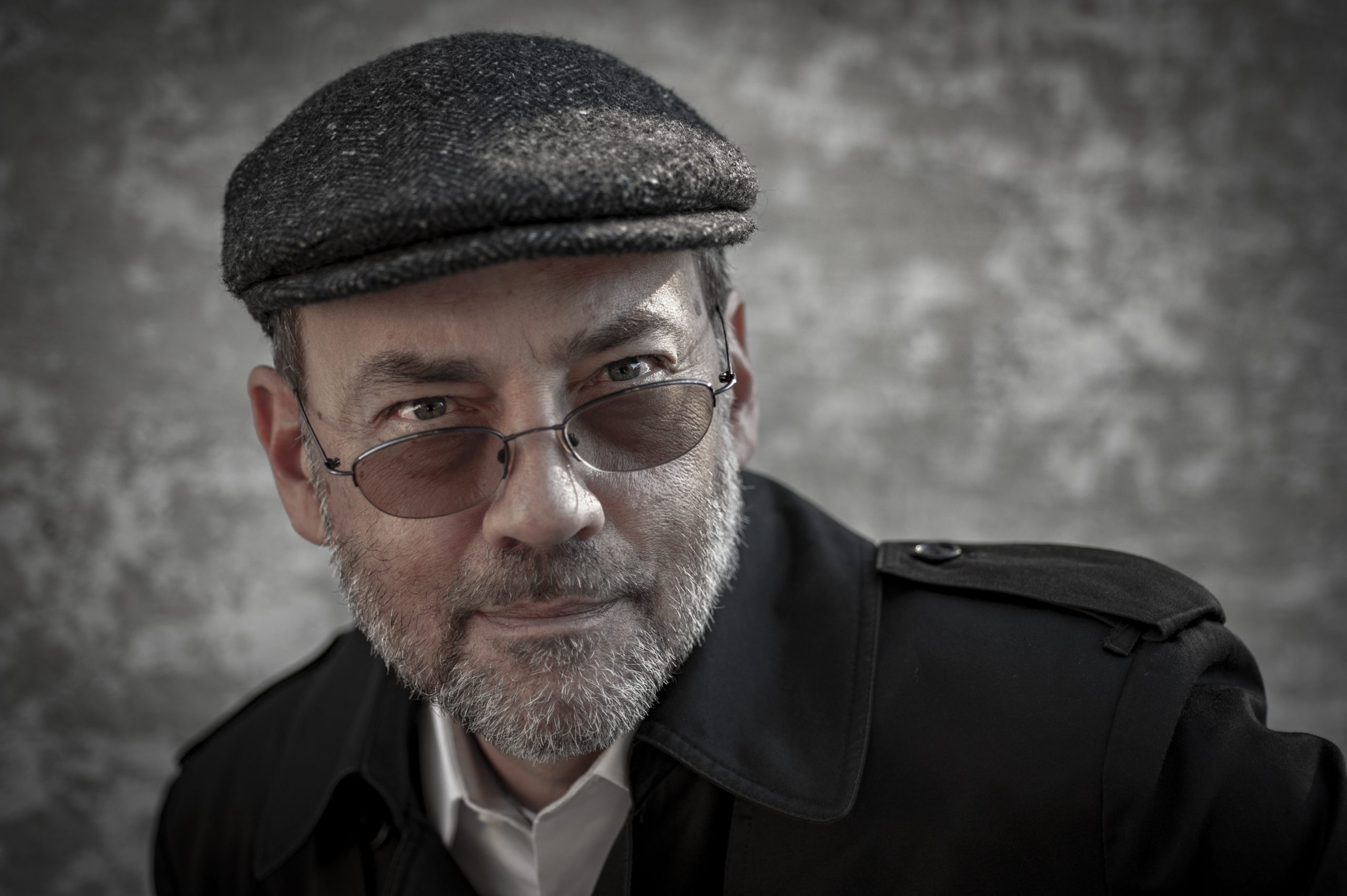
Welcome to Digital Futures Distinguished lecture by Edward A. Lee, Robert S. Pepper Distinguished Professor, University of California, Berkeley.
Date and time: 7 February 2023, 13:00-14:00 CET
Speaker: Edward A. Lee, Robert S. Pepper Distinguished Professor, University of California, Berkeley
Title: Trading off Consistency and Availability in Cyber-Physical Systems
Where: Digital Futures hub, Osquars Backe 5, floor 2 at KTH main campus OR Zoom
Directions: https://www.digitalfutures.kth.se/contact/how-to-get-here/
A maximum of 50 participants are onsite at the Digital Futures hub. First-come, first-served basis.
OR
Zoom: https://kth-se.zoom.us/j/69560887455
Meeting ID: 695 6088 7455
Password: 755440
Moderator: David Broman, Professor, KTH Royal Institute of Technology, Associate Director Faculty, Digital Futures
Administrator: Beatrice Vincenzi
Abstract: Cyber-physical systems (CPSs) are often safety-critical systems where malfunctions imply risk to humans. As CPSs increasingly involve several components interacting over networks, it becomes imperative to devise strategies that preserve safety in the face of network disruptions, whether caused by malicious intent or malfunctions. The classic “CAP Theorem,” due to Eric Brewer, states that in the face of network partitions (P), a system must give up either consistency (C) or availability (A). We have recently generalized and quantified this theorem. The generalization, called the “CAL Theorem,” gives a numerical relationship between network latency (L) and consistency (C) and availability (A). The CAL theorem shows that as network latency varies, for example, when the network comes under attack, then either consistency or availability or both must also vary. I will show in this talk that a CPS must prioritize either availability or consistency, and that which to prioritize depends very much on the application. I will show how the recently developed Lingua Franca coordination language enables designs that enforce these application-specific priorities.
Bio: Edward A. Lee is a Professor of the Graduate School and Distinguished Professor Emeritus in Electrical Engineering and Computer Sciences (EECS) at the University of California at Berkeley, where he has been on the faculty since 1986. He is the author of seven books, some with several editions, including two for a general audience and hundreds of papers and technical reports. Lee has delivered more than 200 keynote and other invited talks at venues worldwide and has graduated 40 PhD students. Professor Lee’s research group studies cyber-physical systems, which integrate physical dynamics with software and networks.
His focus is on the use of deterministic models as a central part of the engineering toolkit for such systems. He is the director of iCyPhy, the Berkeley Industrial Cyber-Physical Systems Research Center. From 2005-2008, he served as Chair of the EE Division and then Chair of the EECS Department at UC Berkeley. He has led the development of several influential open-source software packages, notably Ptolemy and Lingua Franca. He received his BS degree in 1979 from Yale University, with a double major in Computer Science and Engineering and Applied Science, an SM degree in EECS from MIT in 1981, and a PhD in EECS from UC Berkeley in 1986.
From 1979 to 1982, he was a member of the technical staff at Bell Labs in Holmdel, New Jersey, in the Advanced Data Communications Laboratory. He is a co-founder of BDTI, Inc., where he is currently a Senior Technical Advisor and has consulted for a number of other companies. He is a Fellow of the IEEE, was an NSF Presidential Young Investigator, won the 1997 Frederick Emmons Terman Award for Engineering Education, received the 2016 Outstanding Technical Achievement and Leadership Award from the IEEE Technical Committee on Real-Time Systems (TCRTS), the 2018 Berkeley Citation, the 2019 IEEE Technical Committee on Cyber-Physical Systems (TCCPS) Technical Achievement Award, the 2022 European Design and Automation Association (EDAA) Achievement Award, the 2022 ACM SIGBED Technical Achievement Award, and an Honorary Doctorate in Computer Science from the Technical University of Vienna.
Link to profile or speakers webpage: https://ptolemy.berkeley.edu/~eal/
Link to Twitter account: https://twitter.com/LeeEdwardA (@LeeEdwardA)
Link to LinkedIn account: https://www.linkedin.com/in/edward-lee-8b61195/