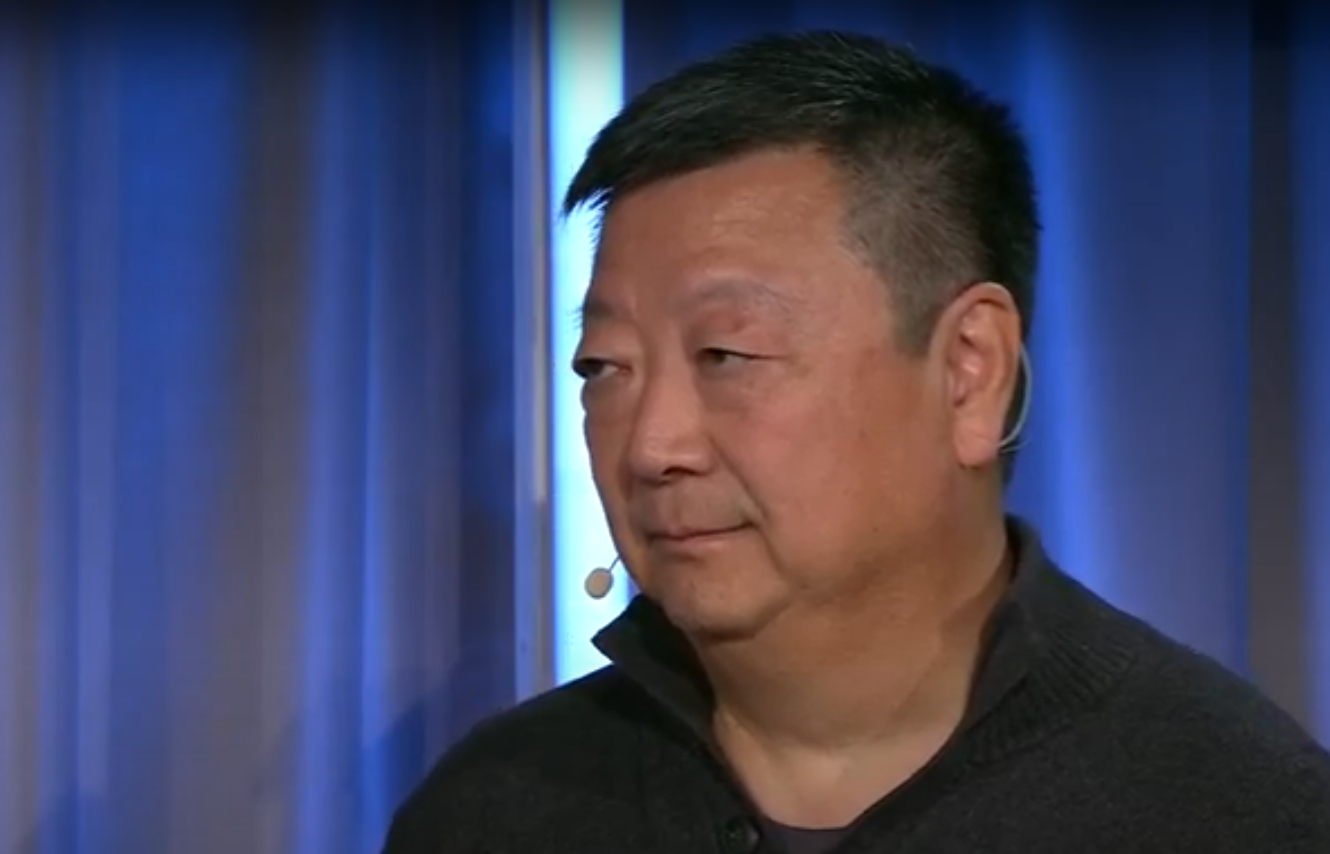
Pei Wang received his Bachelor of Science degree and Master of Science degree in Computer Science from Peking University in 1983 and 1986, respectively, and worked as a teacher at Peking University from 1986 to 1991. He received his Doctor of Philosophy degree from Indiana University, Bloomington, in Computer Science and Cognitive Science in 1995. From 1996 to 2001, he worked in several companies applying artificial intelligence techniques.
Since 2001, Wang has been with Temple University, where he is now a (non-tenure track) Associate Professor in the Department of Computer and Information Sciences. Since the mid-1980s, he has been developing a formal model of general intelligence called NARS (Non-Axiomatic Reasoning System) and its computer implementation, which has become an open-source project OpenNARS.
Pei Wang is the founding Chief Executive Editor of the Journal of Artificial General Intelligence and the Vice Chair of the Artificial General Intelligence Society.
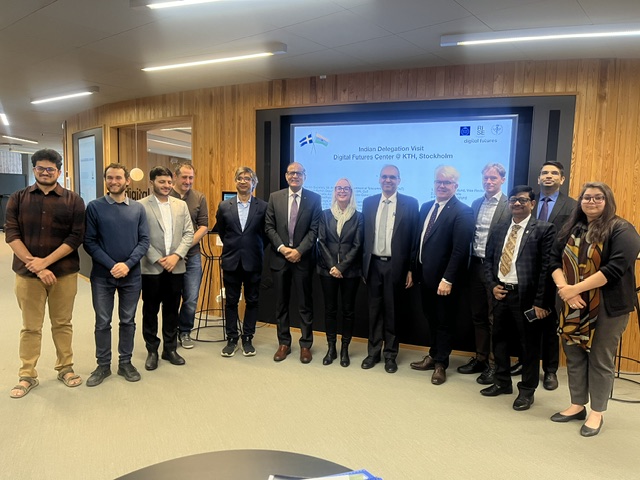
Wang is a Digital Futures Scholar in residence from September to November 2022 and was one of the panellists in the Digital Futures panel Societal-Scale Digital Transformation: Triple-Helix or Triple-Crux? at the conference Digitalize in Stockholm 2022.
On 8 September 2022, Pei Wang gave a Distinguished lecture on ‘The basic questions about Artificial General Intelligence (AGI)‘ – view the recorded presentation HERE.
Hi Pei, since September this year, you have visited Digital Futures as a scholar-in-residence. What made you take on this opportunity?
– I have been cooperating with my host Dr. Robert Johansson for years, and last year my former PhD student Dr. Patrick Hammer got a postdoc position in Digital Futures. I am taking the opportunity of my sabbatical leave to work with them closely on our projects.
Your research includes artificial intelligence, psychology, linguistics, logic, and philosophy, and it is rather interdisciplinary. How come and why do you find this so fascinating?
– I became interested in artificial intelligence as an undergraduate student. Gradually, the study led me to the other fields mentioned above as their problems are tightly tangled with each other, to the extent that it is hard, if not impossible, to address one without touching the others. This feature makes the study complicated and difficult, but at the same time fascinating, as I learned from many great thinkers and scientists in these domains, and often with the discovery that they are talking about different aspects of the same thing.
During this Autumn, you were giving an 8-day PhD course at Digital Futures hub, with the objective of introducing the audience to the topic of Artificial General Intelligence. Participants from a broad range of disciplines were able to attend. Tell us more about this.
– This is a novel experiment that worked out fine, as far as I can tell. What is called “artificial general intelligence” is an emerging field for which people have many different opinions, but little consensus on its theoretical foundation and technical approach. Consequently, few universities in the world offer a course on this topic. I have made efforts to develop such a course, with my own research as a thread to connect the problems and proposals in the field.
Given the interdisciplinary nature of this field (and of Digital Future, too), I selected the materials to focus this course on the basic issues and ideas, not the technical details, so students with different backgrounds can get something relevant to their own research. With the help of Dr. Hammer and Dr. Johansson, the students can choose their own project topic. To better serve the students in different universities (including those outside the city and even the country), the course is offered both in person and online.
Finally, tell us a little about yourself. What have you done in Stockholm so far?
– My wife accompanied me on this visit. On the weekends, we visited many wonderful places in Stockholm, as well as several other cities in the Nordic countries. Since this is the first time for us to be here, it has been an exciting and wonderful experience.
Your scholarship has now ended – what has your experience been like, and what are you going to do next?
– In both research and teaching, I have achieved more than expected. The colleagues and I have also planned several follow-up activities, including the next annual conference on Artificial General Intelligence, which will be held in June 2023 at Digital Future. Therefore, I will be back next year!