Date and time: Thursday 1 October 2026, 13:00-14:00 CEST
Speaker: Leila Papoli-Yazdi, Archaeologist of Contemporary Past, Garbologist
Title: How to Revive Forgotten Stories: A New Garbology Approach
Where: Digital Futures hub, Osquars Backe 5, floor 2 at KTH main campus OR Zoom
Directions: https://www.digitalfutures.kth.se/contact/how-to-get-here/
OR Zoom: https://kth-se.zoom.us/j/69560887455
Host: Amir Hossein Payberah payberah@kth.se
Hosted by WaterCentre@KTH in collaboration with Digital Futures.
Find out more: https://kth.ungapped.io/Events/f2ccd93d-af95-45ac-896a-5ac74e5cd342
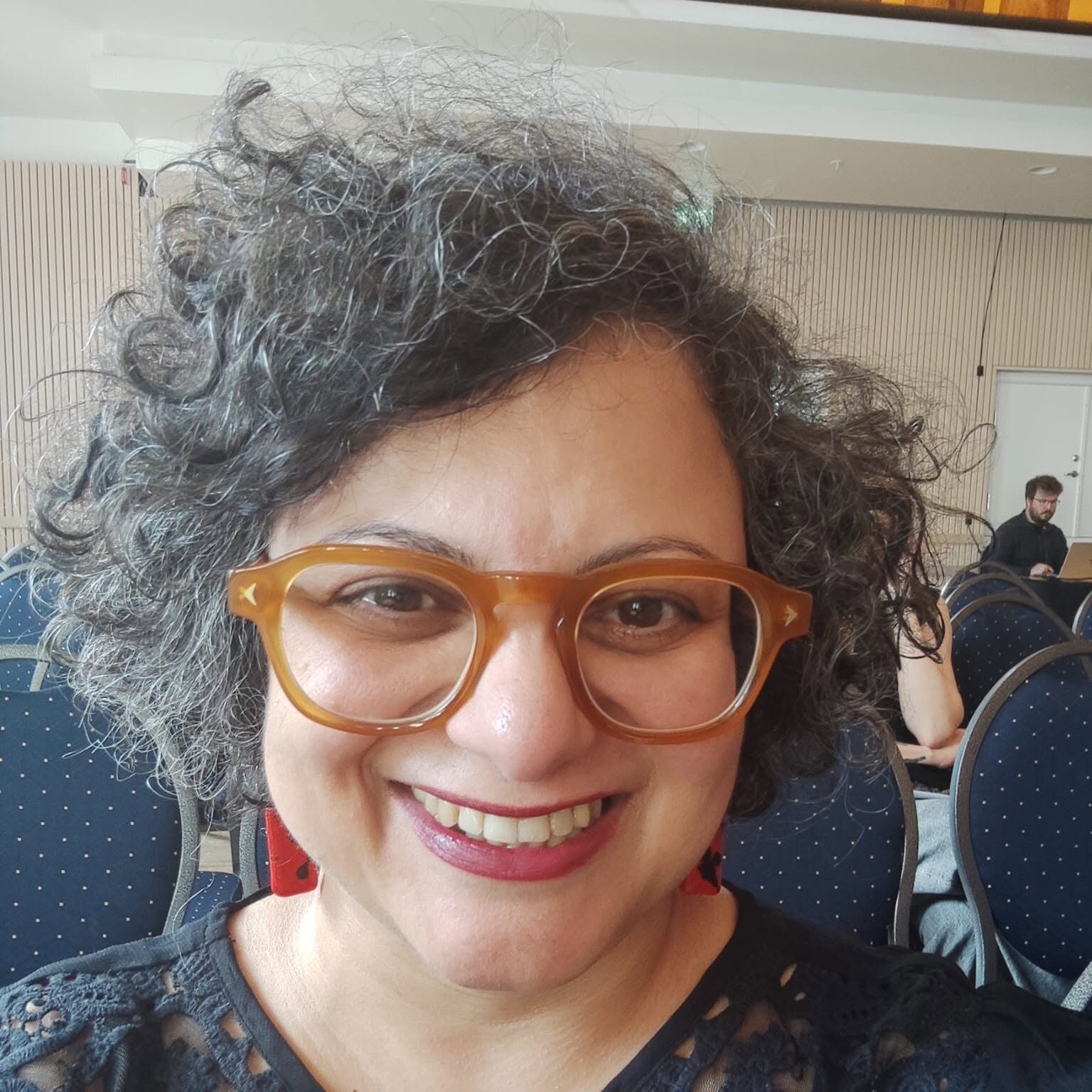
Bio: Leila Papoli-Yazdi, PhD, is a garbologist based in Malmö, Sweden. She holds a PhD in Archaeology from the University of Tehran and has held academic positions across Iran, Germany, and Sweden, including as an Alexander von Humboldt Postdoctoral Fellow at the Freie Universität Berlin and a researcher with the UNESCO Chair for Heritage Futures at Linnaeus University. She is the co-founder of Garbonomix, a start-up applying garbology to a sustainable economy and resilience. Her research uses waste and the discarded as a lens for recovering suppressed histories, gender politics, and the archaeology of the contemporary past.
Abstract: Some communities are victims of oblivion. Their stories are not lost. They are discarded, forgotten. This talk introduces New Garbology as a method for recovering what official memory has thrown away: the objects, the people, the events deemed unworthy of preservation. Waste is never neutral. It is political. It is a record of decisions: what a society chooses to keep, and what it chooses to forget. Drawing on fieldwork and archival material, this talk shows how the discarded can be read, and how reading it differently can revive stories buried under layers of silence.
The author considers her last book, A New Garbology Manifesto, to discuss how garbology can manifest approaches that advocate for the communities history has left behind, not as passive subjects of loss, but as active carriers of memory whose stories can still be reconstructed, reclaimed, and told. This is not archaeology of the past for its own sake. It is archaeology in the service of those still living with what was taken from them.