Date and time: Tuesday 19 May 2026, 13:30-14:30 CEST
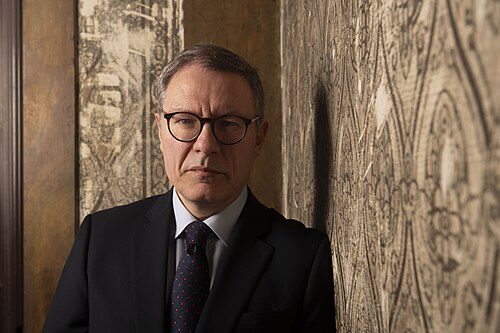
Speaker: Luciano Floridi, Yale University
Title: Distant Writing: AI, Authorship, and the Transformation of Knowledge Production
Where: Digital Futures hub, Osquars Backe 5, floor 2 at KTH main campus
Directions: https://www.digitalfutures.kth.se/contact/how-to-get-here/
Host: Ozan Öktem ozan@kth.se

Bio: Luciano Floridi is John K. Castle Professor in the Practice of Cognitive Science and Founding Director of the Digital Ethics Center at Yale University, and Professor of Sociology of Culture and Communication at the University of Bologna. He is world-renowned as one of the most authoritative voices of contemporary philosophy, the founder of the philosophy of information, and one of the major interpreters of the digital revolution.
His more than 400 works on the philosophy of information, digital ethics, AI ethics, and philosophy of technology have been translated into many languages. Among various awards and recognitions, in 2022 he was made Knight Grand Cross OMRI for his foundational work in philosophy. Since January 2025, he has been President of the Leonardo Foundation ETS.
Abstract: Generative AI unsettles a practice that has long been central to the Humanities and Social Sciences: writing understood as an exercise of human authorship and intellectual agency. As scholars increasingly write in interaction with AI systems, familiar assumptions about originality, responsibility, and interpretation can no longer be taken for granted. This talk explores the concept of “distant writing” as a way of characterising AI-mediated textual production, and of distinguishing it from earlier methodological shifts such as distant reading. Rather than treating AI as a neutral instrument, the analysis considers how its involvement in writing reshapes scholarly practice itself, including the distribution of authority and the conditions under which knowledge is produced and assessed.
By approaching AI as a form of agency rather than merely a tool, the talk clarifies a set of philosophical and methodological questions now facing the Humanities and Social Sciences, while also examining the risks and the new possibilities that AI introduces into research and writing.