Date: 2 – 3 June 2026
Day 1: 2 June, 12:30 – 17:00
Day 2: 3 June, 09:00-12.30 followed by lunch
Title: Workshop on Responsible AI vs. AGI Hype
Where: Digital Futures hub, Osquars Backe 5, floor 2 at KTH main campus OR Zoom
Zoom: https://kth-se.zoom.us/j/69560887455
Directions: https://www.digitalfutures.kth.se/contact/how-to-get-here/
The main goal of this workshop is to gather researchers and practitioners of different disciplines to discuss the current challenges for the responsible use of AI. Some of them are AI ethics, responsible AI design and governance, real AI risks and their social impact, to counterbalance the AGI hype of many industry and media.
If you are interested in giving a lightning talk (10 minutes) on June 2nd, please contact raby2@kth.se proposing a topic related to the workshop.
Registration & Questions
- To participate ONSITE you need to register here.
- Questions? Please contact Ricardo Baeza-Yates: raby2@kth.se
Program – 2 June
12:30-13:00 Registration
13:00 – 14:45 Session 1: Responsible Design
- Responsible Generative Recommender Systems: From Ranking to Interaction
Julia Neidhardt, Data Science Research Unit, TU Wien, Austria
- Causality and Robustness for Responsible AI Decisions
Sebastian Dalleiger, Dept. of Theoretical Computer Science, KTH, Sweden
- GenAI Security – Promises and Challenges
Sandro Stucki, Dept. of Computer Science, Chalmers University of Technology, Sweden
14:45 – 15:30 Coffee break
15:30 – 17:00 Session 2: Irresponsible Design
- AI Ethics and Pseudoscience
Ricardo Baeza-Yates, KTH, Sweden & Univ. Pompeu Fabra, Spain
- Lightning Talks
Short research presentations on topics related to Responsible AI
- Operationalizing the Ethics of Artificial Awareness
Ana Tanevska, TCS/EECS, KTH - Evaluating SpeechLLMs for bias and fairness
Shree Harsha Bokkahalli Satish, Speech, Music and Hearing, KTH - From Representations to Predictions: Uncertainty in LLMs
Tianyi Zhou, TCS/EECS, KTH
- Operationalizing the Ethics of Artificial Awareness
End of Day
Program – 3 June
09:00 – 10:30 Session 3: Social Impact and AI Governance
- AI and Social Epistemic Practice
Vikram Singh Sirola, Dept. of Humanities and Social Sciences, IIT Bombay, India
- Unintended Consequences of Algorithmic Decision-making in the Public Sector
Emrah Karakaya, Dept. of Industrial Economics & Management, KTH, Sweden
- Re-examining Trustworthiness Expectations from Algorithmic, Regulatory, and Actionable Fairness in AI Development
Anna Guimarães, Dept. of Information Science & Engineering, KTH, Sweden
10:30 – 11:00 Coffee break
11:00 – 12:30 Session 4: AGI Hype and AI Risks
- Question Zero: Beyond the ‘AI First’ Hype
Tatjana Titareva, AI Policy Lab, Umeå University, Sweden
- AI Risks: Real vs Imagined
Devdatt Dubhashi, Dept. of Computer Science, Chalmers University of Technology, Sweden.
- AGI, Agency, and Catastrophic Risk
Anandi Hattiangadi, Dept. of Philosophy, Stockholm University, Sweden
12:30 Lunch at Syster o Bror
Organizers
- Anandi Hattiangadi, Professor, Stockholm University
- Aris Gionis, WASP Professor, KTH
- Devdatt Dubbashi, Professor, Chalmers University of Technology
- Ricardo Baeza-Yates, WASP Guest Professor, KTH
Speakers
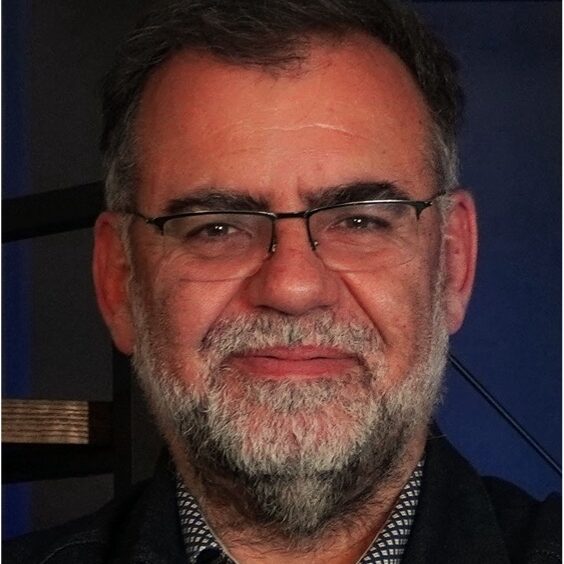
Ricardo Baeza-Yates
Title: AI Ethics and Pseudoscience
Abstract: In this presentation we will cover examples of irresponsible AI, mainly triggered by not fulfilling the first principle of the ACM Principles for Responsible Algorithmic Systems: legitimacy and competency. In the legitimacy side we will look at unethical or pseudoscientific applications, usually without having any bad intention. In the competency side we will present examples of technical and administrative incompetence. These examples have harmed more than one million people in several countries.
Bio: Ricardo Baeza-Yates is Search Chief Scientist at You.com, a San Francisco based company specialized in search APIs. He is also a part-time WASP Guest Professor at KTH, Royal Institute of Technology in Stockholm, Sweden, since 2025, as well as part-time Professor at Universitat Pompeu Fabra in Barcelona (2004) and at Universidad de Chile in Santiago (1989). He is also a member of several technology policy committees or expert groups on responsible AI at ACM, IEEE, OECD and WEF. From 2021 to early 2025 he was the Director of Research at the Institute for Experiential AI of Northeastern University at Silicon Valley. Before he was VP of Research at Yahoo Labs, based in Barcelona, Spain, and later in Sunnyvale, California, from 2006 to 2016. He is co-author of the best-seller Modern Information Retrieval textbook published by Addison-Wesley in 1999 and 2011 (2nd ed), which won the ASIST 2012 Book of the Year award. In 2009 he was elevated to ACM Fellow and in 2011 to IEEE Fellow. He obtained the Spanish National Research Award Ángela Ruiz Robles for applied research and technology transfer given by the Scientific Computing Societies of Spain and the BBVA Foundation in 2018 and the Chilean National Award on Applied and Technological Sciences in 2024, among other distinctions. He obtained a Ph.D. in CS from the University of Waterloo, Canada, and his areas of expertise are responsible AI, web search and data mining, information retrieval, data science and algorithms in general.

Sebastian Dalleiger
Title: Causality and Robustness for Responsible AI Decisions
Abstract: Many AI systems are evaluated as if they make predictions about a fixed world, but deployed systems often change the world they observe. AI decisions affect users, incentives, future data, and the validity of explanations or recourse recommendations, which can exacerbate existing biases, create new forms of harm, and lead to interventions that appear actionable but fail in practice. This talk discusses how concepts from causality and robustness in machine learning can help address such problems. We will explore these ideas using examples from algorithmic recourse, debiased prediction, and feedback-driven recommender systems, and argue that responsible AI requires models that remain reliable not only under data variation, but also under the consequences of their own use.
Bio: Sebastian Dalleiger joined KTH Royal Institute of Technology as a WASP Assistant Professor in 2025. He received his PhD from Saarland University for his work on algorithmic data analysis and networks, conducted at the Max Planck Institute for Informatics and CISPA Helmholtz Center for Information Security. His research lies at the intersection of foundations of machine learning, optimization, and algorithmic data analysis, with a particular interest in reliable, trustworthy, and responsible AI systems.
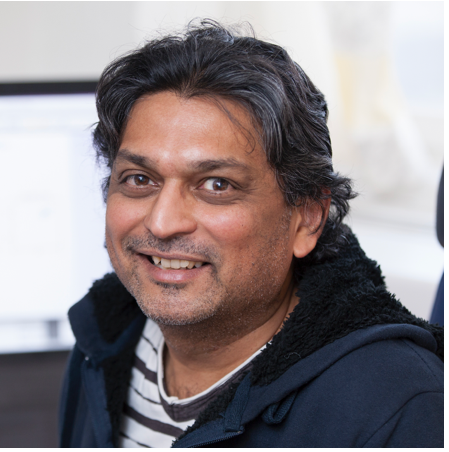
Devdatt Dubhashi
Title: AI Risks: Real vs Imagined
Abstract: We will review recent claims about risks of AI exterminating humanity in the light of evidence from state-of-the-art research and give an assessment of the capabilities and limits of current and near future AI models.
Bio: Devdatt Dubhashi is Full Professor of Computer Science at Chalmers University of Tehcnology, Sweden. He holds a PhD in Computer Science from Cornell University. His main research area is algorithms and machine learning. He has served as an external expert to the OECD on Data Driven innovation and has led several national and international projects in machine learning and related areas.
Re-examining trustworthiness expectations from algorithmic, regulatory, and actionable fairness in AI development
Abstract: As AI systems are increasingly embedded in everyday processes, including high-stakes processes that affect access to opportunities and resources, ensuring fairness is both a social and legal imperative. The concept of fairness, however, is highly contextual, and biases that can lead to unfair outcomes are often non-trivially embedded in data, model design, and deployment practices. In this talk we review algorithmic fairness concepts in contrast with recent regulatory obligations, in an effort to highlight where fairness goals misalign. We then discuss a framework to identify how unfairness can emerge and propagate during the AI development pipeline and point out ways in which awareness and other trustworthiness practices like transparency and oversight can be used to identify and address unfairness.
Bio: Anna Guimarães is an industrial postdoc at KTH, working on the Digital Futures project “Towards Trustworthy AI Deployment” in collaboration with Scania and Stockholm University. The project tackles challenges in developing trustworthy AI systems in accordance with recent legal demands on fairness, privacy, and transparency within the EU AI Act and related governance processes. Anna received her PhD from Saarland University and the Max Planck Institute for Informatics, and her research has focused on cross disciplinary applications of computer science techniques to behavioral and social sciences, and now to governance and law.
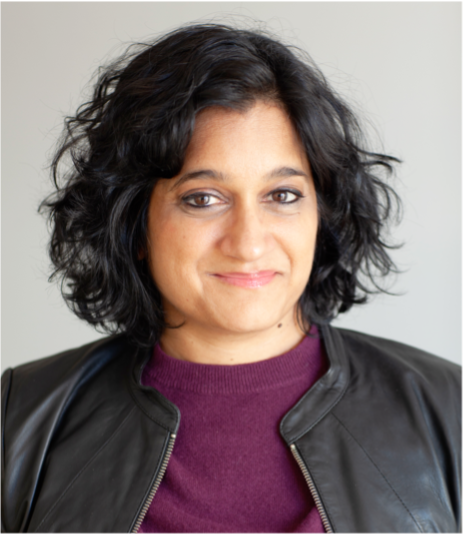
Anandi Hattiangadi
Title: AGI, Agency, and Catastrophic Risk
Abstract: Many arguments for the catastrophic risk of developing AGI rest on the assumption of an intelligence-agency link: that if a system achieves AGI, it is likely to become an autonomous agent, with the ability to develop its own goals, and the power to pursue them. In this presentation, I argue that the intelligence-agency link is dubious, at best, and that the real catastrophic risks associated with AI stem from our tendency to regard AI systems as true agents when in fact they are not.
Bio: Anandi Hattiangadi is a professor of philosophy at Stockholm University and a researcher at the Institute for Futures Studies. She has a Ph.D. in History and Philosophy of Science from the University of Cambridge, and has held positions at Trinity College, Cambridge, and the University of Oxford. She has research interests in philosophy of mind, language, cognitive science, and AI. She is currently writing a monograph on artificial general intelligence, under contract with Cambridge University Press.

Emrah Karakaya
Title: Unintended consequences of algorithmic decision-making in the public sector
Abstract: Algorithmic decision-making has been increasingly experimented in the public sector. Driven by the imperative of artificial intelligence (AI), the hope is that algorithms will increase efficiency and productivity in all parts of the public sector, providing citizens better and quicker services. The public sector of Sweden is no exception. For example, in Swedish municipalities alone, there have been more than a thousand reported cases, where various forms of AI-based algorithms have been tested, experimented and, even sometimes, put into use and scaled up. However, applications of AI in the public sector are not problem free. While those AI applications promise to solve some problems, e.g., inefficiency and slowness of bureaucratic decisions, they can easily shift the problem to another domain: social injustice or organizational burden. In this talk, I will reflect on unintended and unanticipated consequences of algorithmic decision-making, including recent examples where algorithmic decision-making in Swedish public sector went wrong.
Bio: Emrah Karakaya is an associate professor (docent) at the Department of Industrial Economics and Management (INDEK) at KTH Royal Institute of Technology. In his research, Emrah explores how calculative practices influence organizational and industrial change. Some examples of these calculative practices are algorithmic decision support systems (e.g., driven by artificial intelligence) and sustainability assessment methods (e.g., life cycle assessment). Currently, Emrah is co-leading two research projects: Artificial Intelligence and Industrial Transformations (funded by WASP-HS program) and Data-Driven Sustainable Food (funded by KTH’s Digital Futures). Previously, Emrah has held visiting positions at SCANCOR at Harvard University, Copernicus Institute at Utrecht University and Fraunhofer Institute for Systems and Innovation Research.
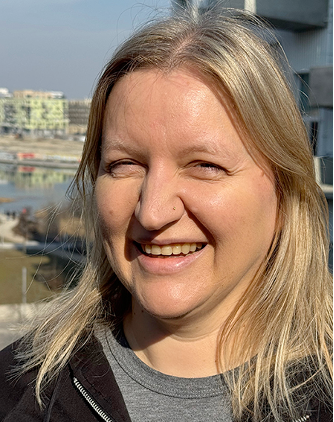
Julia Neidhardt
Title: Responsible Generative Recommender Systems: From Ranking to Interaction
Abstract: Recommender systems are increasingly evolving from static ranking systems into conversational and interactive digital assistants. Rather than only helping users discover items, these systems increasingly influence how information is presented, how preferences are formed, and how decisions develop through ongoing interaction. This talk examines the implications of this shift for the design, evaluation, and governance of recommender systems. Building on recent work on generative conversational recommender systems and bias, it discusses emerging challenges related to conversational framing, semantic homogenization, persistent memory, delegation, and feedback loops. The talk argues that existing fairness and optimization-based approaches are insufficient for these interaction-driven systems and outlines broader sociotechnical perspectives for responsible generative recommender systems that preserve accountability, diversity of perspectives, and human agency.
Bio: Julia Neidhardt is an Assistant Professor at the Data Science Research Unit at TU Wien, Vienna, Austria, where she leads the Christian Doppler Lab for Recommender Systems. She has held the UNESCO Co-Chair on Digital Humanism since 2023. She has a background in mathematics and computer science and has been a guest researcher at the Austrian Academy of Sciences, Northwestern University, and the University of Geneva. Her research lies at the intersection of user modeling, recommender systems, and Digital Humanism, with applications in domains such as news, e-commerce, and tourism. Her recent work focuses on generative conversational recommender systems and the impact of digitalisation on linguistic diversity. She is actively involved in the international research community through editorial, program committee, and organizational roles, and serves on the board of the TU Wien Center for AI and Machine Learning (CAIML).
Vikram Singh Sirola
Title: AI and Social Epistemic Practice
Abstract: The rapid integration of Artificial Intelligence (AI) into everyday epistemic practices has transformed not only the accessibility of information but also the conditions under which knowledge is produced, circulated, and validated. This paper is a social epistemological exploration of how AI systems mediate testimony, trust, authority, and how they restructure collective knowledge production, and transforms epistemic dependence. AI-mediated information is reshaping epistemic agency and our idea of collective rationality. Such systems participate in collaborative cognition where human-AI systems are counted as collective epistemic agents. We need to assess whether such epistemological shift enhances or weakens epistemic exclusion and epistemic injustice. In this context, the paper argues that classical questions in social epistemology concerning testimony, trust, expertise, and epistemic dependence acquire renewed significance.
Bio: Professor Vikram Singh Sirola teaches Philosophy at the Department of Humanities and Social Sciences, Indian Institute of Technology Bombay. His research and teaching interests span Epistemology, Analytic Ethics, and the Philosophy of Science. He earned his Ph.D. in Philosophy from Jawaharlal Nehru University and was awarded the Fulbright-Nehru Senior Research Fellowship at Columbia University, New York. His recent publications include works on Social Epistemology (2019), Underdetermination in Science (2019), Evolutionary Epistemology (2018), Moral Epistemology (2023), and Scientific Normativity (2025). His contributions to teaching have been recognized with the Institute S.P. Sukhatme Award for Excellence in Teaching (IIT Bombay, 2020) and the Departmental Award for Excellence in Teaching (2018).

Sandro Stucki
Title: GenAI Security – Promises and Challenges
Abstract: The past decade has seen a steep rise in the use of machine learning (ML) fueled by developments in deep learning and generative AI (GenAI). The rapid evolution and adoption of these techniques bring unique opportunities and challenges, not least for cybersecurity. In this talk, I will give a high-level overview of the novel threats and possible solutions for securing GenAI systems (security for AI), as well the role of AI/ML in doing so (AI for security). The focus of this presentation will be on LLMs and AI agents – how they change the threat landscape and what to do about it.
Bio: Sandro Stucki is a lecturer at Chalmers University of Technology. He holds a PhD in Computer Science from EPFL and has worked as a researcher in both academia and industry. His current research interests are at the intersection of Formal Methods, Security and AI. In the past, Sandro worked as an applied scientist at Amazon, on large-scale code analysis and applied ML, and as a postdoctoral researcher at Chalmers and the University of Gothenburg, applying formal methods and type theory to problems in privacy and security.

Tatjana Titareva
Title: Question Zero: Beyond the ‘AI First’ Hype
Abstract: This presentation examines the concept of “Question Zero” (Q0) as an alternative to the current “AI First” approach to artificial intelligence (AI) adoption. It argues that AI systems should not be implemented simply because they are technologically possible or politically fashionable. Instead, organizations should first ask what problem we try to solve and whether AI is the best solution for this problem and under what conditions it should be adopted. The presentation critiques dominant narratives surrounding AI, including beliefs that technology is inevitable, that technological solutions can solve all societal problems, and that decision-making should be left solely to technical experts. Through examples such as the Dutch childcare benefits scandal and recent European AI investment strategies, it highlights the risks of rapid and insufficiently scrutinized AI deployment. Q0 is a practical and accessible assessment framework based on five dimensions: Why, Who, What, How, and Where. The framework encourages organizations to evaluate motivations, stakeholders, system design, deployment processes, and infrastructure before adopting AI systems. The presentation concludes that responsible AI governance requires democratic deliberation, accountability, and a “Purpose First” approach focused on societal needs rather than technological acceleration.
Bio: Tatjana Titareva is a Staff Scientist at the AI Policy Lab, Umeå University in Sweden. She researches AI in education, policy, leadership, and governance. Tatjana collaborates with the interdisciplinary research hub exploring AI in Education based at the Department of Education, University of Oxford, UK. She also serves as an Editorial Board Member of the Journal of Innovative Higher Education in the USA. Previously, she served on the Presidential Commission on AI at the Association for the Study of Higher Education (ASHE), and as a guest editor for the Responsible AI issue of James Madison University (JMU) International Journal on Responsibility. She is a Group Leader for the UN/UNESCO policy group, as well as was a three-time fellow of AI policy clinics and contributor to AI and Democratic Values Index by the Center for AI and Digital Policy (CAIDP) in Washington, DC, USA. In the past, she cooperated with UNESCO IESALC and OECD in AI in education research.
The conference is co-sponsored by Digital Futures.