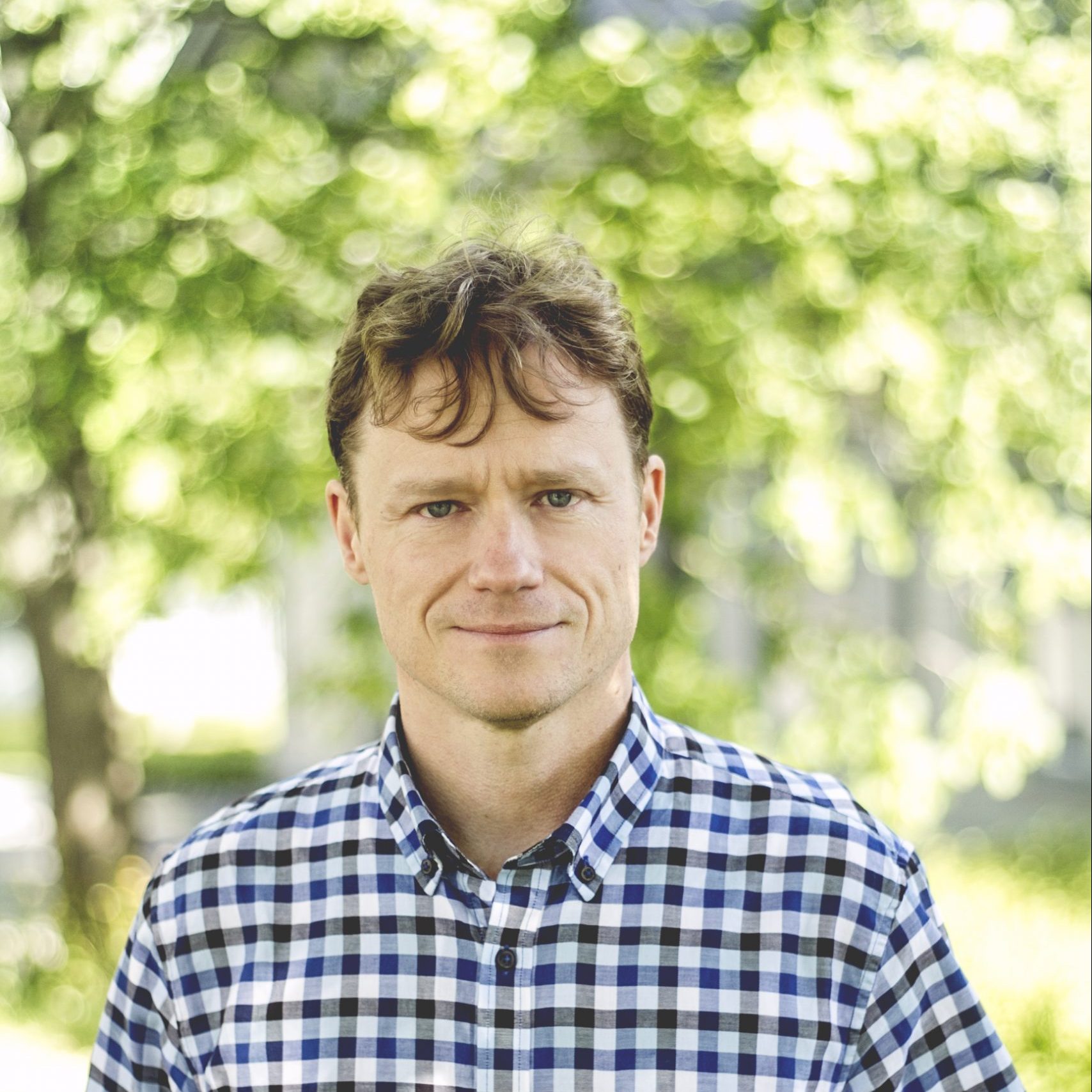
Meet Mikael Skoglund, Professor and Head of the Department of Intelligent Systems as well as the Division of Information Science and Engineering, and PI, Strategic Research Area ICT-TNG at KTH. Mikael is a Member of the Executive Committee at Digital Futures. He is also part of the Working group Cooperate and a Co-PI of research project Humanizing the Sustainable Smart City (HiSS) at Digital Futures.
Hi Mikael, describe your role at Digital Futures?
– The strategic research area for IT and mobile communication at KTH is divided into two parts. We have the original SRA ICT-TNG that was initiated in 2010, and there is also our newly established Digital Futures. Karl Henrik Johansson was the director for ICT-TNG until he entered the role as director for Digital Futures, and at that point, I took over as responsible for ICT-TNG. Since Digital Futures was launched we have been working on integrating ICT-TNG and Digital Futures, and as an important step in that direction, I have entered the Executive Committee of Digital Futures. Here my role is to represent the ongoing activities in ICT-TNG, notably the faculty fellowships that we awarded. I am also responsible for the continued fellowship program under the umbrella of Digital Futures. Another important activity that is coming up is the expected review of the SRA in IT and mobile communication – that is, both ICT-TNG and Digital Futures.
Tell us a bit about your long-time experience in research and what motivates you as a researcher?
– I got my PhD from Chalmers in 1997 and later that same year I came to KTH as a postdoc, and haven’t left since. I was appointed to the Chair in Communication Theory in 2003. At that time I was one of the youngest full professors in Sweden, which is no longer the case.
As a researcher, I am very much curiosity-driven. That is to say that it doesn’t matter much to me whether what I’m doing is of any practical relevance, as long as I feel I gain new knowledge. It turns out, however, that there is usually no conflict between practical relevance and open sky research. Over the years I have seen that results that feel practically useless when they first appear often gain practical relevance within 5-10 years, at least in my area of specialization.
Finally, tell us a little bit about yourself!
– I live south of Stockholm, in Tullinge, with my wife and the two kids who are still living with us. My oldest son moved to Linköping in the Fall of 2020 to enter an engineering program there. My spare time, to the extent it exists, is usually devoted to activities with the family, and taking care of our house in Tullinge and our two summer houses. I also enjoy a lot spending time outdoors, in the woods or on water. I watch movies and love music and I actually play several instruments.