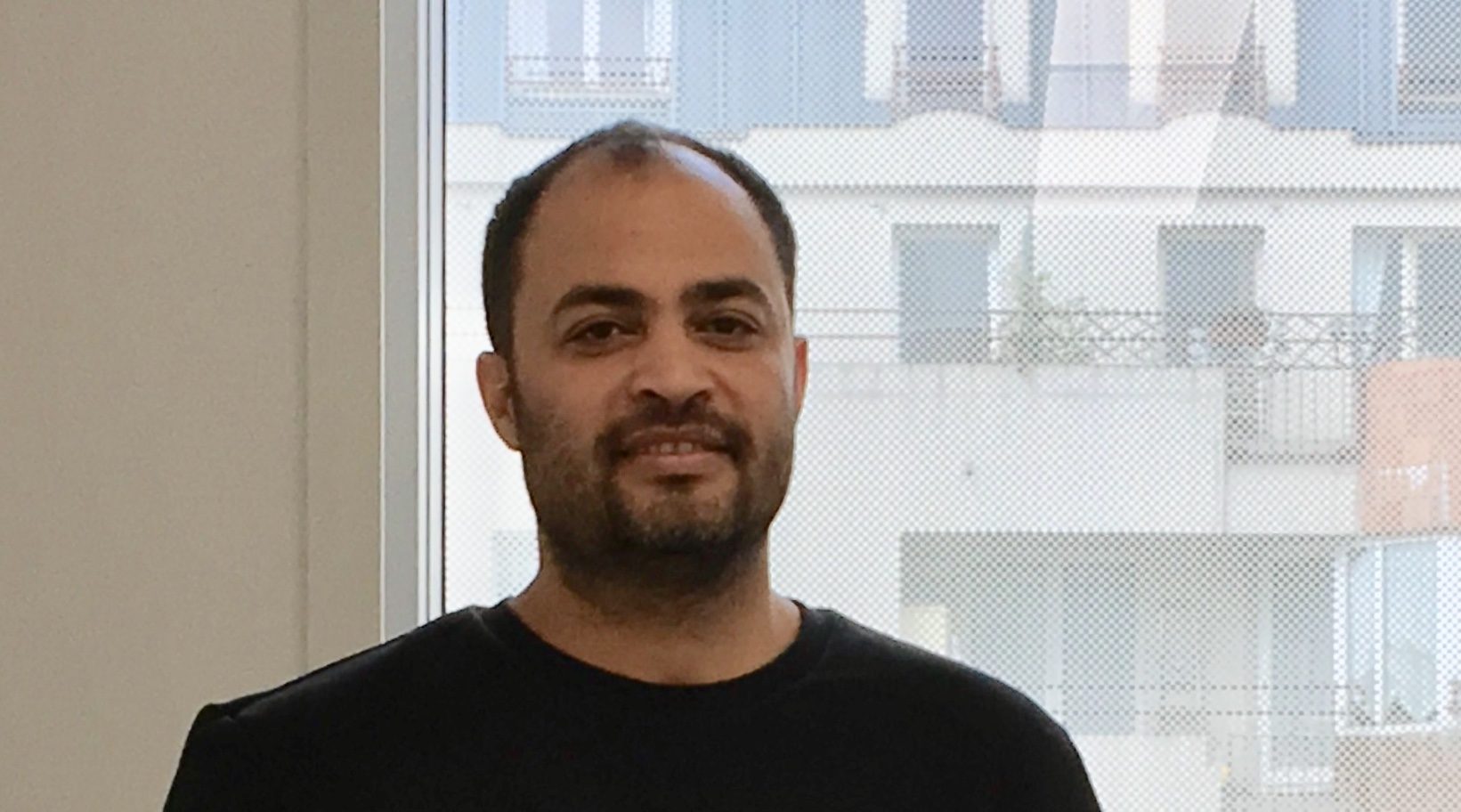
We talked to Mohammed Saqr, a Digital Futures Postdoctoral Fellow based at the Department of Media Technology & Interaction Design at the KTH School of Electrical Engineering and Computer Science.
Hi Mohammed Saqr, describe your role as a Postdoc Fellow at Digital Futures and why you applied for this fellowship mobility program.
– This is a world-class organization with vast potential that is every researcher’s dream. What is more, being a technology-oriented university helps me collaborate with great scientists and researchers in my field and other close fields. KTH gives researchers the freedom to choose research projects, develop their careers and draw their own pathways.
The title of your postdoc project is “Learning Analytics in Higher Education” – tell us a bit about it. Have you already some results from your work?
– In simple words, I use data to improve learning. Data has become an essential part of our life, and so it is in learning. Students generate data every moment when they use a digital system. In learning analytics, we collect such data – after ethical approvals – we analyze it and develop methods to improve learning and teaching. And also to support students and decision-making.
Your research in learning analytics focuses on machine learning, artificial intelligence, and social and temporal networks – why did you decide to focus on these topics?
– Artificial intelligence and machine learning are the present and the future. Such technologies offer so much potential to understand how we live, learn and work and I want to be part of the revolution.
You have been living in Sweden since 2015, but also in France and Finland. What brought you to these countries?
– I got my PhD from Sweden. Then, I got a great offer to join the University of Paris (formerly known as La Sorbonne) in the heart of Paris among a great group of Interdisciplinary scientists. I enjoyed every moment there and learned much about research and open science. Then, I got an opportunity to work in Finland at the intersection of education, which Finland is a leader in and analytics with much research time.
Finally, tell us a little bit about yourself!
– While I have completely converted to computer science by now, I was actually trained as a physician specializing in neurology and psychiatry. So, I spent a great deal of my life in a hospital, treating headaches, epilepsies, and patients in coma and meningitis!