Date and time: Thursday 27 August 2026, 11:00-12:00 CEST
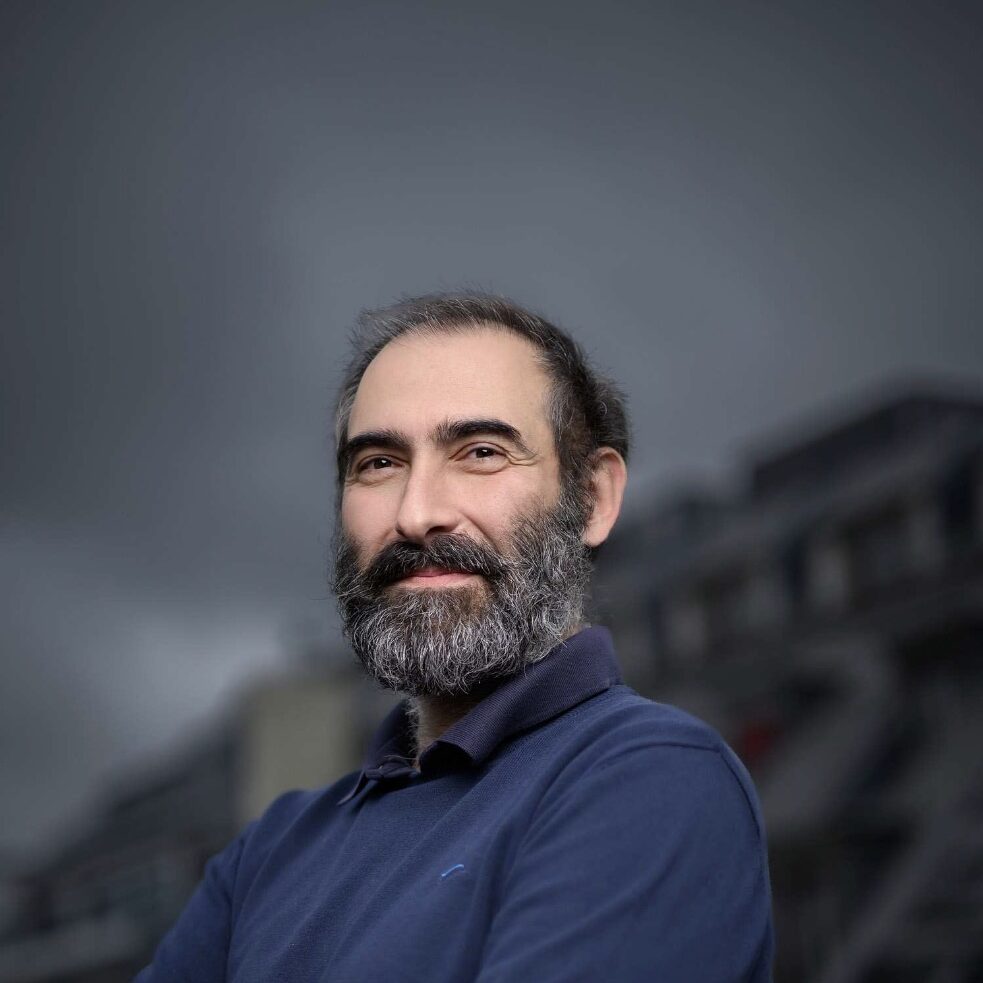
Speaker: Federico Fontana, Sapienza University of Rome
Title: Binary Neural Networks: From the Roots to Trustworthy Intelligence on the Edge
Where: Room 221, floor 2, Lindstedtsvägen 24, KTH main campus
Hosts: Romeo Lanzino lanzino@kth.se and Atsuto Maki atsuto@kth.se

Bio: Federico Fontana is a postdoctoral researcher in Computer Science at Sapienza University of Rome, where he received his PhD in efficient deep learning in January 2026. His research focuses on making deep learning work under tight computational budgets, binary neural networks, model compression, and cyclic-precision training, with applications to real-time deepfake detection and machine unlearning for diffusion models.
His work has appeared at CVPR, ECCV, and ICML, and in IEEE Transactions on Artificial Intelligence, in collaboration with partners including KTH, Imperial College London, TU Munich, and Thales. Serves as a reviewer for CVPR, ECCV, ICCV, ICML, and ICLR.
Abstract: In a robot, perception is not a preprocessing step, it lives inside the control loop. Whatever controller you run, any learned component must fit the same millisecond-and-milliwatt budget, or the loop misses its deadline. Binary neural networks (BNNs) sit at the extreme end of the efficiency spectrum: with weights and activations constrained to {−1, +1}, memory shrinks ~32×, convolutions collapse into XNOR and popcount operations, and inference cost becomes a fixed, predictable operation count.
This talk traces the field from its roots, BinaryConnect, XNOR-Net, the straight-through estimator, and the paradox that training a 1-bit network still relies on full-precision scaffolding, to today’s revival through 1-bit LLMs. I will then present my own work on making BNNs trainable and capable: removing floating-point precision from BNN training itself, cutting training compute with cyclic precision schedules (CycleBNN, ECCVW 2024) and show that they hold up in the wild: real-time on-device deepfake detection (Faster than Lies, CVPRW 2024), GPS-denied drone-to-satellite geolocalization under flight-grade power budgets (BiCrossNet, MLST 2025), and gesture recognition for human–robot interaction (SIGGRAPH 2024).
I will close with the open problems: the unmapped effect of extreme quantization on robustness and calibration, and continual learning on the edge, where weight updates (and unlearning) become bit flips.
No background in quantization is assumed.