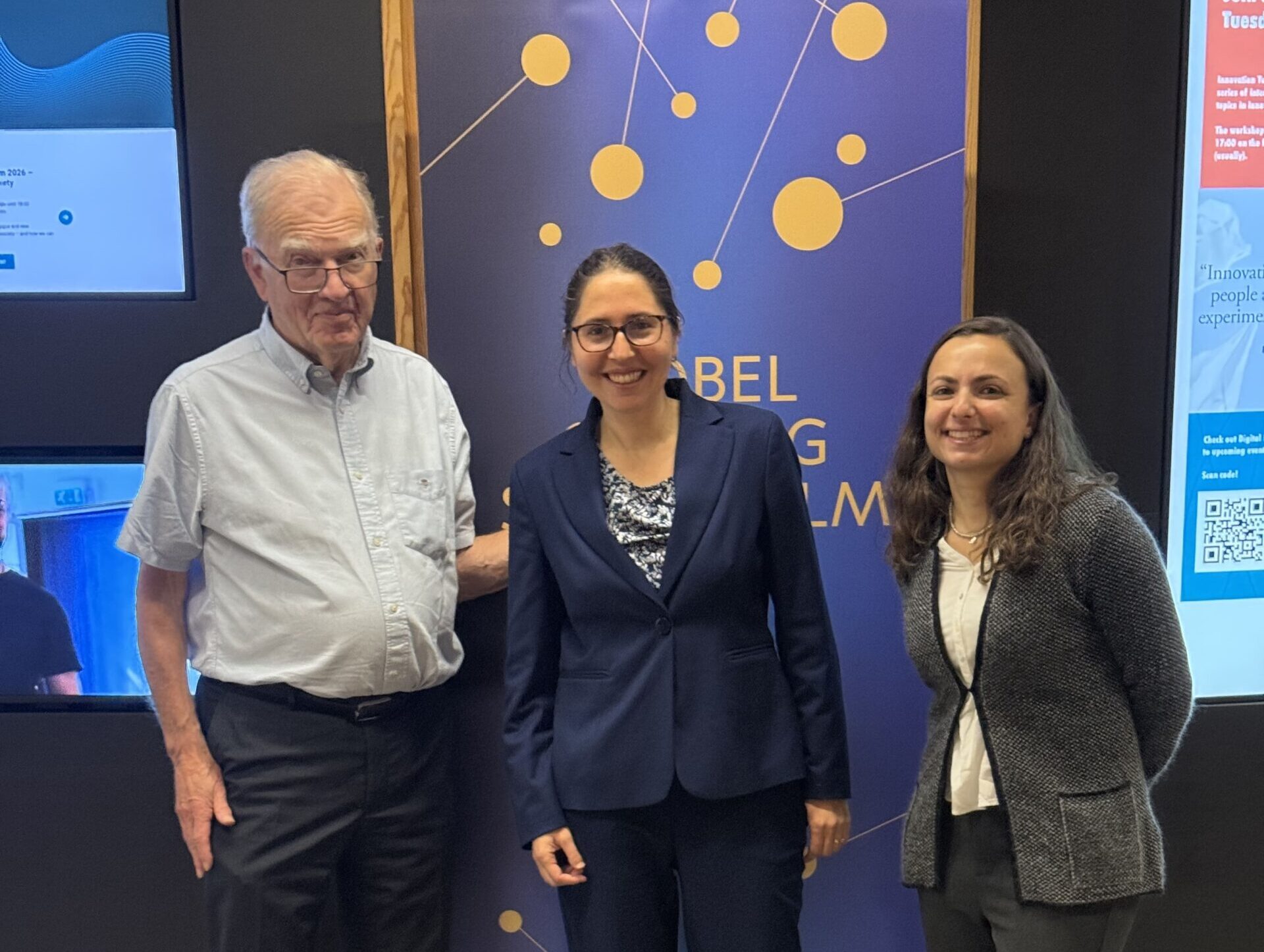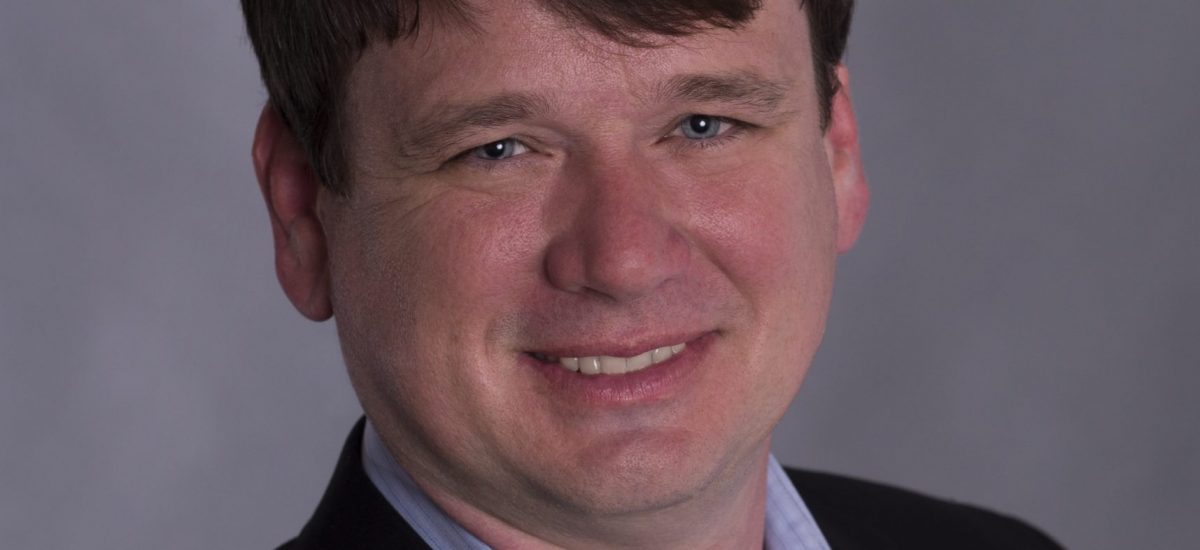
Professor Gustaaf Jacobs, Scholar in Residence at Digital Futures from October 2024 to January 2025, is a leading expert in scientific computing and the physics of turbulent flows, chemically reacting systems, and aerodynamics. A full professor at San Diego State University and an Associate Fellow of the AIAA, he was recognized among Stanford’s Top 2% Most Highly Cited Scientists in 2022. His career spans academic and leadership roles at institutions like Delft University, MIT, and Brown University, and he is a recipient of the prestigious US Air Force Office of Scientific Research Young Investigator Award.
Professor Jacobs’ work focuses on developing rigorous algorithms to enhance the accuracy and efficiency of multi-scale physics simulations. During his residency, hosted by Professor Jennifer K. Ryan at KTH, he is collaborating on the development of regularized discontinuous Galerkin formulations and multi-scale modeling kernels. His efforts integrate mathematics, physics, and numerics to advance simulations of turbulent flows in renewable energy and propulsion systems.
In this interview, Professor Jacobs shares his insights into multi-scale modeling, his interdisciplinary research journey, and the collaborative future of scientific computing.
As a Scholar in Residence at Digital Futures, you’re collaborating on the development of multi-scale physics modeling kernels. What excites you most about this opportunity, and how does it build on your extensive work in scientific computing and turbulent flow physics?
– A distribution kernel is a pivotal component in connecting dynamical systems that govern the principal components of a given multi-physics problem. My work has focused on coupling several such multi-physics problems in the areas of particle-laden flows, plasmas, and chemically reacting flows. A generalized perspective necessitates consistent mathematical analysis. Digital Futures is providing the opportunity to explore this analysis in collaboration with leaders in the field at KTH.
Your research focuses on creating mathematically rigorous algorithms that enhance the accuracy and efficiency of multi-scale physics simulations. Could you elaborate on the challenges of balancing mathematical rigor, computational efficiency, and practical application in these algorithms?
– A rigorous proof of the sufficient properties that ensure the robustness and accuracy of a kernel approximation provides the rules of thumb for designing an algorithm. Accuracy estimates and robustness are invaluable for solving a problem with minimum resolution requirements, thus ensuring optimal usage of computational resources. This, in turn, facilitates the rapid prototyping of engineering systems.
A significant part of your residency involves developing and testing regularized discontinuous Galerkin formulations for turbulent flow problems. Why are these formulations critical for advancing our understanding and simulation of multi-scale physics phenomena?
– Particle-laden and (fuel) droplet-laden turbulent flows are central to the operation of power-generating units in renewable and green energy systems, as well as propulsion systems. High-fidelity predictive tools, such as high-order discontinuous Galerkin-based flow solvers, are essential for accurately predicting and understanding mixing characteristics and related combustion efficiency and cooling strategies.
Over the years, you’ve held diverse roles in academia and industry, from serving as a Program Chair at conferences to mentoring early-career researchers. How have these experiences shaped your approach to fostering innovation and collaboration in your field?
– With the advent of data-driven science and related model development, engineering, science, mathematics, and their subfields are increasingly overlapping. Machine learning, for example, requires data generation from the physics of engineering systems, predictive tools and their numerical analysis, reduced models and dynamical systems mathematics, statistical analysis, advanced manifold fitting, and much more. This has brought fields closer together and made them much less siloed than they might have been in the past. Most modern research portfolios are collaborative and multidisciplinary as a result. Serving in various roles in academia and industry has exposed me to the multiple facets of science, mathematics, and engineering, shaping my broad program of research and fostering collaborations with a wide range of expertise.
With a career spanning from Delft University to MIT and now San Diego State University, your work bridges physics, mathematics, and computational engineering. What advice would you give to researchers looking to integrate interdisciplinary approaches into their work, especially in the field of scientific computing?
– This is a great question. A valuable lesson I have learned is that one should be eager to learn, broaden one’s horizons, and most importantly, enjoy the process. For me, the most gratifying aspect of an academic career is understanding a scientific problem from multiple perspectives. Visiting experiences, such as those provided by Digital Futures, are instrumental in enhancing one’s learning experience. Especially in the early stages of a career, if the opportunity exists to explore one’s scientific preferences, I would highly recommend it. Working with several renowned mentors has given me the opportunity to do exactly that and has instilled in me a strong desire for lifelong learning.