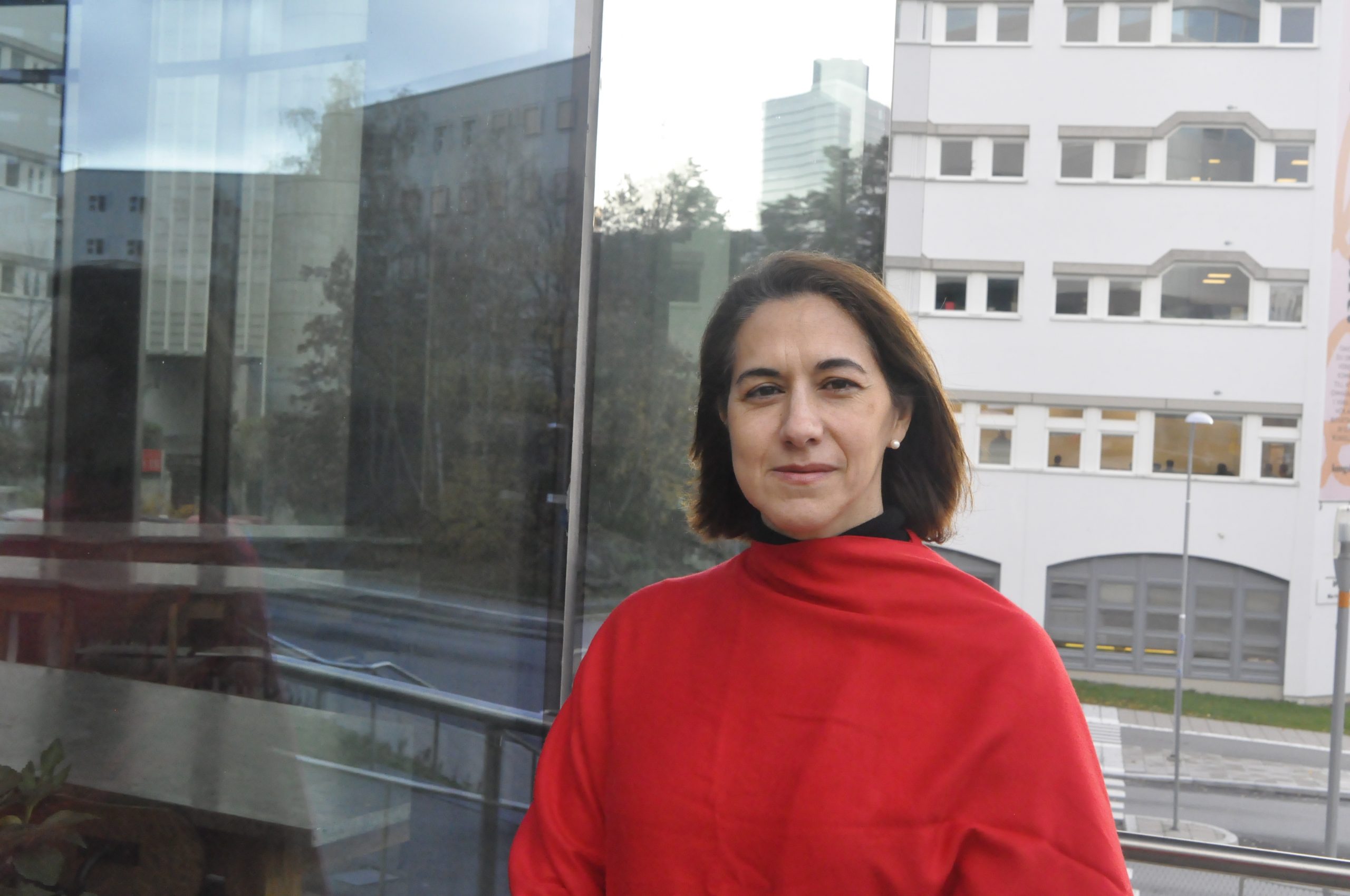
Meet Teresa (Tessy) Cerratto Pargman, Professor, Human-Computer Interaction (HCI) at the Dept. of Computer and Systems Sciences at Stockholm University (SU), Faculty of Social Sciences at Stockholm University. Teresa (Tessy) is also a Member of the Executive Committee at Digital Futures.
Hi Tessy, describe your role at Digital Futures?
– I’m a member of the executive committee with special responsibility for the area of societal outreach and engagement. This is a task that I take over from Britt Östlund, who has done an excellent job involving partners such as the City of Stockholm, working on “A good digital life during the second half of life”. Capitalizing on Britt’s work, I intend to engage new partners from the public and private sectors in a key societal area: education. I think that Digital Futures is a dynamic and vibrant platform that can contribute to nurturing conversations on digital transformations toward SDG 4: ensure inclusive and equitable quality education and promote lifelong learning opportunities for all.
Tell us a bit about your long-time experience in research and what motivates you as a researcher?
– My research career started with my PhD in Cognitive Psychology at Université Paris 8. I worked with a fabulous research team from the CNRS (The French National Centre for Scientific Research) that studied human-computer interaction issues in relation to distance education and computer support for collaborative learning. Since then, my work has aimed at understanding how human activities such as collaborative writing, computer-mediated communication, second-language learning, mobile learning, and social annotation practices are configured by the tools in use. When new devices are appropriated, some aspects of such activities and practices will develop further, while others stagnate.
My interest in examining how tools configure educational practices is addressed in the project I lead on Ethical and Legal challenges of AI-driven practices in higher education. The Wallenberg Foundation’s WASP-HS program funds this project (2021-2025). In this project, we look at how ethical and legal issues, on the one hand, are entrenched in the design of tools for examination (i.e., online invigilator, automated grading, etc.) and, on the other hand, how AI technologies increasingly shape university examination practices.
This focus on ethics comes from attempting to look critically at digital technologies. Technologies such as AI are a powerful means for transforming the education sector but also for disrupting well-functioning practices.
In your profile, you state that your research is situated at the intersection of Educational Technology and Human-computer interaction (HCI). Where does this interest come from?
– My interest in educational technology and human-computer interaction started with the desire to influence the design of tools for education so that these tools are accessible and meaningful to students and teachers. These tools should also reflect what is valued in school practices, and this ultimately helps students, teachers, and academics not only to perform but also to develop.
Finally, tell us a bit about yourself!
– People in the education sector who work with digital technologies are doing great work, but they are working in silos. We need to do better and start combining knowledge and expertise to identify new perspectives on the use of student data and AI techniques in education and contribute to a meaningful and inclusive future for all.