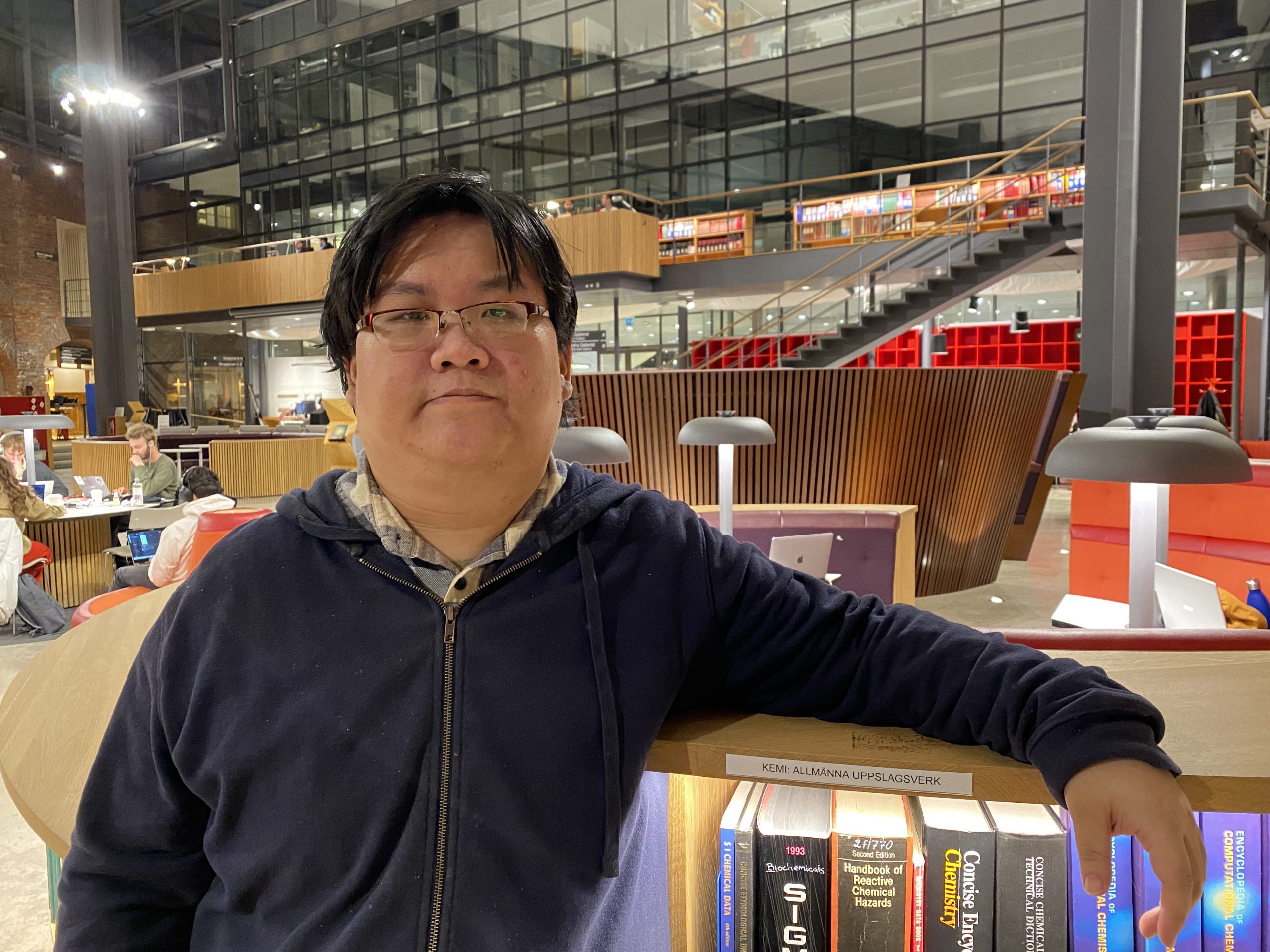
Meet Hao Hu – Postdoc Fellow at Digital Futures. Hao Hu is a postdoc researcher at KTH Division Robotics, Perception and Learning working with Hossein Azizpour. Before joining KTH, he worked as a research scientist in FX Palo Alto Laboratory (FXPAL), California, United States. Hao got his PhD in Computer Science from the University of Central Florida (UCF) in 2019.
Hi Hao, describe your role as a Postdoc Fellow at Digital Futures and why you applied for this fellowship mobility program?
– Hi everyone, currently I work at the Division of Robotics Perception and Learning as a deep learning researcher, teaching machines to be intelligent using a large volume of data. I learned about the Digital Future fellowship from my previous colleagues and chose it because of the freedom and networking opportunities it provides, allowing me to establish my own research projects and connecting me with many other researchers with various backgrounds.
The title of your postdoc project is Deep Learning Approaches for Long-term Future Forecasting – tell us a bit about it? Have you already some results from your work?
– Sure. It is an interesting yet challenging topic. The ultimate target is to build deep learning models that can give high-level predictions for far-future events based on current observations. For example, an intelligent camera may predict if a person will be in danger under certain circumstances and send out alarms in advance to avoid harm happening. Practically, it is a very complicated project that involves multiple latest research directions on neural networks, and it has been broken into several small phases in my research agenda. I have got some results about the first phase which is about designing improved modules for networks such that they can be trained using less unlabeled data. We are expecting to publish these results in a near future.
That sounds great. Actually, your research interests include various topics in machine learning and computer vision and you have a special focus on temporal modelling and deep learning – why these topics?
– Well, because I really believe such works would bring beneficial impacts for our society. Especially in recent years, we can all feel that AI is changing our world in almost every aspect. What I’m doing is just a part of it, and it is really fun!
Finally, tell us a little bit about yourself!
– I went to Stockholm in October 2020, which is my first time travelling to Europe. Before that, I worked for one year as a research scientist in California, United States. Compared to my previous work, I found there are more opportunities to work with people with different backgrounds in KTH, which makes it really an ideal place to work. On the other hand, it is a pity that I still never had a good chance to explore the city due to the COVID. I hope things can get back to normal as soon as possible so it can be easier to know more about Sweden.
Link to the Postdoc project Deep Learning Approaches for Long-term Future Forecasting