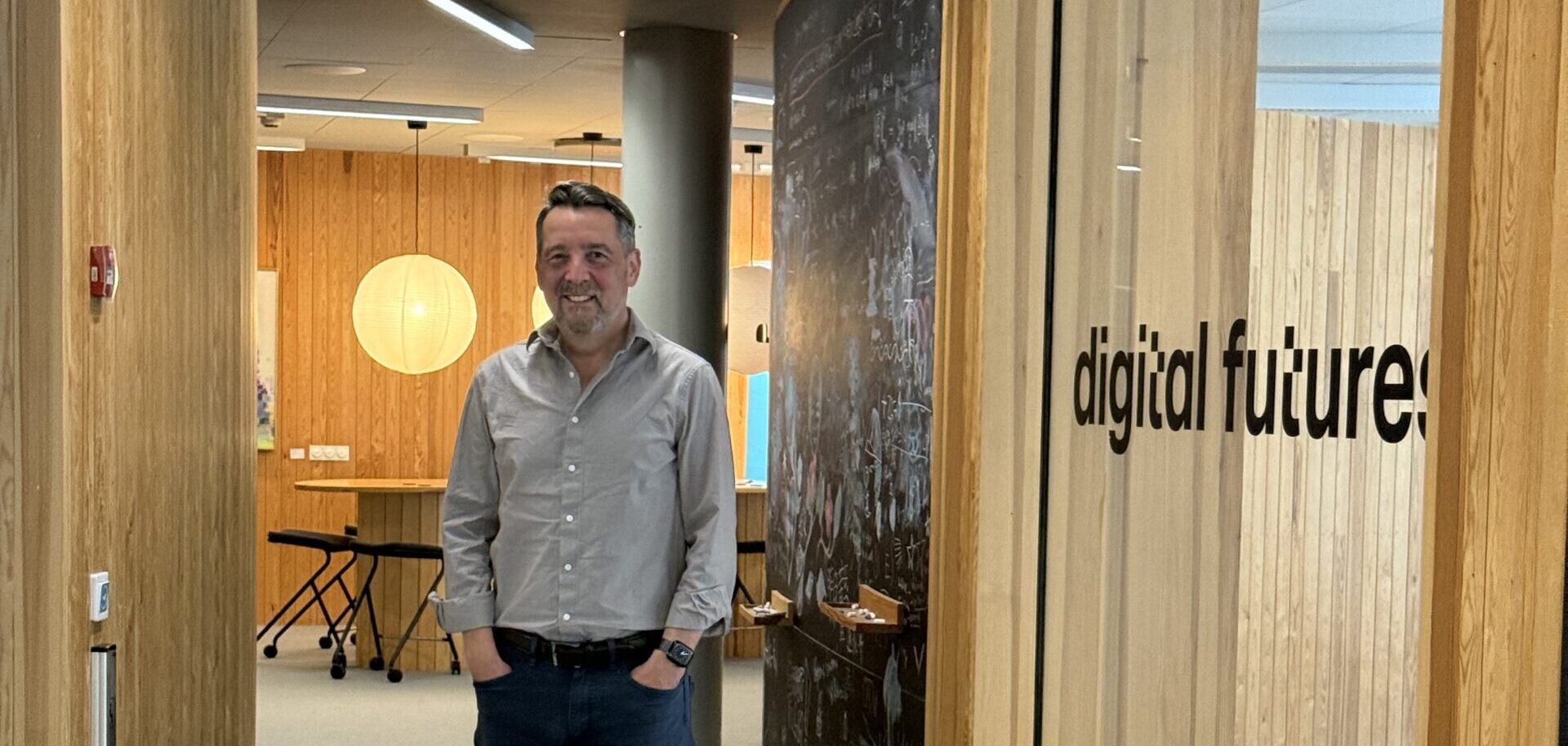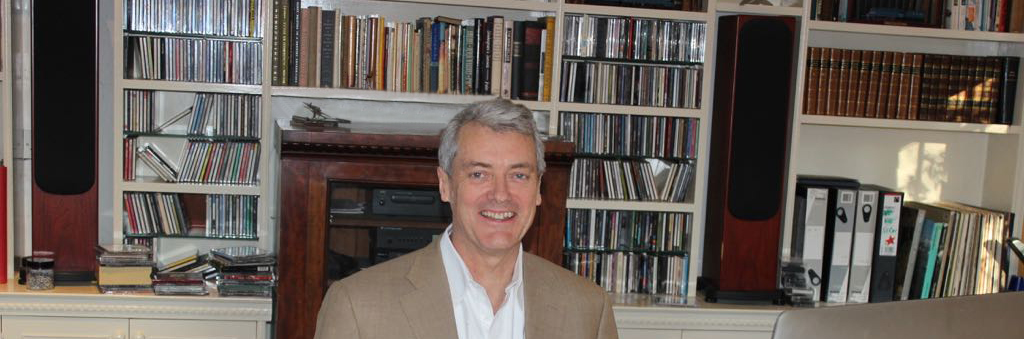
Richard Harper is a professor at the Department of Computing and Communications at Lancaster University. He is a Fellow of the IET and the Royal Society of Arts. In 2014, the ACM elected him a Fellow of its Academy in honour of leadership in the field of Human-Computer Interaction. More recent awards have included IISI-EUSSET Lifetime Achievement Award for Contributions to CSCW (2022). He is Visiting Professor in the College of Science at the University of Swansea, Wales, and is currently a Digital Futures scholar in residence.
On 6 December, Richard Harper will give a Distinguished Lecture – Are We Made Smart by Smart Homes? – at Digital Futures hub – find out more and register HERE.
Hi Richard, since September this year, you have visited Digital Futures as a scholar-in-residence. How come you applied for this programme?
– My research is in the area of digital technology and in how it is shaping society and even our self understanding. A scholar in residence gave me the opportunity to spend more time learning about and meeting researchers here at KTH, with a view to developing my own thinking and creating long term connections that might drive future research.
You’re concerned with how new technologies shape us and how we, in turn, shape our technologies. Why do you find this so fascinating?
– The first desktop machines, derived from the Xerox Star, used analogies from the real world to show how computation could act in service of human need. With the desktop Gui, people could create digital documents for example, and with them, create a digitally mediated discourse with their colleagues elsewhere in an organisation. Today, thirty years after the Gui was invented, digital tools still do the same – they convert real world concerns into computable phenomena. But what are the things that are being transformed into digital forms, and to what ends? How are these transformations altering the real world and our relations with it? If they do, are these good or bad transformations or a little of both? These are the motivations for research on technology.
You have 28 patents, have published over 220 papers and have written or edited 18 books, including the IEEE award-winning “The Myth of the Paperless Office”; “Texture” (the A.o.I.R. book of the year 2011), “Choice” (2016) and “Skyping the Family” (2019). Between 2017 and 2022, you were the Co-Director of the Institute for Social Futures at Lancaster University. Before this, you led research groups at Microsoft Research Cambridge and Xerox (Euro) Parc. On top of this, you have also founded various start-ups and consulting companies. Tell us more; what drives you? From where do you get the energy?
– I delight in engaging with ideas that lead to innovation. Inventiveness, for me, is not some magical skill, it is a way of seeing how ideas can be made real. And this means looking at how ideas are linked to the way the world works. Hence, what I explore is the world and the way it works. I am, if you like, an anthropologist, though my interest is not in different cultures as it is in my own, the culture I share with my work colleagues, my family and friends. I have managed to write so many books, hundreds of articles and patented many ideas simply because the culture I live in is fantastically interesting.
Finally, tell us a little about yourself. What have you done in Stockholm so far?
– I like to combine a delight with the written word with a passion for water-based sports, having played water polo for twenty years and having rowed in an eight in the Cambridge Bumps*. Most of my life has been in Cambridge, where I met and married my Canadian partner, Abi. We have three children, all of whom have left home to attend university, though they occasionally come home to play with our ginger cat.
– I like to combine a delight with the written word with a passion for water based sports, having played water polo for twenty years, and having rowed in an eight in the Cambridge Bumps. Tthis a race in the river Cam in which the boats chase each other up the two mile course, and win if they bump the boat ahead, or lose if they are bumped by the one behind. Most of my life has been in Cambridge, where I met and married my Canadian partner, Abi. We have three children, all of whom have left home to attend university, though they ocasionally come home to play with our ginger cat.
You are here as a Digital Futures scholar in residence for a couple of months – what has your experience been like so far, and what will you do next?
– My residency will continue through to the middle of December, and then I will return for two more weeks in the new year. What I have been learning here confirms what I have learnt over my career: that the best research crosses disciplines. At KTH the disciplines that are crossing are new to me, mixing design with computer science, information science and anthropology, feminist studies with ergonomics. I shall return to England with a broader sense of what is possible with interdisciplinary research.