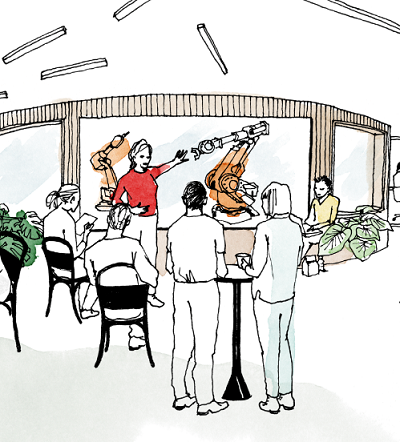
The Digital Futures seminar series has now been running for about a month, since the launch in the middle of May. Up until now, six seminars have been held in total, covering topics ranging from digital technology in an ageing society, to big data and AI for global environmental change monitoring. And there is more to come.
Almost every Tuesday and Thursday from May to July, Digital Futures arrange an open digital presentation held by one or two passionate researchers. On Tuesdays, there are high-level fika seminars, introducing ambitions of digitalization technology research for the future society. The talks are usually delivered by researchers from academia and industry, targeting the whole digitalization research community. On Thursdays, there are focused lunch seminars digging into the details of various digitalization technology research topics. These are especially featuring young researchers, and are meaning to be of interest especially for researchers within the same or neighbouring research fields.
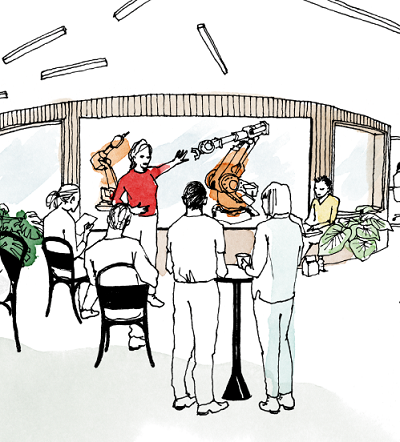
“The purpose of the seminar series is to create a forum for researchers on digital technology that enables cross-disciplinary discussions, bringing forward both the width and depth of the interesting research topics covered within the Digital Futures research matrix,” says Jana Tumová, Associate Director Mobility at Digital Futures.
On the premiere week of the seminar series, both the high level and the in-depth seminar covered the topic of controlling the spread of covid19. Philip E Paré analyzed two different mathematical models for network-dependent spread and concluded by discussing an ongoing project on contact tracing. Bo Bernhardsson and Joakim Jalden analyzed the influential Imperial College model and described recent work done by a team of Swedish academia together with analysts in the health care system. Also discussed was the recent efforts on setting up a cooperation initiative between Region Stockholm and KTH. The covid19 topic engaged researchers from many different fields, bringing around 100 digital attendees to the first week’s seminars.
The seminar series will take a break over the summer, but there are still several weeks of interesting talks to attend. Coming up is seminars covering for example Embodied Social Agents, AI-assisted Diagnostic Tagging, and Programmable robotic self-assemblies.