

About the project
Objective
- Develop a high-fidelity simulator that replicates Swedish railway operations, including infrastructure, rolling stock, power supply, signalling, and realistic operating behaviour.
- Create and analyse operational scenarios using historical, live, or simulated data to support performance monitoring, strategic planning, and subsystem interactions.
- Design analysis and visualisation modules to evaluate railway performance, including delay propagation, energy use, track capacity, driver behaviour, and the impact of digital technologies (e.g., ATO, DAC, VC).
- Demonstrate use cases with external partners through performance analysis, disruption management, decision support, subsystem compatibility testing, and development of a scalable digital twin architecture.
Background
Railways are essential for achieving climate-neutral, energy-efficient, and resilient mobility. In Sweden, they are a key pillar of sustainable transport policy. However, increasing capacity demands, operational complexity, infrastructure ageing, and the need for digital transformation pose major challenges. Despite progress in technologies and predictive management, the sector still lacks integrated platforms for testing, real-time data use, and efficient planning.
The SPOT-Rail project addresses these gaps by developing a cross-system railway demonstrator that replicates Swedish rail operations. At its core is a high-fidelity train driving simulator connected to live and historical data, supporting research, education, and strategic planning. This enables the testing of new technologies, evaluation of operational strategies, and development of decision-support tools.
By bridging research and real-world operations, SPOT-Rail promotes safer, more efficient, and environmentally friendly rail transport. It contributes to Sweden’s and Europe’s green transition goals while fostering innovation, collaboration, and a skilled workforce for the future of sustainable mobility.
Crossdisciplinary collaboration
The project brings together expertise from multiple disciplines to enable efficient and realistic simulation of railway operations. Key fields involved include: Railway systems engineering and train operations; Human factors and interaction design; Data science and artificial intelligence; Systems engineering. These disciplines contribute various theories, simulation modelling approaches, and machine learning algorithms for predictive analysis and decision support. Furthermore, the project aims to engage students by integrating its outcomes into university courses and offering opportunities for course projects and final theses. This strengthens the link between research, education, and practical application.
About the project
Objective
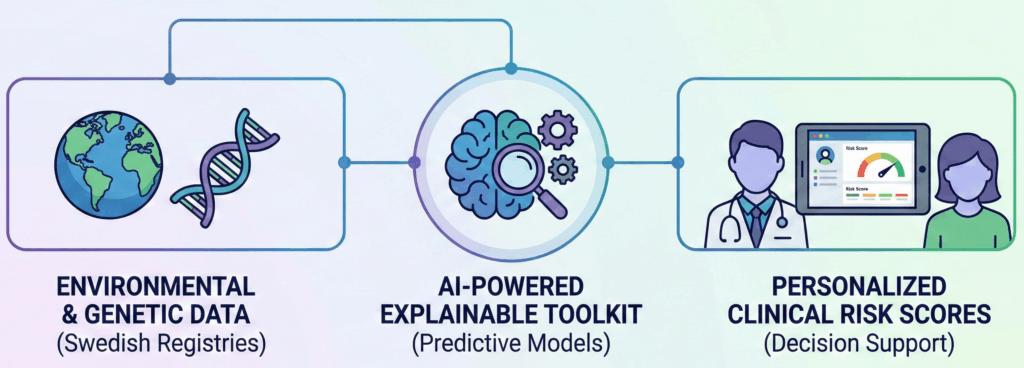
Breast and prostate cancers are among the most diagnosed cancers worldwide and in Sweden, arising from a complex interplay of genetic, environmental, and epigenetic factors. This project aims to develop an AI-powered, open-source, explainable toolkit that provides clinicians with a holistic and personalized assessment of breast and prostate cancer risk. By leveraging Swedish national health registries, we will capture key risk dimensions and integrate them into advanced predictive models capable of handling complex, interacting factors.
Specifically, the project will design and validate advanced predictive models to quantify the combined and individual contributions of multiple risk factors; implement a user-friendly, open-source Python toolkit that translates complex model outputs into actionable clinical risk scores and visualizations for decision support; conduct a clinical pilot in a regional setting to evaluate usability, functionality, and preliminary clinical utility in identifying individuals at elevated risk; and finally, formulate a strategy for national scaling and holistic integration, including a roadmap for incorporating genetic risk profiles from parallel projects, thereby paving the way for a comprehensive cancer risk assessment platform.
Background
Although high-risk inherited mutations (such as in BRCA1/2) are well known, they only explain a fraction of breast and prostate cancer cases. A large share of risk is instead driven by modifiable lifestyle factors acting through epigenetic mechanisms over the life course. Current clinical practice and many existing risk models still treat these factors in isolation and struggle to capture their cumulative, non-linear, and interacting effects. At the same time, Sweden maintains exceptionally rich national registries covering cancer diagnoses, healthcare utilization, prescriptions, demographic and socioeconomic data, and environmental conditions.
These data sources are ideal for characterizing the totality of non-genetic exposures but remain underused in integrated, clinically oriented tools. Traditional statistical methods often cannot cope with the high dimensionality and complexity of such data, while state-of-the-art AI and machine-learning approaches tend to function as “black boxes” that clinicians may be reluctant to trust in high-stakes decisions. This situation creates a clear gap for explainable, registry-driven AI that can bridge genetic and non-genetic risk into a transparent and usable decision-support tool.
Crossdisciplinary collaboration
The project is built around a research pair that combines expertise in computer science and AI with medical bioinformatics, epidemiology, and clinical cancer research.
Golnaz Taheri leads the development of advanced machine-learning models, explainable AI techniques, large-scale data processing, and the implementation of the open-source toolkit.
Arian Lundberg contributes expertise in medical bioinformatics, biomarker and translational research, epidemiology, and public health, ensuring that evaluations are clinically relevant and aligned with real-world cancer care. Together, this collaboration exemplifies a cross-disciplinary fusion of AI, digital health, and clinical cancer research, aiming to deliver tools that are both technically robust and directly applicable in healthcare and public health practice.
PI: Assist Prof. Golnaz Taheri, PhD, Knut and Alice Wallenberg & SciLifeLab DDLS Fellow, School of Electrical Engineering and Computer Science (EECS), KTH Royal Institute of Technology.
PI: Assist Prof. Arian Lundberg, PhD, Knut and Alice Wallenberg & SciLifeLab DDLS Fellow, School of Engineering Sciences in Chemistry, Biotechnology and Health (CBH), KTH Royal Institute of Technology.
About the project
Objective
Kidney diseases affects approximately 10% of the world’s population and is projected to become one of highest cause of life-lost-years within two decades. Despite this growing healthcare threat, diagnostic methods remain insufficiently precise, which unfortunately hinders early quantitative kidney disease staging. We aim to demonstrate a precision medicine pipeline that combines high-resolution optical 3D whole biopsy imaging with advanced AI-assisted 3D image analysis. Our approach eliminates preparation-induced biases by not slicing tissue biopsies, thereby preserving native 3D architecture and in-context spatial relationships. High-resolution imaging in 3D will spatially resolve key structural and molecular disease markers across scales in optically cleared biopsies. Moreover, our pipeline will automate 3D disease staging using AI-based image analysis, employing cutting-edge self-supervised learning to extract, segment, and quantify disease-relevant features objectively.
Background
Pathology impacts all aspects of patient’s care from identifying a disease, to monitoring its progression and to make crucial treatment decisions. Clinical kidney pathology thus plays a central role as method for diagnostic support in healthcare to help renal physicians and patients. Present nanoscale kidney pathology analysis is done in ultra-thin biopsies by electron microscopy, losing precious in-context 3D information of morphological and molecular pathophysiology. Moreover, used workflows are highly labor intense across sample preparation, imaging and imaging analyzing steps.
Cross-disciplinary collaboration
Imaging and image analysis are inherent pathology tools that can deliver diagnostic support and guide patient care. Our developed kidney pathology workflow will be faster, more precise, save healthcare labor costs, and be less biased with automate AI analysis support. The exploration of self-supervised methods for functional structure analysis is furthermore a rapidly growing and impactful area in AI, as researchers seek more sophisticated ways to analyze high-dimensional biological data without manual annotations. Our work positions KTH at the forefront of this cutting-edge field, meeting the rising demand for robust, scalable AI tools that can improve diagnostic accuracy and consistency.
PI: Hans Blom, Applied Physics/SCI/KTH
Co-PI: Gisele Miranda, Computer Science/EECS/KTH
About the project
Objective
This project aims to study a dramatically different approach to software development of safety-critical systems. Specifically, the overall research goal is to: develop a new foundation for agile development of complex and regulated safety-critical cyber-physical systems that enable high-confidence rapid software development of systems with certification compliance requirements.
More specifically, we will address the following research challenges by:
- designing and evaluating a new agile development methodology for software and systems design for heavily regulated domains (specifically the defense industry), posing requirements on consistency between software implementation, design documentation, and compliance control according to certification authorities.
- developing new techniques, algorithms, and methods for supporting such new agile methodology, by designing new transformer-based optimization and verification techniques that are both sound and minimize false positives.
- constructing an interactive software prototype that can, in real-time, analyze software code and documentation, automatically perform compliance checks, and report live information on a dashboard available to the R&D organization.
Sweden’s defense industry’s competitiveness is vital for the safety and security of the country, where Saab AB is the major player. Two key components for competitiveness are development speed (short lead time) and flexibility (quickly adapting to changes). Both speed and flexibility are hampered by rigid processes: this project innovates in a dramatically different approach compared to current practices.
Background
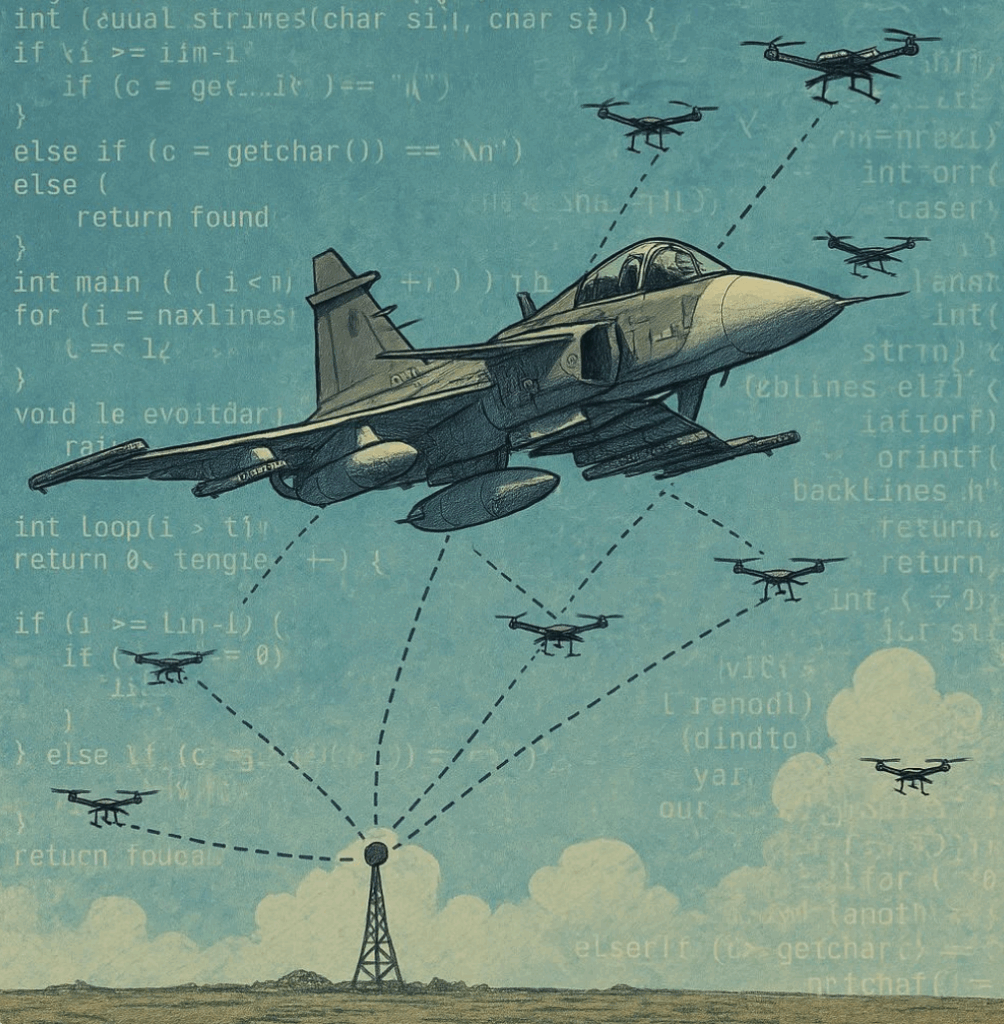
Safety-critical cyber-physical systems—such as the modern aircraft fighters like Saab Gripen—are significantly relaying on software technology. Besides strong requirements of correctness and reliability, developing such systems falls under heavy regulation and certification control, including certification standards such as DO-178C. As a consequence, the development processes of such systems are extremely complex, requiring significant manual documentation, formal meetings, and control, which result in long development, innovation, and release cycles.
On the other hand, the development of non-safety critical software has, for several decades, been using agile methodologies (e.g., Scrum and Kanban) and quick iteration cycles. Moreover, the recent trend with generative AI tools based on LLMs and transformer technology, has paved the way for even more rapid development, using AI assisted pair programming systems such as GitHub Co-pilot, CodeWhisperer, and Codeium.
The key question addressed in this project is: how can agile development methodologies and assisting software tools be designed in the context of safety-critical systems with certification and regulation requirements? Specifically, the research problems concerns (i) soundness—how can we guarantee the correctness of analyses results, (ii) completeness—how can false positives be mitigated to make the system useful in practice, and (iii) explainability—how can analysis results be traced back to source data.
Crossdisciplinary collaboration
This project is conducted in close collaboration between the aerospace and defense company Saab AB and KTH Royal Institute of Technology.
Participating in the project:
- Main PI: David Broman, Professor, KTH Royal Institute of Technology
- Co-PI: Thomas Nordh, Product Owner and Business Area Leader, Saab AB
- Co-PI: Daniel Stensér, Digital Acceleration Officer, Saab AB
About the project
Objective
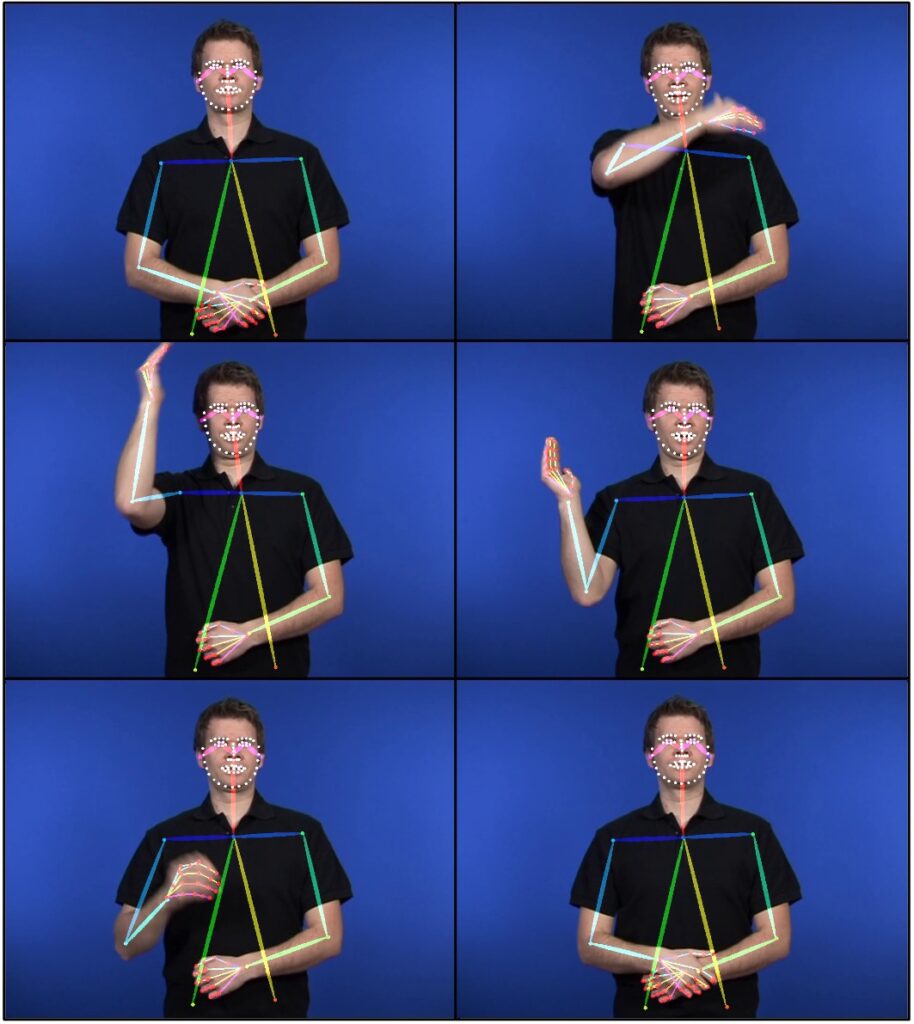
In this project we develop semantic tokenization models for sign language (SL), and combine these with large language models, leading to machine learning models that can understand, process, translate and generate SL efficiently. To achieve this, we will pool together large data resources, through our collaboration with SVT and other large-scale multilingual sign language datasets.
We will fine-tune and evaluate our models across a number of downstream tasks e.g., sign language recognition, segmentation, and production. The project addresses the need for inclusive and accessible urban infrastructures by reducing communication barriers for the deaf and signing communities, e.g. via automated translation and interpretation services that can enable seamless interaction between signers and non-signers, fostering integration in public services, workplaces, and social settings.
Background
Currently, we are seeing an AI-revolution fueled by large language models. What started out as text-only models has developed into generalized multimodal information processing frameworks, handling many languages, and different modalities such as images, speech and video, often with surprising accuracy.
Sign languages are visuo-spatial natural languages used by more than 70 million people world wide. Sign languages lack a text-based representation, and have not been part of, or benefited from, the large language model or foundation model developments. Furthermore, sign language technology is not being prioritized by the large corporate interests that are driving current AI developments.
Signed languages represent a special challenge since they, in contrast to spoken languages, have no universally adopted written form. For storage and transmission, one has to rely on video. For communication between signers and non-signers, either costly interpreter services are required, or one has to resort to limited text-based communication – which will be in a second language to a native signer. The promise and potential utility of sign language (SL) technology is thus substantial in terms of reducing communication barriers, allowing for signers to use language technology in their native language. Despite this, progress in SL technology has been limited in comparison to the rapid development for spoken languages. In this project we suggest an efficient way to allow sign language to inhabit the LLM ecosystem and benefit from the GPT-revolution.
Cross-disciplinary collaboration
The proposed project is a multidiciplinary endeavor. Advancing the state of the art in SL processing through foundation models requires combined expertise in machine learning, spoken language engineering, data processing and SL corpora and SL linguistics, including native sign-language users. The project team is composed to provide this expertise.
About the project
Objective
This research aims to create a strong framework for Online Continual Learning (OCL) that will help AI models learn gradually from streaming data. It will tackle the catastrophic forgetting phenomenon and maintain long-term flexibility, with a focus on high-stakes, changing environments where models need to adjust quickly without retraining. This is especially important in healthcare and other real-world areas where data changes constantly and unpredictably.
Background
Traditional AI models, especially in Deep Learning (DL), are usually trained on fixed datasets and used as set systems, making them fragile in changing situations. When new tasks or data come up, these models either need expensive retraining or risk forgetting what they previously learned. This inflexibility limits their growth and usefulness in real-world scenarios
Online continual learning changes this by allowing models to update continuously as new data comes in, much like how humans learn over time. However, this approach brings complex challenges, such as finding a balance between stability (keeping old knowledge) and plasticity (adjusting to new information).
Finding this balance in high-dimensional areas is particularly hard, as updates need to happen in real-time while following strict memory and processing limits. Take healthcare as an example: patient profiles and medical knowledge change every day. AI systems must keep up without sacrificing safety or accuracy. The implications go beyond healthcare. They also include autonomous systems that must navigate changing environments and adaptive vision models that need to stay relevant amid ever-changing data streams.
About the Digital Futures Postdoc Fellow
Romeo Lanzino is a researcher in Artificial Intelligence. He focuses on Computer Vision, Continual Learning, and , bioinformatics . He is currently a postdoctoral researcher at KTH Royal Institute of Technology, where he’s researching adaptive AI systems that can learn continuously from changing data streams. He earned a PhD in Artificial Intelligence at Sapienza University of Rome (Italy) under the Italian National PhD AI program. His doctoral research looked closely at how Deep Learning is used for analyzing physiological signals, questioning common beliefs about how well neural networks perform in Electroencephalography studies. He has a background in computer science from Sapienza, where he received both his BSc and MSc with honors. Romeo is active in the academic community as a reviewer for top venues like ICCV, NeurIPS, and IEEE Transactions on Multimedia, and he also co-organizes related workshops at major conferences.
Main supervisor
Atsuko Maki, KTH
Co-supervisor
Josephine Sullivan, KTH
About the project
Objective
This project aims to build mathematical foundations and design efficient algorithms for problems on metric graphs. The research will proceed in two stages. First, the focus will be on developing geometric and topological methods to construct or reconstruct metric graphs from real-world data. Second, the project will address the extraction of statistical information and the solution of applied problems on metric graphs through optimization-based approaches.
Background
Metric graphs offer a powerful way to model real-world data that has an underlying network structure together with spatial attributes. Examples of metric graphs include road networks, brain connectivity networks, and social networks. Unlike tabular data which is well-structured, metric graphs are inherently complex and nonlinear. Existing methods are ill-suited for computational and practical analysis of metric graphs, which limits their utility as models for real data. My research aims to provide an essential framework for applications of metric graphs in machine learning and data science.
About the Digital Futures Postdoc Fellow
Yueqi Cao completed his PhD in mathematics at Imperial College London in 2025. He works on applied and computational mathematics and statistics, with a particular interest in geometric and topological data analysis. Prior to that, he obtained master’s degree and bachelor’s degree in mathematics from Beijing Institute of Technology.
Main supervisor
Johan Karlsson
Co-supervisor
Sandra Di Rocco