About the project
Objective
This project aims to develop an efficient edge–end collaborative generative video communication framework that leverages generative AI to reduce communication bandwidth requirements while maintaining high-fidelity video quality and low latency.
The research focuses on three interconnected objectives:
- Adaptive Video Representation: Develop prediction-based spatiotemporal layered video representations that dynamically adapt to changing network conditions and available computing resources.
- Edge–End Collaborative Generation: Design a cascaded flow matching-based generative model that enables efficient task partitioning and collaborative video reconstruction between edge servers and end devices.
- Joint Communication–Computation Resource Management: Establish a unified communication–computation–quality (CCQ) evaluation framework and develop intelligent resource management strategies to optimize video quality, latency, and resource efficiency.
Background
The rapid growth of immersive applications, such as 360° virtual reality and volumetric video, places unprecedented demands on communication bandwidth and end-to-end latency. Traditional video coding and transmission architectures face increasing challenges in supporting these data-intensive applications, particularly over bandwidth-constrained wireless links.
Generative AI offers a promising alternative by transmitting compact video representations and reconstructing high-quality content at the receiver, effectively trading computing power for communication bandwidth. However, conventional cloud-centric and edge-based approaches still encounter significant limitations in last-hop wireless transmission, computational scalability, and real-time performance.
This project explores a new paradigm of edge–end collaborative generative video communications, in which generative tasks are distributed between edge servers and end devices. By jointly optimizing video representation, generative task partitioning, and communication–computation resources, the project seeks to enable bandwidth-efficient, low-latency, and high-quality immersive video services while contributing to sustainable AI-native communication infrastructure.
About the Digital Futures Postdoc Fellow
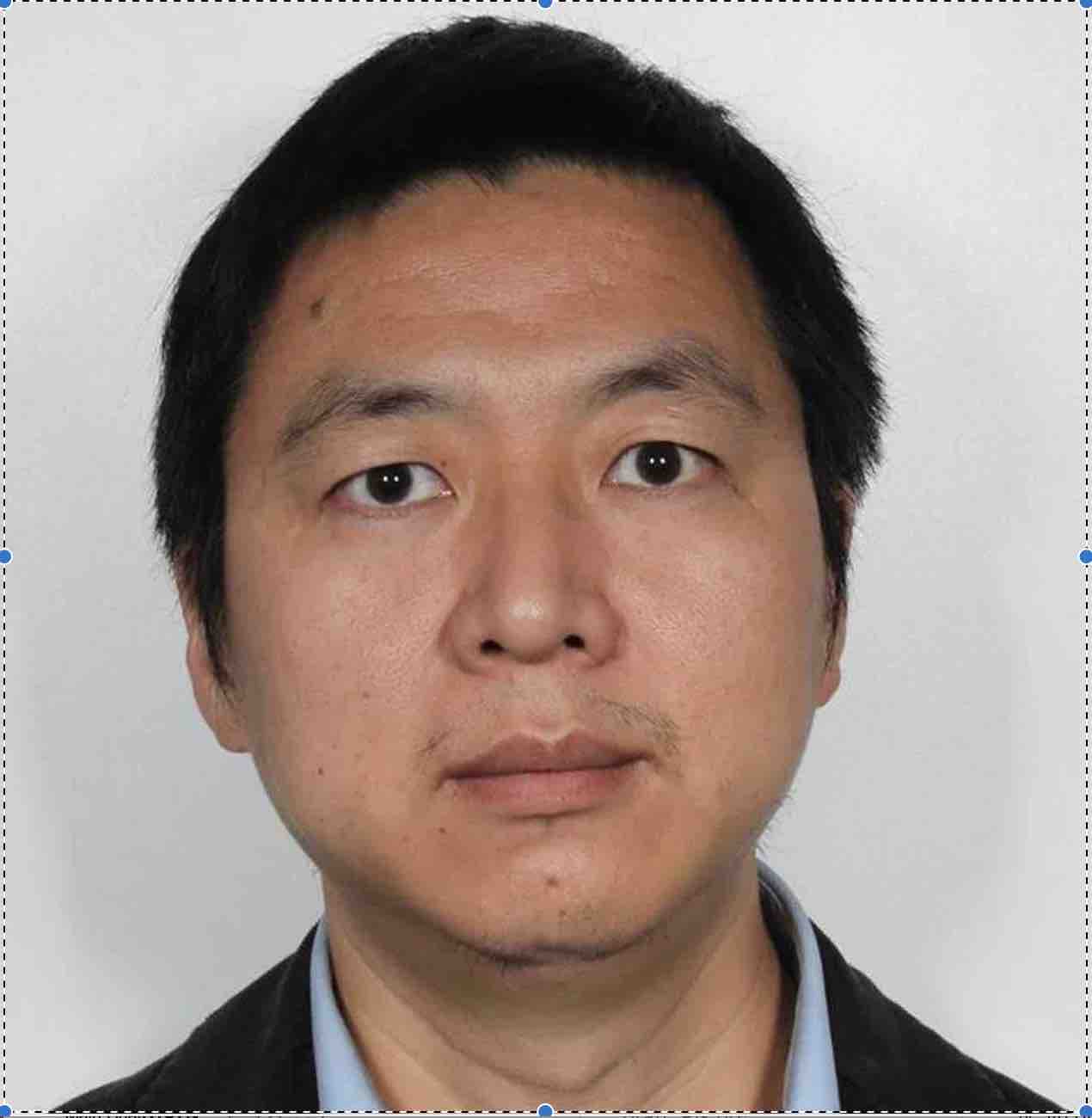
Yuang Chen is a Digital Futures Postdoctoral Fellow at KTH Royal Institute of Technology, Sweden. He received his Ph.D. degree from the Department of Electronic Engineering and Information Science at the University of Science and Technology of China (USTC). Previously, he worked as a full-time Research Assistant at The Hong Kong Polytechnic University and as an AI Research Scientist at Huawei. He also gained industrial research and development experience at Huawei 2012 Laboratories and New H3C Technologies.
His research interests include intelligent multimedia communications, 5G/B5G/6G wireless networks, immersive video transmission, edge intelligence, and generative video communications. He has also conducted interdisciplinary research on AI-driven speech signal processing for healthcare applications. He has published more than 20 papers in leading international journals and conferences and holds multiple invention patents. He is a recipient of the 2026 Chinese Academy of Sciences (CAS) President’s Award and was selected for the 2026 IETF Young Talent Program.
Main supervisor
Mikael Skoglund, KTH Royal Institute of Technology
Co-supervisor
Ming Xiao, KTH Royal Institute of Technology
Markus Lierl, KTH Royal Institute of Technology