A Summer Research Internships (SRI) Programme was organised during the summer, as part of the Digital Futures initiative’s goal of offering training in the new Science of Digital Transformation. The SRI programme was directed towards students on the bachelor and master level who were given the opportunity to conduct research under the guidance of researchers affiliated with Digital Futures. Meet some of the students in this series of interviews.
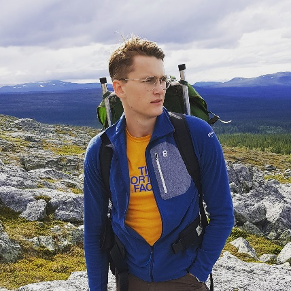
Meet Jakob Nylöf, Master’s Programme in Engineering Physics, KTH Royal Institute of Technology.
How come that you decided to apply for this internship?
Primarily I was interested in control theory after taking the introductory course at KTH, and I wanted to learn more about what the field is being used for in practice. Furthermore, I was already interested in pursuing a PhD at KTH or somewhere else in the world after finishing my Master’s program. The internship offered an excellent opportunity to try out doing research.
You’ve been working on a project on COVID – can you tell us a bit about it?
My project is based on finding an optimal distribution of COVID test kits or vaccines among, for example, a network of cities in a country with intermediate communication links. One way to do this is to distribute the test kits proportionally. Each city receives the same local proportion of tests to COVID cases as the country’s global proportion. With a central entity, such as the Swedish “Folkhälsomyndigheten”, this is no challenge. However, achieving this allocation in a distributed manner requires an iterative algorithm. Cities need to send and receive quantized information to and from their neighbours about their number of stored test kits and confirmed cases.
What do you think about the SRI program?
The SRI program has provided great insight into working within academia. The almost weekly seminars have been the primary source of information. I especially enjoyed the career advice seminars. The research seminars have also been fascinating to listen to. Primarily because I got to see different research topics in control, for example, self-driving vehicles and attack resilient control systems. Secondly, it showed ways to explain advanced mathematics in simple words. When not working remotely, I’ve also gotten the chance to interact with PhD students. Talking about their field of research and what they do on a typical day at work has been fun and insightful.
Any plans for the future? Did this internship make you change your mind?
I plan to continue within engineering physics as this was my choice for the Master’s program at KTH. The internship has made me realize that I want to learn more mathematics as applied to control. As such, I plan to adjust my future courses accordingly. As previously mentioned, I already wanted to pursue a PhD before the internship. Still, now this is really an undoubted step in my future career.