Date and time: Thursday 17 December 2026, 13:00-14:00 CET
Speaker: Constantine Dovrolis, XM Chair in AI, University of Cyprus
Title: Learning What Matters: Data Selection, Neural Structure, and Associative Memory
Where: Digital Futures hub, Osquars Backe 5, floor 2 at KTH main campus OR Zoom
Directions: https://www.digitalfutures.kth.se/contact/how-to-get-here/
OR Zoom: https://kth-se.zoom.us/j/69560887455
Host: Viktoria Fodor, vjfodor@kth.se

Dr. Constantine Dovrolis is the XM Chair in Artificial Intelligence and Professor at the Computer Science department of the University of Cyprus. He was a Professor at the School of Computer Science at the Georgia Institute of Technology (Georgia Tech) between 2002-2025, and the Director of the center for Computational Science and Technology (CaSToRC) at the Cyprus Institute (CyI) between 1/2023-8/2026. He is a graduate of the Technical University of Crete (Engr.Dipl. 1995), University of Rochester (M.S. 1996), and University of Wisconsin-Madison (Ph.D. 2000).
His research spans generative and agentic AI, continual learning, neuro-inspired machine learning, network science, and network neuroscience. He serves on Cyprus’s National AI Taskforce and plays a leading role in Pharos-CY, the country’s AI Factory Antenna. Together with his collaborators and students, they have published in a wide range of scientific disciplines, including climate science, biology, and neuroscience.
According to Google Scholar, his publications have received more than 16,000 citations with an h-index of 59. His research has been sponsored by US agencies such as NSF, NIH, DOE, DARPA, and by companies such as Google, Microsoft and Cisco. He has published at diverse peer-reviewed conference and journals such as the International Conference on Machine Learning (ICML), the ACM SIGKDD conference, PLOS Computational Biology, Network Neuroscience, Climate Dynamics, the Journal of Computational Social Networks, and others.
Abstract: What should an AI system learn from, how should it organize its computation, and how can it keep accumulated knowledge usable? These questions connect three challenges in machine learning: identifying valuable training examples, discovering computational structure, and retaining access to relevant experience as new information arrives. In this talk, I will explore selection and organization as design principles for efficient and adaptive AI.
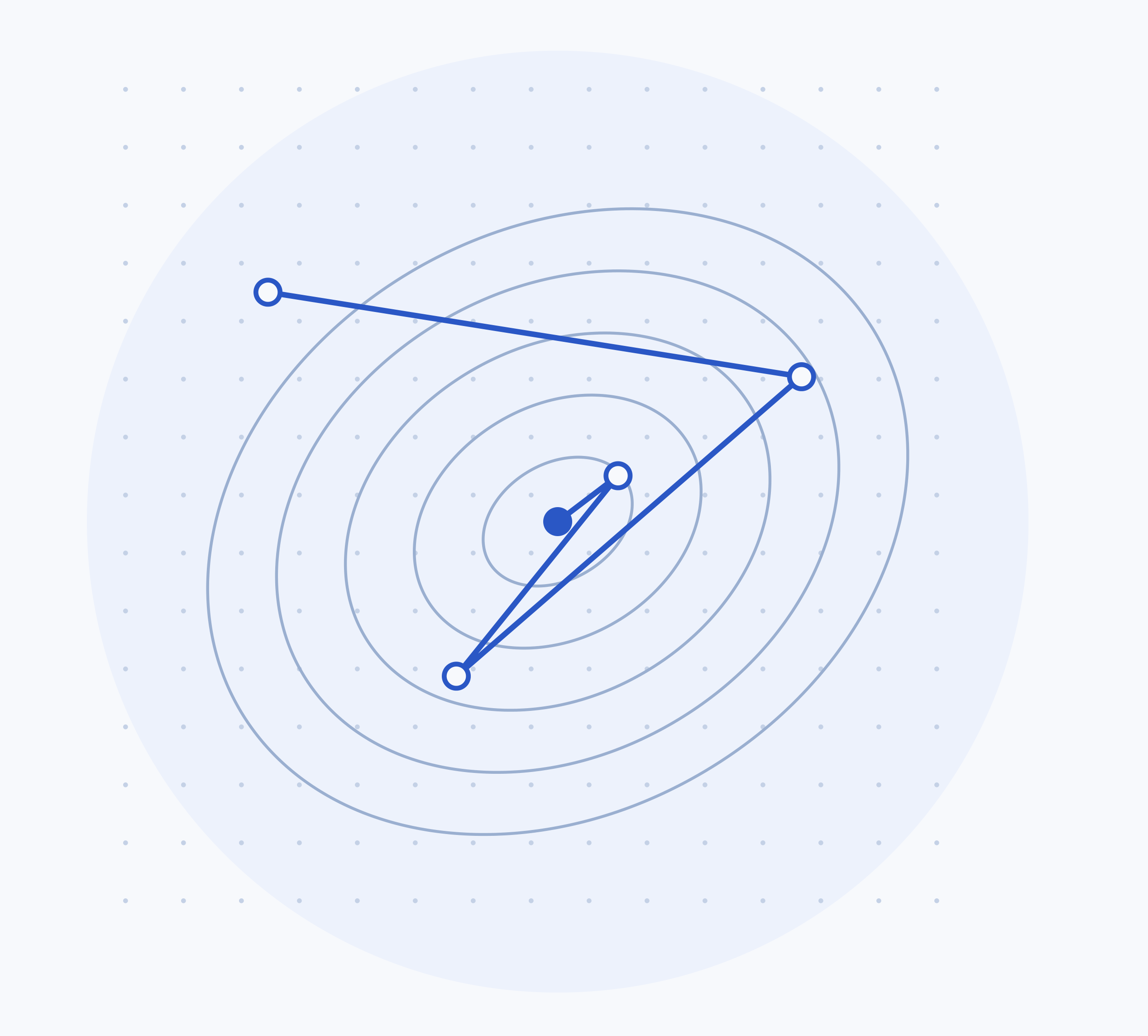
First, I will introduce PEAKS, a method for incrementally selecting training examples while the learner’s own representations evolve. Combining prediction error with similarity in feature space helps identify useful examples under a fixed data budget. Second, I will present Learned Wiring (LeWi), which jointly learns neural connectivity and connection weights through a spatial representation of neurons. This approach enables networks to exploit hidden compositional structure, improving sample efficiency on tasks built from interacting local computations. Third, I will discuss Memini, an external associative memory that supports continual learning in LLM systems while keeping pretrained models fixed. Memini preserves incoming observations and connects them through recurring concepts, helping the system retrieve earlier evidence and combine information received at different times.
Together, these contributions examine how the selection of experience, the organization of computation, and the structure of memory influence what AI systems can learn and use. I will discuss the evidence supporting each approach, their limitations, and the broader challenge of designing systems that make effective use of information throughout learning and deployment.