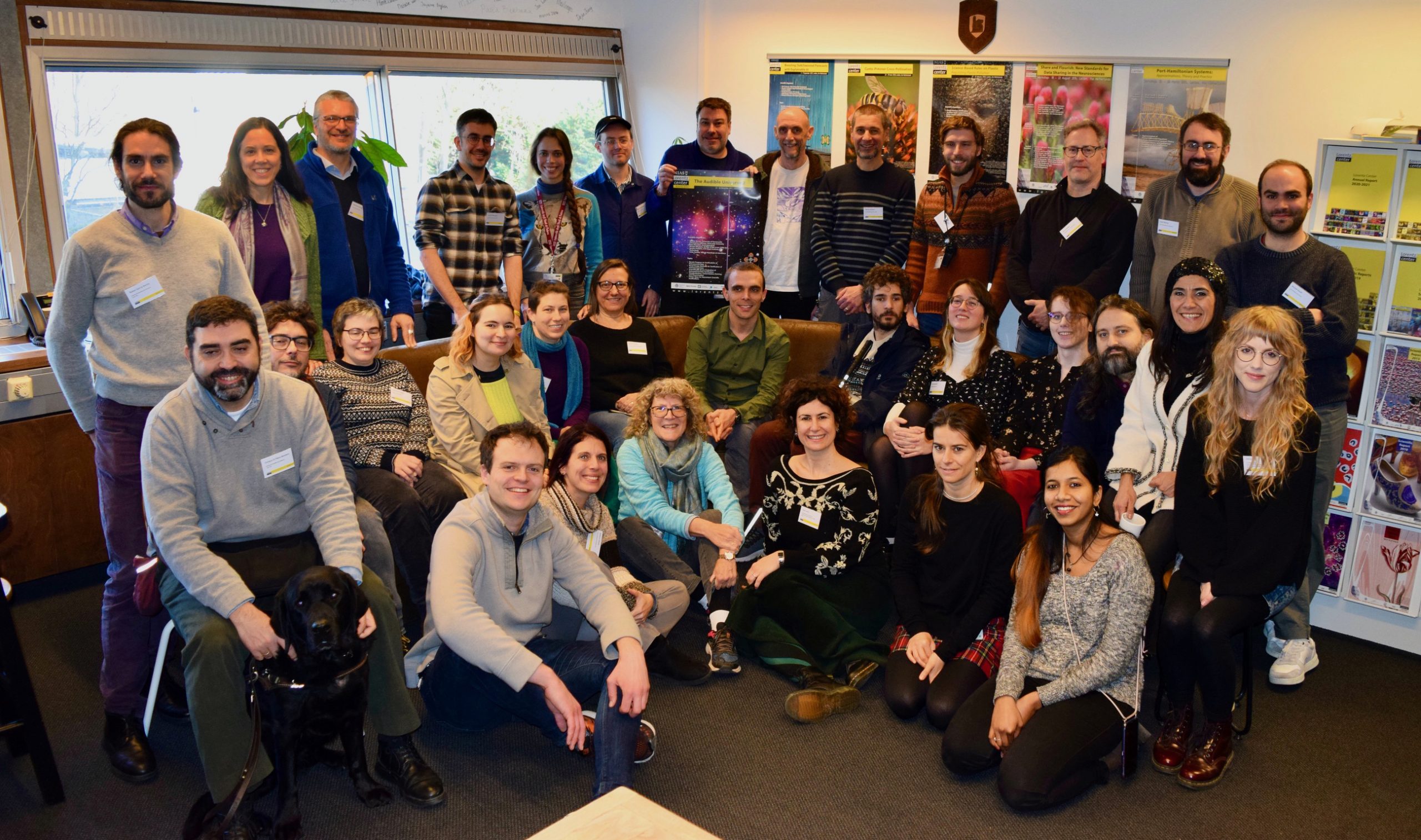
Sandra Pauletto, Digital Futures Associate Director for Mobility and Associate Professor at KTH Royal Institute of Technology, was one of the organisers together with Anita Zanella, Istituto Nazionale di Astrofisica, Italy; Nicolas Bonne, University of Portsmouth, UK; Kate Meredith, GLAS Education; Nicolas Misdariis, IRCAM, France; Chris Harrison, Newcastle University, UK, of the Audible Universe 2 a 5-day workshop at the Lorentz Centre, in Leiden, Netherlands.
The workshop explored the emerging research interest of converting astronomical phenomena into sound as an alternative to visualisation. The “sonification” of astronomical data, which is made possible by digitalisation, allows making academic research, outreach and education accessible to people who are blind or visually impaired (BVI), as well as to assess whether data sonification (with visualisation) can enable a deeper understanding of the underlying data.
Sandra Pauletto, together with Nicolas Misdariis, lead the sonification design and evaluation sessions of the workshop, where astronomers, software developers, and sound experts explored new ways of sonifying astronomy data as well as ways of assessing the effectiveness of the sonification.
– Sonification is a interdisciplinary field in which specific domain knowledge (in this case about astronomy), expertise about sound perception and cognition, and design skills need to meet in order to develop effective new representations that can transform education, accessibility and research, concludes Sandra Pauletto
More information and link to the Audible Universe 2 workshop at the Lorentz Centre.