Researchers at KTH have developed an open-source artificial intelligence (AI) solution to counter the challenges posed by integrating renewable energy and electric vehicles (EVs) in power grids. The increasing reliance on variable sources like solar and wind, combined with the demand for charging EVs, creates voltage fluctuations and deviations, potentially leading to power grid failure. According to Qianwen Xu, Assistant Professor at KTH and a member of the Digital Futures Faculty, the inconsistency of wind power and solar radiation, coupled with unpredictable EV charging needs, introduces many uncertainties.
The team has introduced open-source deep reinforced learning (DRL) algorithms for power converters deep within the grid. These algorithms enable the coordination of energy sources on a large scale, optimizing the system’s performance in the face of fast fluctuations without real-time communication. The decentralized management approach of the solution ensures voltage levels are maintained within required limits, preventing detrimental effects on electrical equipment and overall grid stability.
The researchers have demonstrated the effectiveness of their solution in a real-world smart microgrid hardware platform at KTH. The open-source software package is available on GitHub, and the research paper has been published in the IEEE Transactions on Sustainable Energy. The work is part of Digital Futures collaborating with researchers from the University of California, Berkeley, and Stockholm University.
Learn more in this article on AI protects power grid from fluctuations caused by renewable power and EVs, by David Callahan at KTH.
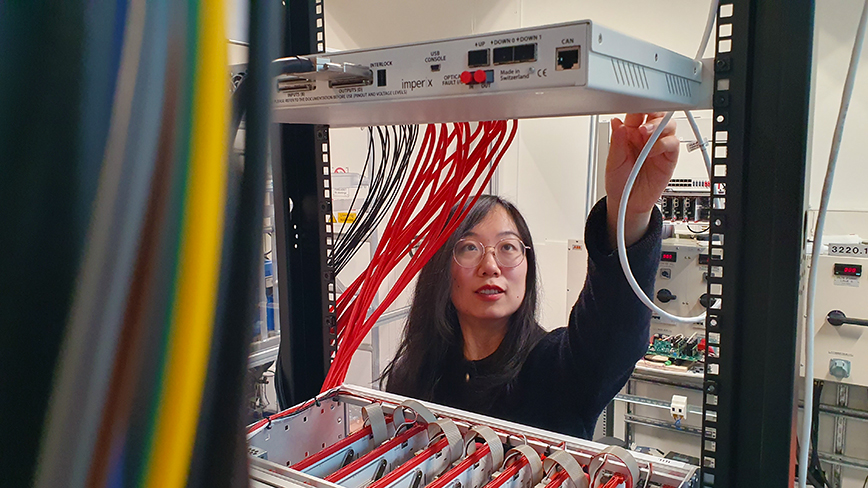
Photo: Assistant Professor Qianwen Xu in her lab at the Department of Electric Power and Energy Systems, KTH Royal Institute of Technology (by David Callahan)