About the project
Objective
- Develop an accurate and computationally efficient model of power-electronics-dominated microgrids with distributed renewable energy sources.
- Establish electrical-parameter-dependent Lyapunov methods for analysing microgrid stability and robustness under time-varying loads and network conditions.
- Design distributed event-triggered control strategies that enable reliable, communication-efficient, and scalable operation of renewable-energy microgrids.
Background
The transition towards renewable energy is increasing the complexity of modern power systems. Microgrids with high shares of distributed renewable energy sources rely on power-electronic converters, communication networks, and coordinated control, making their modelling, stability analysis, and operation challenging.
This project will develop event-triggered networked control methods for microgrids, combining control theory, power systems, network science, and data-driven methods. The goal is to improve the reliability, resilience, and efficiency of future renewable-energy systems while reducing unnecessary communication and supporting the sustainable digital transformation of energy infrastructure.
About the Digital Futures Postdoc Fellow
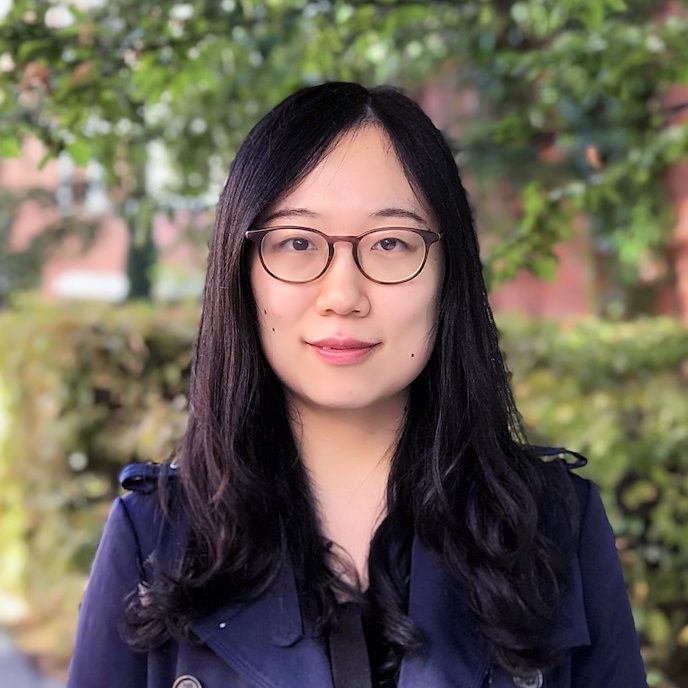
Dr. Libei Sun is a postdoctoral researcher at the Department of Electrical Engineering at KTH Royal Institute of Technology. Libei received a PhD in Control Theory and Control Engineering from Chongqing University, China, and was previously a postdoctoral researcher at the University of Hong Kong and a researcher at Nanyang Technological University. Libei’s research focuses on event-triggered control, smart grids, safe control, and robotics.
At KTH, Libei works with Prof. Qianwen Xu and Prof. Dimos Dimarogonas on reliable and communication-efficient control solutions for sustainable power systems.
Main supervisor
Prof. Qianwen Xu, KTH Royal Institute of Technology.
Co-supervisor
Dimos Dimarogonas, KTH Royal Institute of Technology.