About the project
Objective
This project aims to provide mitigation solutions for decision-makers to reduce human and environmental exposure to particle emissions caused by the transport sector. Through the use of cross-disciplinary approaches, the project develops methodologies that are tested and validated by adopting Stockholm as a digital sandbox.
Background
In our daily city life, we are constantly exposed to means of transport such as passenger vehicles, heavy-duty vehicles, and rail transportation. These vehicles release toxic particle emissions originating from exhaust and non-exhaust sources. Recent projections indicate an increase of non-exhaust emissions in urban areas from 0.5% in 2021 to 67% in 2050. Non-exhaust emissions are the primary source of inhalable Particulate Matter (PM). With a diameter smaller than 10 µm, PM10 can be inhalable by humans causing inflammations and other health diseases. On the other hand, PM with a size larger than PM10 can deposit over the nearby infrastructures contributing to environmental pollution.
Stockholm is among the forefront European cities capable of monitoring in real-time level of PM and policy makers strive to mitigate these emissions. However, despite these efforts, the concerns regarding the increase of non-exhaust PM in the urban areas remain critical.
About the Digital Futures Postdoc Fellow
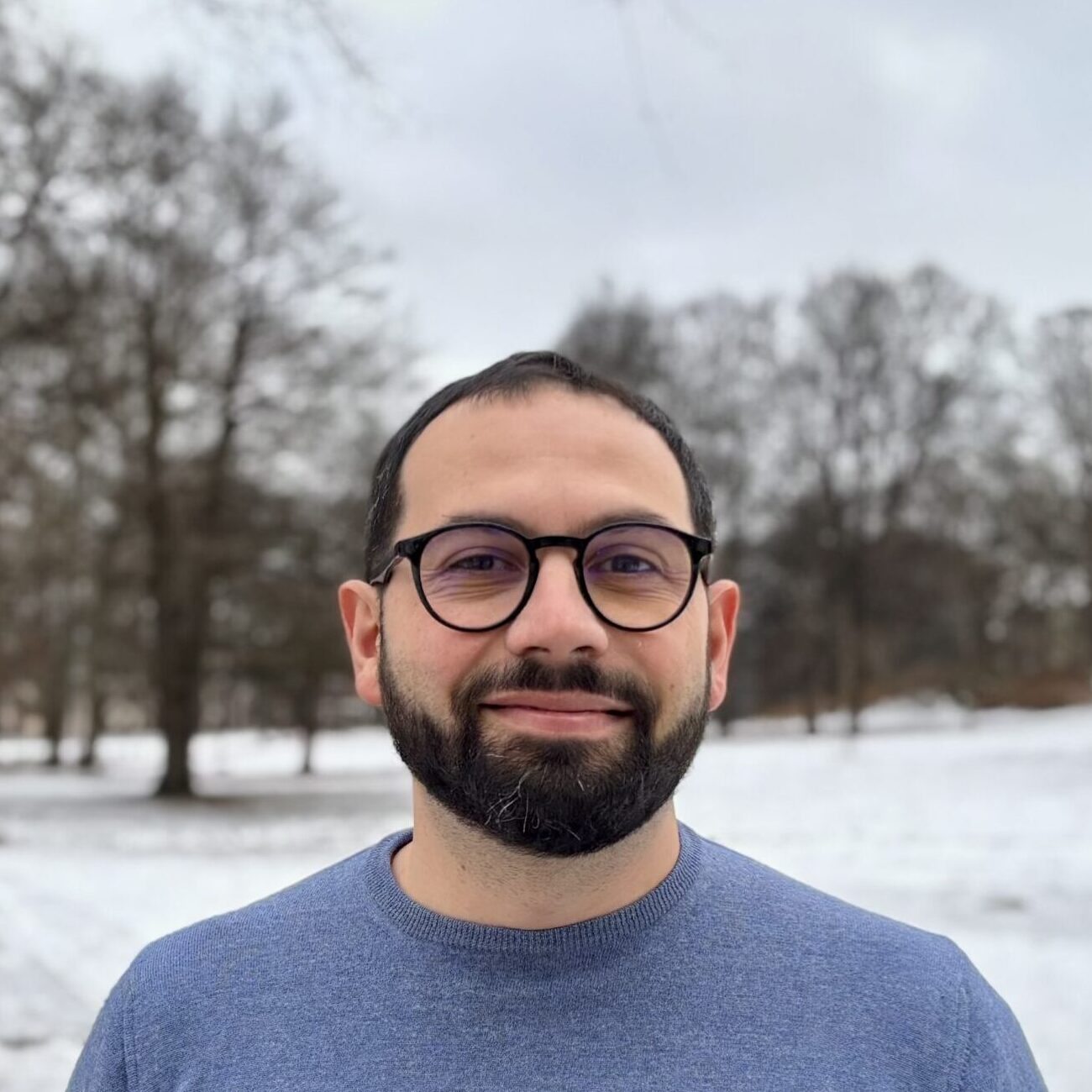
Henri Giudici completed his Ph.D. in Civil and Environmental Engineering at the Norwegian University of Science and Technology – NTNU (Norway). He specialized in vehicle tire-pavement interactions in winter conditions. His research supported the Norwegian road authority in reducing road salt application rates during winter. Between 2019 and 2022, he served as an industrial Principal Scientist, developing technologies and data-driven approaches for assessing the quality of transport infrastructures. In 2022, he continued his academic career as a researcher in systems engineering at the University of South-Eastern Norway – USN (Norway). In his current Digital Futures postdoc, Henri fosters agile approaches to integrate scientific evidence into policy-making by bridging transport tribology, systems engineering and data science.
Main supervisor
Ellen Bergseth, Associate Professor at Department of Engineering Design, KTH.
Co-supervisor
Ulf Olofsson, Professor at Department of Engineering Design, KTH.