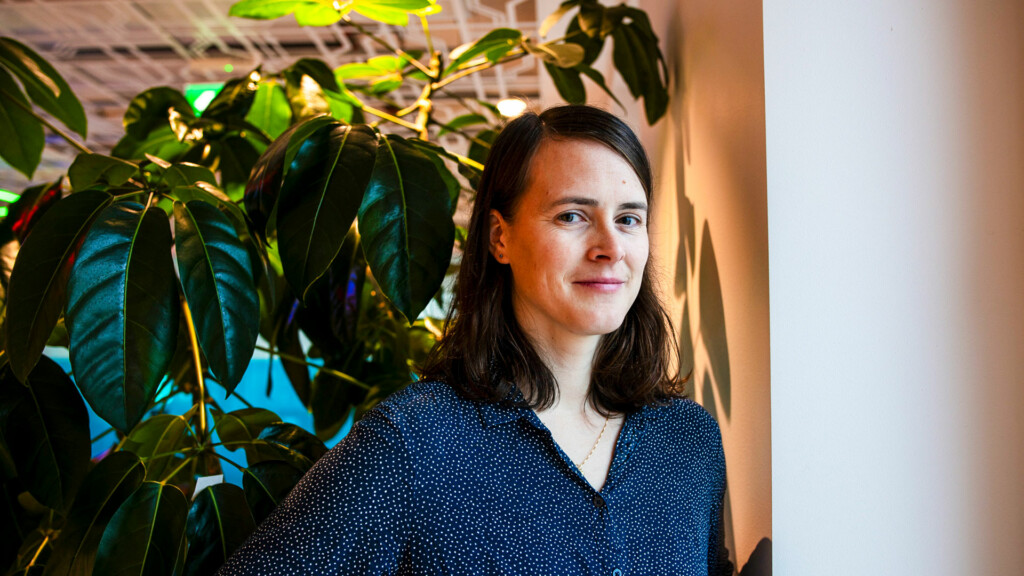
A person with long brown hair and a dark blue patterned shirt stands indoors, leaning against a white wall, with a large leafy green plant in the background.

The hidden climate cost of AI and Internet use

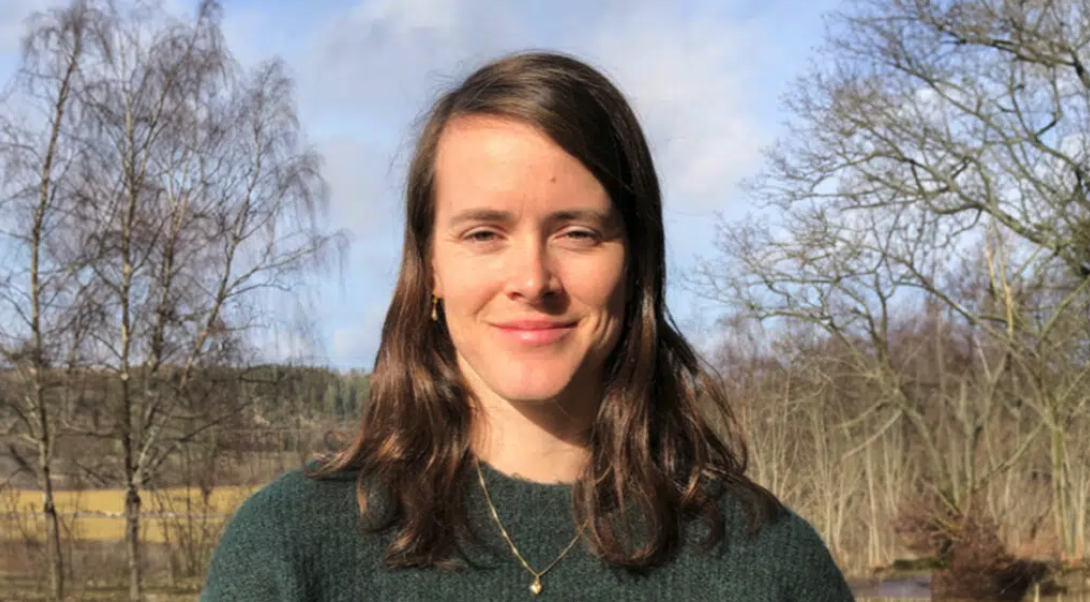
The rapid growth of AI and internet usage is contributing significantly to increased energy consumption and environmental impact. Anna Furberg, a researcher at KTH and affiliated with Digital Futures, was recently interviewed by both Ingenjören and Läget (a youth-focused web magazine from Stockholm University) about these issues. In Ingenjören, she discussed how AI requires large amounts of electricity – often significantly more than traditional internet services like search engines – and warned that without responsible management, AI could worsen climate challenges. She stressed the need for a life-cycle perspective on digital technologies and urged careful consideration of how and why AI is used.

Several Swedish initiatives are exploring solutions for more energy-efficient AI, such as neuromorphic chips, improved data center technologies, and optimized code. Despite the technological promise, Furberg and digital ethics advisor Per Axbom both caution against assuming technology alone will solve these problems. Responsible use, transparency, and thoughtful decision-making are essential.

In her Läget interview, Furberg explained that everyday internet activities – like streaming videos, scrolling on social media, or online shopping – consume electricity, much of which is still generated using fossil fuels. She emphasized that it’s not just about electricity use, but also our online behaviors and the environmental cost of producing digital devices. Cooling systems, data servers, mobile networks, and Wi-Fi all contribute to this footprint. Furberg called for both individual awareness and systemic responsibility, highlighting that while consumers play a role, companies and policymakers must take stronger action.

The original articles are both in Swedish.

Photo: Kristina Alexanderson

More news

Aerial view of Singapore’s Marina Bay at sunset, featuring the Marina Bay Sands hotel, city skyscrapers, the ArtScience Museum, and calm water reflecting the colourful sky.

Sweden–Singapore Symposium outlines blueprint for inclusive, AI-ready workforce

08/12/2025

Academics, policymakers, and industry leaders from Sweden and Singapore have concluded a three-day symposium in...

A woman with straight, light brown hair and fair skin is standing outdoors, wearing a dark top. The background is blurred, showing a sunny, mountainous landscape. She is looking calmly at the camera.

Jennifer K Ryan is nominated AWM fellow and member-at-large to the SIAM council

03/12/2025

The Association for Women in Mathematics (AWM) has named five mathematicians as 2026 AWM Fellows,...

A collage of four professional headshots: Arvind Narayanan, Kathleen Kohn, Olga Veksler, and Stanley Greenstein. Each person is shown from the shoulders up, facing the camera, with name labels beneath their photos.

New members appointed to the Digital Futures Strategic Research Committee

27/11/2025

Digital Futures welcomes four new members to its Strategic Research Committee (SRC), the group responsible for...

Four people sit around a table with microphones and audio equipment, recording a podcast. They are engaged in conversation, with one man gesturing whilst speaking. The background features shelves with decor and a large photograph.

Researcher Anna Furberg featured in Ellevio podcast on AI, data centers, and the energy system – now on Spotify!

25/11/2025

Digital Futures researcher Anna Furberg is one of the featured guests in the latest episode...