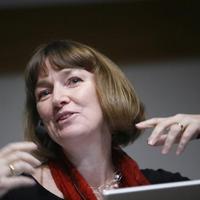
Scholar in residence 1 March – 30 June 2026
Nazanin Andalibi is an Associate Professor in the School of Information at the University of Michigan (UM), where she also serves as affiliate faculty with the Digital Studies Institute and the Center for Ethics, Society, and Computing. Her award-winning research appears in leading venues including ACM CHI, CSCW, and TOCHI. She has received $1.16 million in funding from the National Science Foundation, including a prestigious NSF CAREER award. The policy and practical impact of her work is reflected in its citation in numerous policy documents, her invited remarks at the Federal Trade Commission, and her keynote address at Reddit’s ModSummit. She also serves on the editorial board of ACM Transactions on Computer-Human Interaction and contributes regularly to conference organizing committees.
A critical social computing and human–computer interaction (HCI) scholar, Andalibi studies how marginality is experienced, enacted, and shaped through sociotechnical systems such as artificial intelligence and social media. A central strand of her work investigates the privacy, ethical, justice, and policy implications of emotion AI in high-stakes contexts, including workplaces, hiring processes, social media, and health care. Her research demonstrates how emotion AI amplifies existing inequities, creates new forms of harm, and disproportionately burdens marginalized communities—deepening identity-based vulnerabilities and reinforcing the very structural challenges its proponents claim it will solve.
At Digital Futures, Andalibi looks forward to collaborating with scholars engaged in feminist, critical, and justice-oriented research; sharing feedback on projects in all stages of development; and enjoying fika with colleagues. This year, she is primarily focused on her forthcoming book, which examines the ethical, social, and political implications of AI systems that claim to infer or predict human affect and other socially and culturally situated phenomena, with attention to themes of power, knowledge, and affect. She is particularly grateful to engage with the Digital Futures community and with her host, Prof. Kia Höök, whose foundational scholarship at the intersection of affect and computing demonstrates the possibilities of non-reductive approaches to affect in computing.
Contact: andalibi@umich.edu