Research center
established by:

KTH, Stockholm University and RISE
A person with long dreadlocks, glasses, and a blue jacket sits outdoors in a wooded area, looking thoughtfully to the side. The background is blurred with trees and soft sunlight.

Jaron Lanier – keynote speaker at Digitalize in Sthlm 2021!

Meet Jaron Lanier – Scientist, Musician, Visual Artist & Author of Who Owns the Future? – and one of our international keynote speakers at Digitalize in Sthlm 2021

A Renaissance Man for the 21st century, Jaron Lanier is a computer scientist, composer, artist, and author who writes on numerous topics, including high-technology business, the social impact of technology, the philosophy of consciousness and information, Internet politics, and the future of humanism.

A pioneer in virtual reality (a term he coined), Lanier founded VPL Research, the first company to sell VR products, and led teams originating VR applications for medicine, design, and numerous other fields. He is currently the ”octopus” (which stands for Office of the Chief Technology Officer Prime Unifying Scientist) at Microsoft. He was a founder or principal of startups that were acquired by Google, Adobe, Oracle, and Pfizer.

In 2018, Lanier was named one of the 25 most influential people in the previous 25 years of tech history by Wired Magazine. He’s also been named one of the 100 most influential people in the world by Time Magazine, top one hundred public intellectuals in the world by Foreign Policy magazine, top 50 World Thinkers by Prospect magazine, and one of history’s 300 or so greatest inventors in the Encyclopedia Britannica. In 2009 Jaron Lanier received a Lifetime Career Award from the IEEE, the preeminent international engineering society.

As a musician, Lanier has been active in the world of new ”classical” music since the late seventies. He is a pianist and a specialist in unusual musical instruments, especially the wind and string instruments of Asia. He maintains one of the largest and most varied collections of actively played rare instruments in the world.
Find out more in the abstract of Jaron’s talk  “There Are Two Possible Human Futures And One of Them Is Better” at Digitalize in Sthlm 2021

More news

Swiss Federal Communications Commission visits Digital Futures

10/09/2026

On 10 September, Digital Futures welcomed a delegation from the Swiss Federal Communications Commission (ComCom) for a...

A large red-brick building with towers and a courtyard filled with people sitting on grass and benches. Text reads Welcome to CASPT & Transit Data 2027, 21–24 June in Stockholm.

CASPT/Transit Data 2027 to bring public transport researchers and practitioners to Stockholm: Call for papers – submit by 16 October

08/09/2026

From 21–24 June 2027, Stockholm will host the 17th International Conference on Advanced Systems in Public...

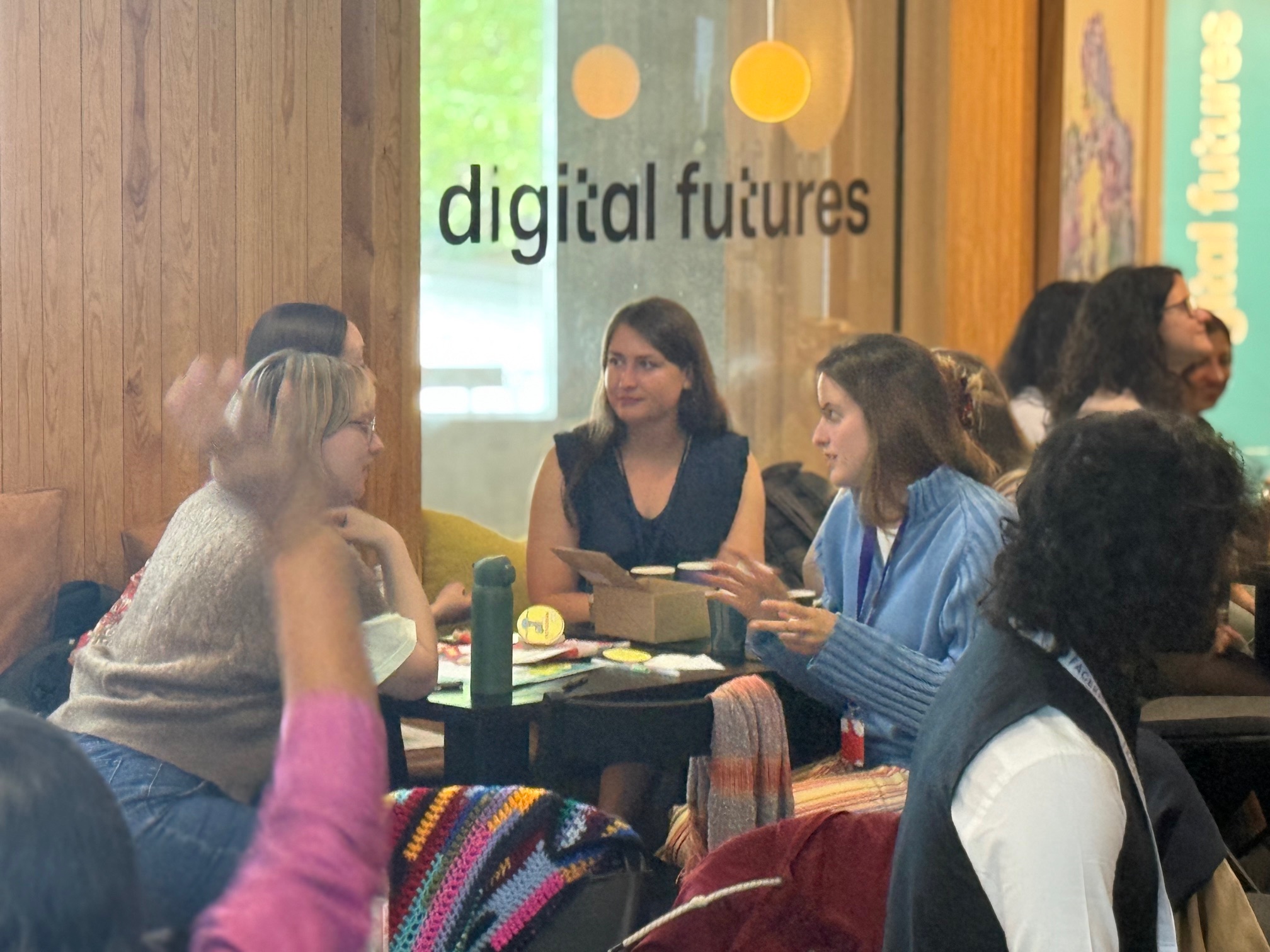
A group of people sit in a modern meeting room, attentively watching a presentation on a screen labelled Human-Centred Cybersecurity. The space features wood walls, glass, and digital futures signage.

Exploring AI for healthcare and society: KI master’s students visit Digital Futures

07/09/2026

Led by Elham Rostami, Director of HumanLab at Karolinska Institutet, a group of master's students...

A person with wavy hair stands with arms folded in front of a blue and yellow racing car on a sunny day at a racetrack, with garages and empty grandstands in the background.

From KTH to the racetrack: Filippo takes autonomous racing to the next level at UC Berkeley

31/08/2026

This summer, KTH student Filippo Di Fiore has gained first-hand experience of cutting-edge autonomous racing...