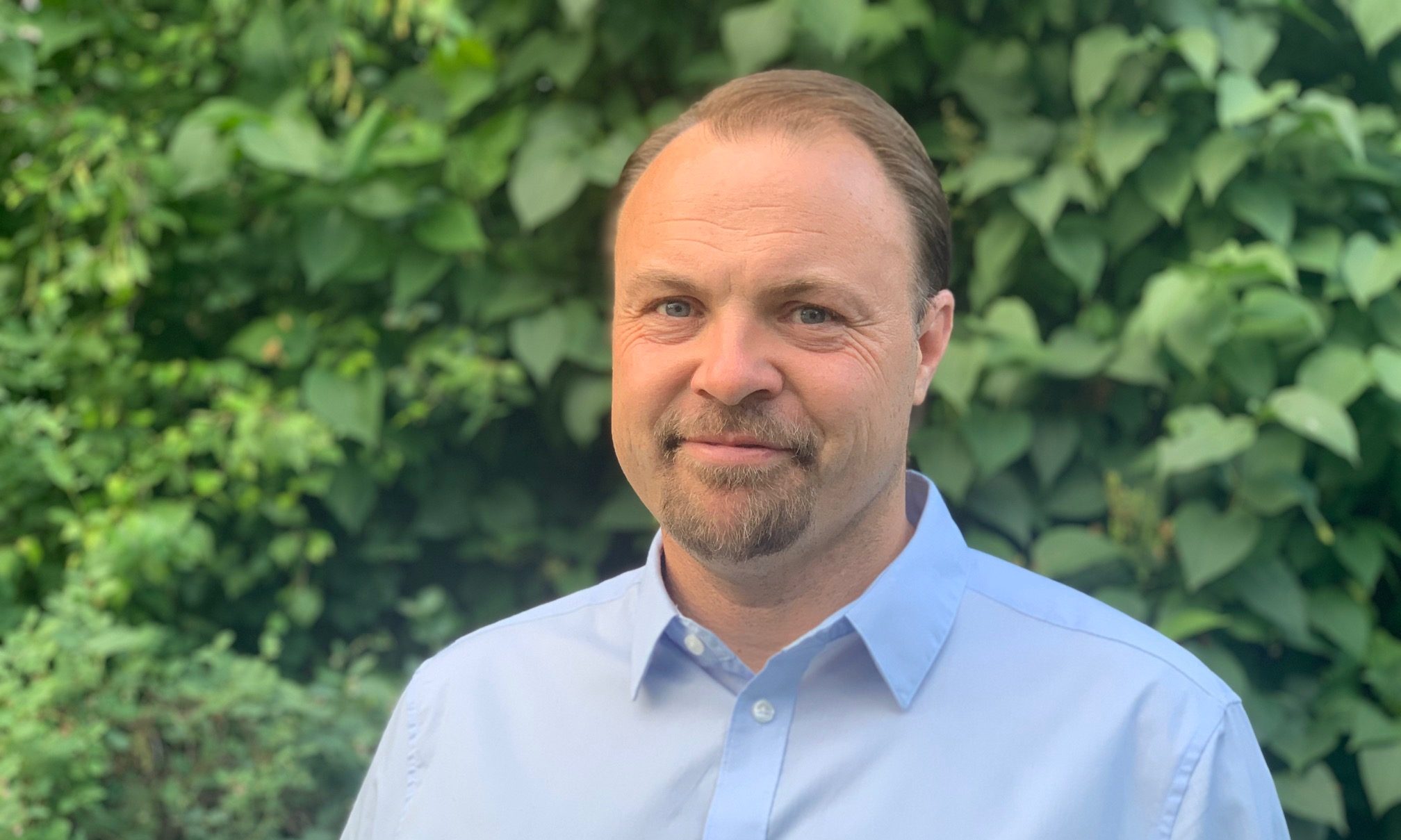
We talked to David Broman, Associate Professor and Docent at the Division of Software and Computer Systems at KTH and an Associate Director, Operations at Digital Futures. David is also PI of the research project Data-Limited Learning of Complex Dynamical Systems.
Hi David, describe your role at Digital Futures?
– In my role as a member of the executive committee, my focus is on the faculty engagement at Digital Futures, and how we can create an environment that helps our Digital Futures faculty in the best possible way. In particular, in the last couple of years, I have been highly involved in the design and planning of the Digital Futures hub and the new equipment for hybrid meetings and seminars. Now when we are soon – hopefully – opening up the KTH campus and the hub for in-person meetings, I really hope that we can create a lively and creative research environment for all Digital Futures faculty members, students, and collaborators.
Your research focuses on the model-based design of systems – why did you decide to focus on this topic?
– My main research interest is on how we create modeling languages and compilers to help scientists and engineers to raise the level of abstraction when analyzing systems, and still enable efficient computations. That is, how can we as computer scientists create model-based methods and tools that help domain experts in areas such as evolutionary biology and mechanical engineering to solve their problems in a shorter time frame. The reason why I really like this topic is twofold. First, it spans over several exciting research areas, including programming language and compiler theory, machine learning with focus on probabilistic methods, and cyber-physical systems. Second, it is an enabling technology, which may enable new innovations in other research and engineering fields.
Finally, tell us a little bit about yourself!
– Well, I am originally from Sweden and grew up in a really small village in Småland in the south of Sweden. I worked a number of years in industry before deciding to do a PhD and to make an academic career. I have two lovely kids and a wonderful wife. We have now finally got used to the Swedish weather again after moving back to Sweden in 2014. Before that, we lived a number of years in California where I worked at UC Berkeley. Besides working and spending time with my family, I also try to find some time for painting.