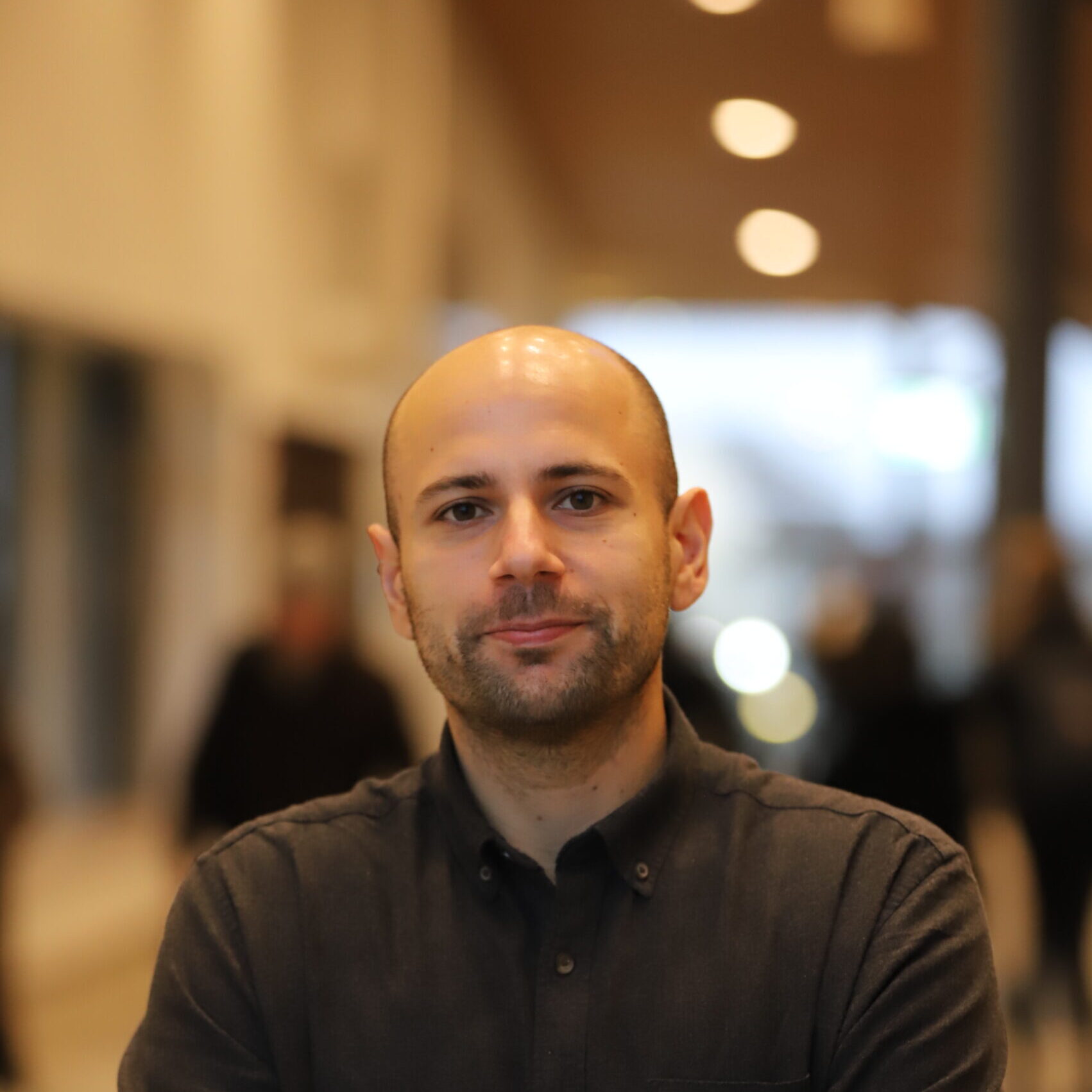
How can Artificial Intelligence (AI) and Earth Observation (EO) contribute to more accurate urban population predictions in rapidly growing cities? This was the central question of the POPAI project, led by Stefanos Georganos during his postdoctoral fellowship at Digital Futures.
With a strong focus on the Global South, his research explored innovative ways to address critical data gaps and support evidence-based policymaking for sustainable urban development. Now, as an Associate Professor at Karlstad University, Stefanos continues to push the boundaries of geospatial research, applying machine learning and remote sensing to tackle socio-economic inequalities. In this interview, we discuss how his time at Digital Futures shaped his career, the impact of his research, and his vision for the future.
Reflecting on your time at Digital Futures, what were the key goals and challenges of your POPAI project?
The long-term goal of POPAI was to better understand the synergy between AI and Earth Observation in scalable population mapping. This research aimed to address the United Nations Sustainable Development Goals, support evidence-based policymaking, and contribute to the development of more sustainable cities.
When I proposed POPAI, AI – particularly deep learning – was becoming increasingly widespread in the field of Earth Observation. However, most early applications focused on traditional tasks like object detection and image segmentation. My goal was to push beyond those limits. I wanted to explore whether state-of-the-art deep learning models could directly capture socio-economic and demographic information from satellite imagery.
This was a significant challenge because, in many parts of the world – especially in the Global South – population data are sparse, outdated, or difficult to collect. Designing a deep learning framework that could accurately estimate population distributions under these constraints required careful consideration of available data and how best to integrate multiple sources, including high-resolution satellite images. After extensive experimentation, we developed a system that not only performed remarkably well but also outperformed existing methods in several contexts.
How did your postdoctoral research contribute to the broader field of AI-driven population mapping, particularly in developing urban areas?
Our approach has established a benchmark in the field and inspired further research that builds upon our concepts. It is incredibly rewarding to see others acknowledge and expand on these methods – after all, a scientist’s ultimate reward is often the broader adoption and impact of their work. We hope this line of research continues to bridge critical data gaps, supporting both evidence-based policymaking and the pursuit of more sustainable urban development worldwide.
What skills, collaborations, or insights gained during your fellowship have been most valuable in your transition to an Associate Professor role at Karlstad University?
One of the most valuable aspects of my postdoctoral fellowship at Digital Futures was the wide range of experiences I gained, which prepared me well for my current role as an Associate Professor at Karlstad University.
First, contributing to multiple projects in parallel introduced me to diverse research questions and methodologies. This exposure not only sharpened my technical skills but also enriched my perspective on interdisciplinary collaboration and problem-solving.
Another significant factor was my experience in teaching and supervising students at various levels. I had the opportunity to assist in undergraduate and master’s-level courses, as well as supervise doctoral candidates. These teaching experiences strengthened my leadership, communication, and pedagogical abilities – skills that are crucial in my current position. I was also fortunate to take high-quality pedagogical courses at KTH, focusing on doctoral supervision and teaching in higher education. These courses helped me refine my skills in effective teaching, assessment, and curriculum development, ensuring that I create an environment where my students can truly excel.
Moreover, working alongside highly skilled colleagues at KTH provided me with a strong support network for exchanging ideas and receiving feedback. This collaborative environment, combined with the independence I was given to pursue my own research ideas, taught me how to balance teamwork with individual initiative. Having the space to explore new concepts in a supportive setting was pivotal, allowing me to refine my research approaches and develop innovative methods – many of which I’m now applying and expanding upon at Karlstad University.
Overall, the fellowship was an ideal platform for professional growth, blending research, pedagogy, mentorship, and collaboration in ways that have profoundly shaped my path as an Associate Professor.
In what ways do you see AI and Earth Observation evolving to better support sustainable urban development and policymaking?
I believe we’re entering an incredibly exciting period where AI and Earth Observation (EO) are poised to make a real difference in how cities grow and function. Thanks to advances in deep learning and the increasing availability of high-resolution satellite data, researchers and policymakers can now obtain near-real-time insights into everything from population distribution to resource usage in urban areas.
However, this progress isn’t just about developing sophisticated algorithms. It also depends on fostering meaningful collaborations among researchers, local governments, NGOs, and community organizations. By pooling data and sharing methodologies, we can ensure that AI and EO tools aren’t just accessible to well-funded institutions in developed countries but also to communities in the Global South, where accurate information is often urgently needed.
At the same time, I’m seeing a growing emphasis on the ethical and transparent use of these technologies. We must be mindful of privacy concerns and data-protection issues while also involving local communities in setting research priorities. If we can strike that balance – harnessing cutting-edge AI and EO techniques while ensuring they serve the actual needs of diverse communities – we have a much better chance of creating truly sustainable, resilient, and equitable cities.
Looking ahead, what are the main research directions or projects you are currently focusing on, and how do they build on your previous work at Digital Futures?
Looking ahead, I am primarily focused on research that extends my previous work at Digital Futures. Last year, I received a FORMAS early-career grant to build on the work initiated by POPAI. This achievement was made possible by the supportive and stimulating environment at KTH, which gave me the space to develop my ideas further. The project DEPRIMAP unravels the dynamics of deprived urban areas using AI and EO to foster evidence-based sustainable planning.
Currently, I am honored to serve as the principal supervisor for a doctoral student, marking an excellent start to my professorship. Additionally, my teaching experience has expanded significantly and I am actively contributing to the development of the upcoming master’s program in GeoAI.
Ultimately, my time at KTH and Digital Futures has been instrumental in shaping my perspective on research and education, and I am happy to see Digital Futures continue to thrive and grow!