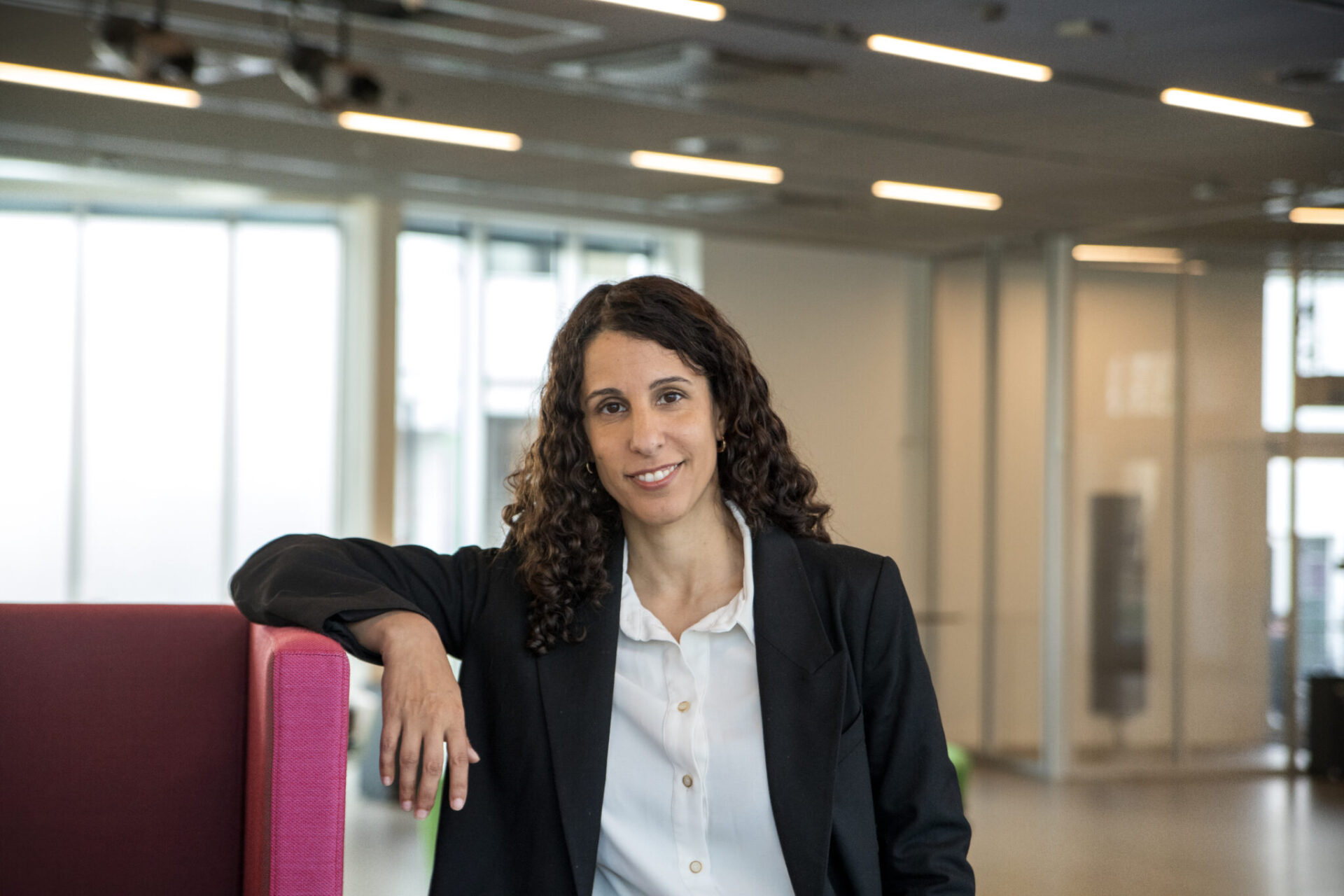
Meet Claudia Núñez-Pacheco – Postdoc Fellow at Digital Futures. Claudia Núñez-Pacheco is an interaction design researcher and artist. She holds a PhD and a master’s degree from the Sydney School of Design at the University of Sydney in interaction design and electronic arts. Her research investigates how bodily ways of knowing can be used as crafting materials for the design of aesthetic experiences. Claudia has been awarded twice by the National Commission for Scientific and Technological Research Scholarship in Chile, in addition to disseminating her research through various international human-computer interaction and design academic fora.
Hi Claudia, describe your role as a Postdoc Fellow at Digital Futures and why you applied for this fellowship mobility program?
– Hi! I am an interaction design researcher working at the Division of Media Technology and Interaction Design. I decided to apply to this fellowship because it would allow me to work next to world-class design researchers in an open and constructive environment. And I was right! It is great being here collaborating with brilliant people from all over the world.
The title of your postdoc project is Foreignness as a conceptual framework for interaction design – tell us a bit about it? Have you already some results from your work?
– I am particularly interested in how the notion of being a foreigner brings us closer to new ideas about how to design for speculative futures. During my postdoc, I have conducted a series of academic workshops on the topic, and some of their findings are published at the ACM TEI conference this year. In addition, I am currently working on a prototype that uses haptics and storytelling to communicate the experience of earth tremors, which are unfamiliar or foreigner to many people here, but part of my life when I grew up.
In your research journey, you have engaged in a multidisciplinary exploration that merges material thinking, wearable technology, human-computer interaction (HCI) and design methods with tools from experiential psychology – why did you decide to focus on these topics?
– Because first of all, I am a designer, and as such, I feel attracted towards complex problems, or what others have called wicked problems or complex socio-technical systems. In my view, these problems, which are inherently multifaceted, are better handled when we put them in conversation with a plurality of perspectives. For example, my work focuses on how the study of subjective experiences is key for designing ethical technologies. Still, I am also interested in developing systems responding to our shared human nature. My research on foreignness relates to this: We come from different cultures, but are we really that different? How can we design technologies that afford both genuine diversity and togetherness at the same time?
Finally, tell us a little bit about yourself!
– I enjoy the aroma of lavender, LED lights and wine tasting. And a curious one: I know how to read Tarot cards, but I don’t believe these can predict the future.
Link to postdoc project Foreignness as a conceptual framework for interaction design