About the project
Objective
The aim of the project is to develop control theoretic tools that can handle coarse models. In particular, coarse models as typically found in synthetic biology. Mathematically, we capture ‘coarseness’ through topological dynamical systems theory and aim to provide control theoretic counterparts to well-established index theories. Developing the theory is a first step, a second step is to integrate these tools directly into data-driven pipelines.
Background
Several pressing biological questions of today have a strong control-theoretic component, e.g., we do not only want to describe a cancerous cell, we want to prescribe its dynamics. Compared to classical fields of engineering, biology usually lacks the type of models that contemporary control theory can handle well. Instead, biological models are typically coarse and largely qualitative. In this project we accept this coarseness, take a topological viewpoint and develop control theoretic tools at precisely this level of granularity. We focus in particular on genetic regulatory networks that can or should generate oscillations. This, because of the large practical and theoretical appeal.
About the Digital Futures Postdoc Fellow
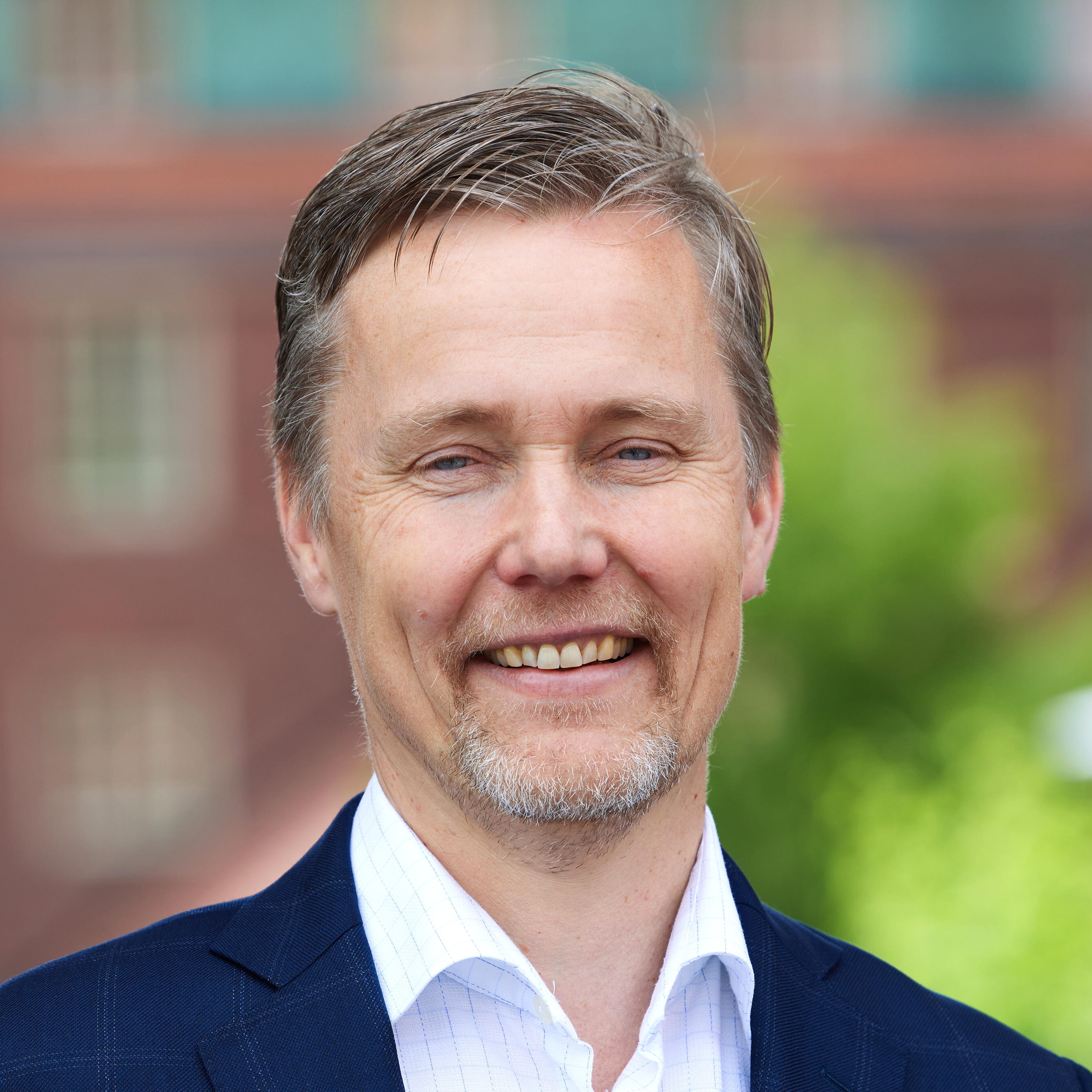
Wouter Jongeneel is a control theorist fascinated by topology and the life sciences. He received his PhD in Electrical Engineering from EPFL in Switzerland. Prior to that, he received a MSc in Systems & Control from TU Delft in the Netherlands. His research is centered around understanding the interplay between structural features of a system and qualitative behaviour it can display.
Main supervisor
Karl Henrik Johansson, KTH
Co-supervisor
Martina Scolamiero, KTH