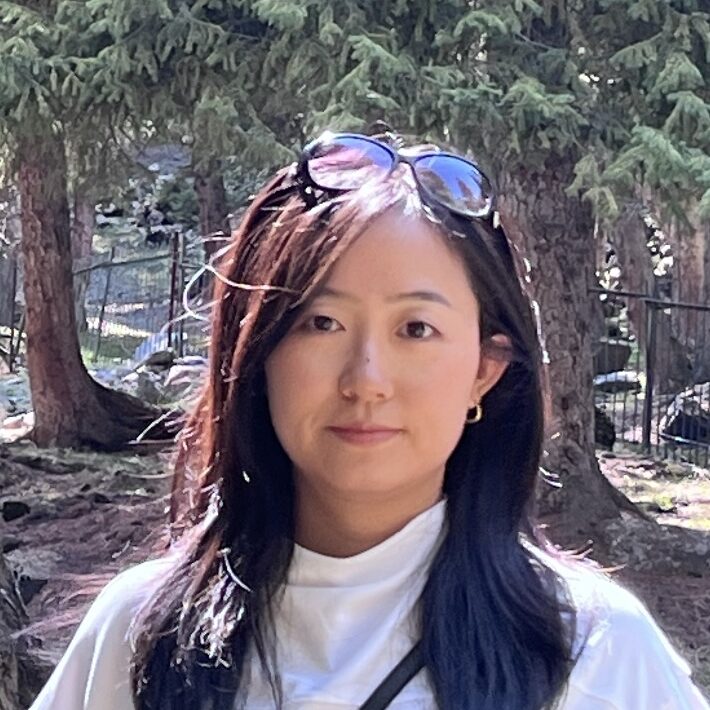
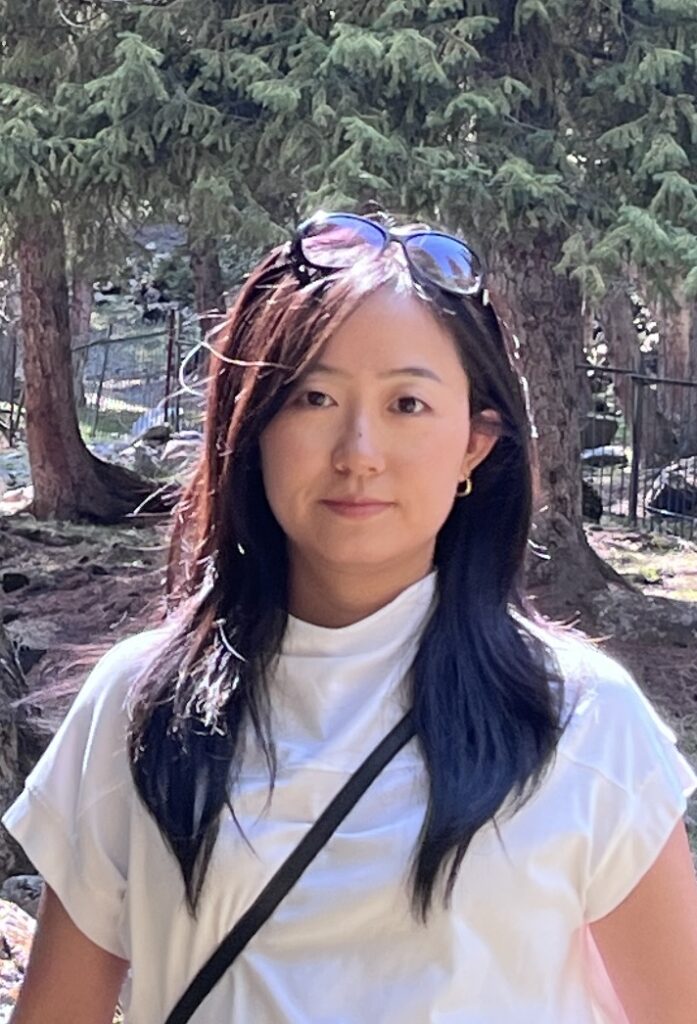
Dr. Zhiqi Tang’s postdoctoral journey at Digital Futures and KTH Royal Institute of Technology marked a significant phase in her career, as she tackled one of the most pressing challenges in robotics: enabling intelligent multi-vehicle systems to act autonomously in real-world environments. Her research focused on creating a sensory-based hierarchical control framework that blends mathematical rigor with practical relevance—from urban search and rescue to intelligent transport networks.
As she began her new role as a faculty member at the University of Manchester, Tang reflects on how her time at KTH and Digital Futures has shaped her research philosophy, collaborations, and academic path.
Your research at Digital Futures focused on sensory-based hierarchical control for intelligent multi-vehicle systems. What motivated this direction, and how does it address current limitations in real-world autonomous robotics?
– Autonomous systems such as robots and self-driving vehicles are becoming essential in many areas—such as inspection, exploration, and intelligent transportation—and they have great potential to benefit society. However, in practice, most multi-vehicle systems today can only perform simple missions in static, well-defined environments.
My research aims to achieve effective multi-vehicle coordination with minimal human intervention, even when the environment is uncertain and communication and onboard computation are limited. The proposed sensory-based hierarchical control framework integrates perception and decision-making in a scalable way, allowing vehicles to adapt and respond effectively to dynamic and unpredictable conditions.
What were some of the technical or conceptual breakthroughs you achieved during your time at Digital Futures, particularly regarding real-time decision-making and collision avoidance in dynamic environments?
– I developed a novel collision-avoidance mechanism for multi-vehicle systems operating in unknown and congested environments using only local sensing information. The proposed approach is simple, elegant, and computationally efficient, while remaining applicable to real-world vehicles with complex dynamics. It provides formal safety guarantees and rigorous convergence analysis, addressing the local-minimum issues present in existing literature. This mechanism serves as a low-level safety foundation for the proposed hierarchical control framework. Building on this foundation, the framework embeds nonlinear opinion dynamics into vehicle sensorimotor layers to achieve adaptive decision-making and safe motion control under interaction uncertainty in intelligent transportation scenarios.
How did the interdisciplinary and collaborative environment at Digital Futures and KTH influence the evolution of your project and research methodology?
– The interdisciplinary and collaborative environment at Digital Futures and KTH enabled me to establish close collaborations with industrial partners such as Ericsson and Scania. Through these collaborations, I recognized the importance of transferring academic research into industrial innovation. In particular, I gained a better understanding of practical demands from business stakeholders and real-world applications. Consequently, I revised and implemented my research results through experiments aligned with these real-world scenarios.
In what ways did your experience as a postdoctoral fellow prepare you for your role at the University of Manchester, both in terms of research and academic development?
– Through the diverse research seminars and workshops organized by KTH and Digital Futures, I interacted with scientists from a wide range of disciplines, which strengthened my communication skills and expanded my academic network. Through collaborations with new partners in both academia and industry, I significantly strengthened my background in control systems and robotics while broadening my research expertise into interdisciplinary areas. As a result, I enhanced my professional maturity and research independence. In addition, teaching and mentoring activities further developed my ability to become a qualified and effective educator.
Looking ahead, how do you plan to expand or apply the work you started at Digital Futures in your new position, and what challenges or applications are you most excited to tackle next?
– The proposed control framework represents an initial step and has been demonstrated through case studies in intelligent transportation scenarios, such as vehicle platooning and merging. Future work will focus on generalizing the framework to multi-robot systems with heterogeneous dynamics, targeting a wider range of more complex tasks, including environmental monitoring and search-and-rescue operations.