About the project
Objective
This project aims to study a dramatically different approach to software development of safety-critical systems. Specifically, the overall research goal is to: develop a new foundation for agile development of complex and regulated safety-critical cyber-physical systems that enable high-confidence rapid software development of systems with certification compliance requirements.
More specifically, we will address the following research challenges by:
- designing and evaluating a new agile development methodology for software and systems design for heavily regulated domains (specifically the defense industry), posing requirements on consistency between software implementation, design documentation, and compliance control according to certification authorities.
- developing new techniques, algorithms, and methods for supporting such new agile methodology, by designing new transformer-based optimization and verification techniques that are both sound and minimize false positives.
- constructing an interactive software prototype that can, in real-time, analyze software code and documentation, automatically perform compliance checks, and report live information on a dashboard available to the R&D organization.
Sweden’s defense industry’s competitiveness is vital for the safety and security of the country, where Saab AB is the major player. Two key components for competitiveness are development speed (short lead time) and flexibility (quickly adapting to changes). Both speed and flexibility are hampered by rigid processes: this project innovates in a dramatically different approach compared to current practices.
Background
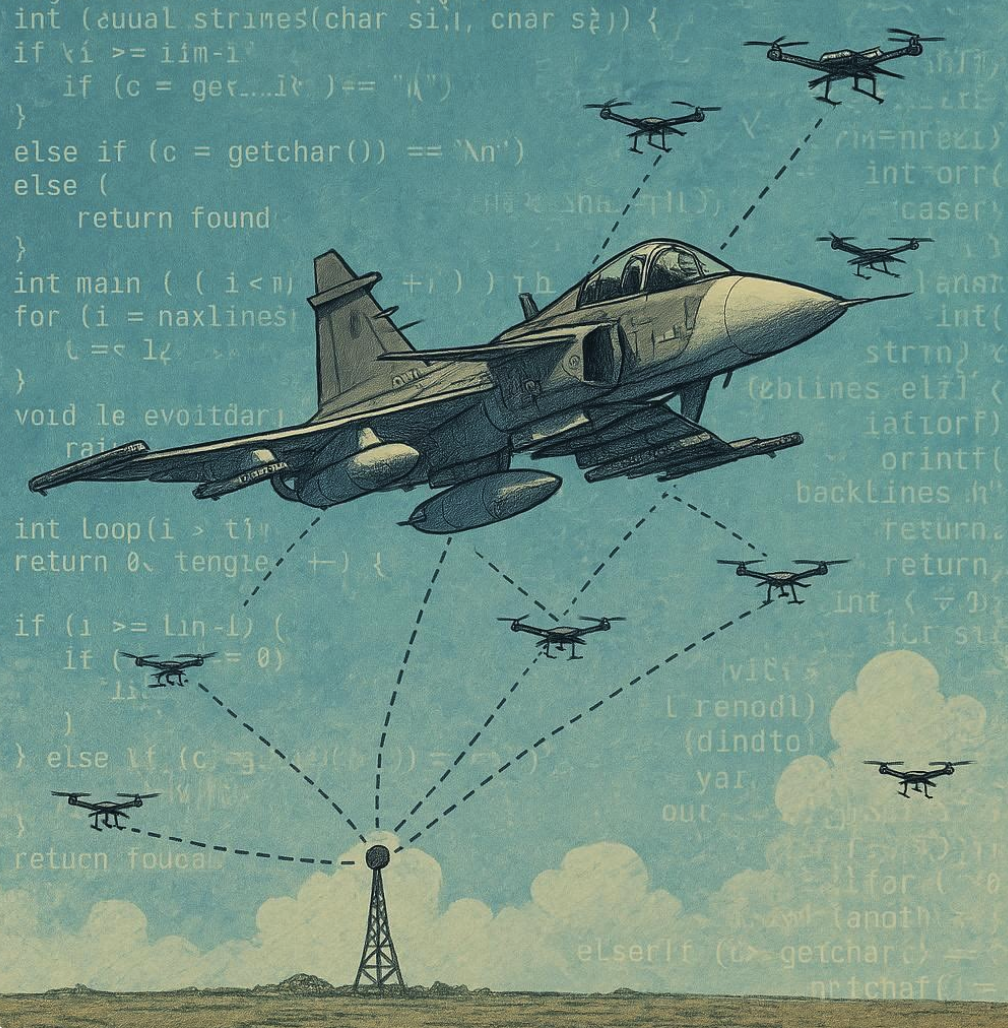
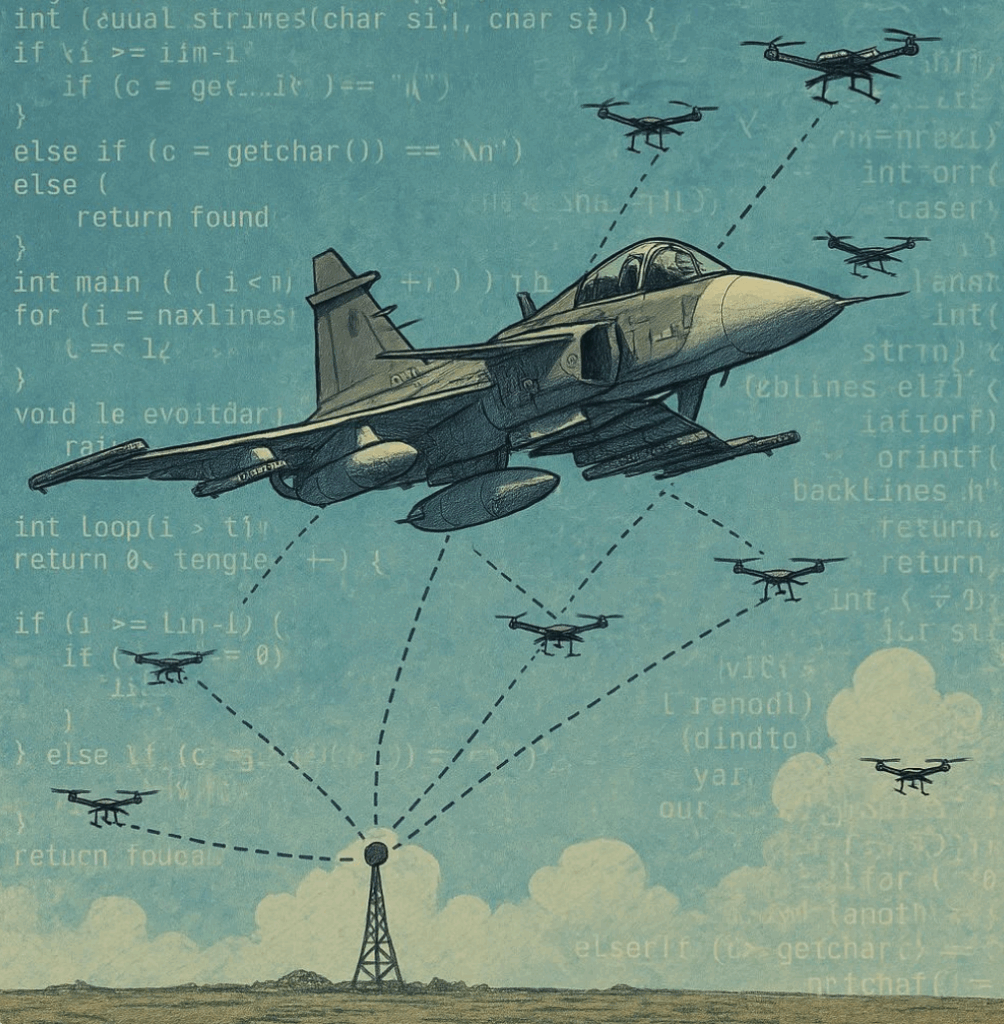
Safety-critical cyber-physical systems—such as the modern aircraft fighters like Saab Gripen—are significantly relaying on software technology. Besides strong requirements of correctness and reliability, developing such systems falls under heavy regulation and certification control, including certification standards such as DO-178C. As a consequence, the development processes of such systems are extremely complex, requiring significant manual documentation, formal meetings, and control, which result in long development, innovation, and release cycles.
On the other hand, the development of non-safety critical software has, for several decades, been using agile methodologies (e.g., Scrum and Kanban) and quick iteration cycles. Moreover, the recent trend with generative AI tools based on LLMs and transformer technology, has paved the way for even more rapid development, using AI assisted pair programming systems such as GitHub Co-pilot, CodeWhisperer, and Codeium.
The key question addressed in this project is: how can agile development methodologies and assisting software tools be designed in the context of safety-critical systems with certification and regulation requirements? Specifically, the research problems concerns (i) soundness—how can we guarantee the correctness of analyses results, (ii) completeness—how can false positives be mitigated to make the system useful in practice, and (iii) explainability—how can analysis results be traced back to source data.
Crossdisciplinary collaboration
This project is conducted in close collaboration between the aerospace and defense company Saab AB and KTH Royal Institute of Technology.
Participating in the project:
- Main PI: David Broman, Professor, KTH Royal Institute of Technology
- Co-PI: Thomas Nordh, Product Owner and Business Area Leader, Saab AB
- Co-PI: Daniel Stensér, Digital Acceleration Officer, Saab AB